
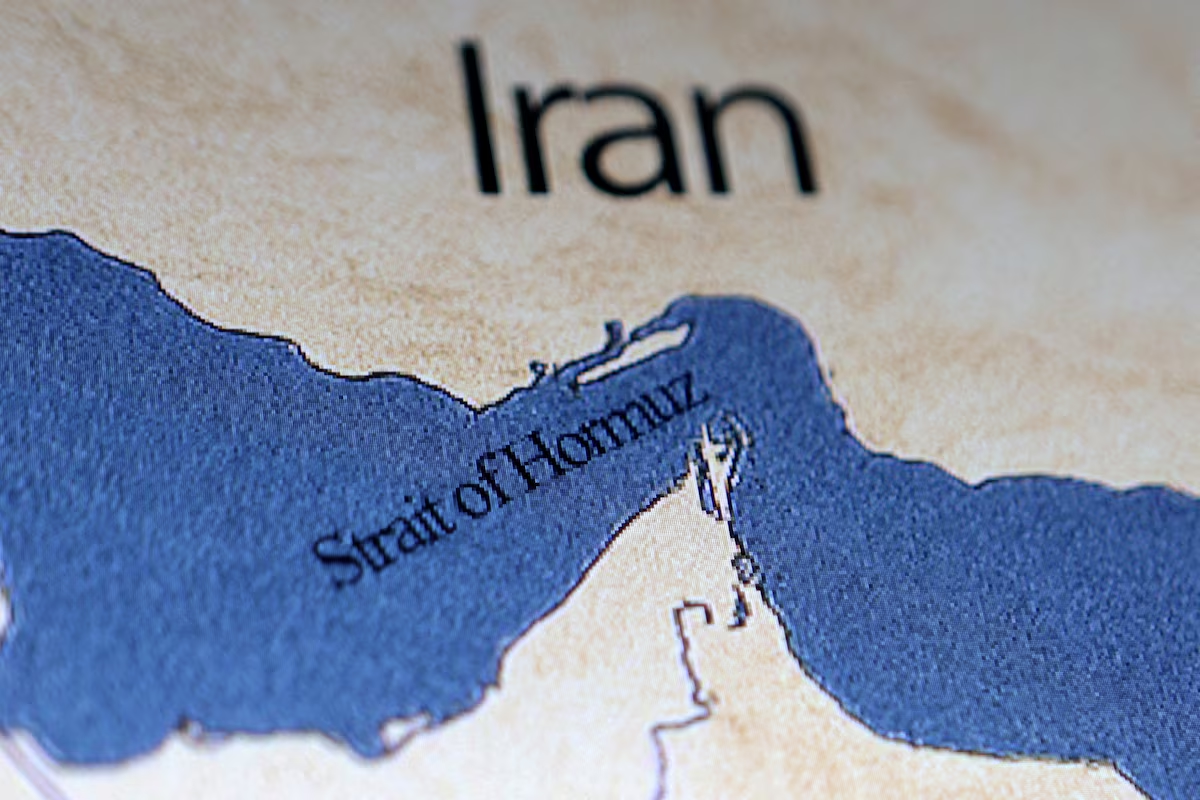

The Middle East conflict is creating fresh diplomatic tensions as several US allies refuse to deploy warships to the Strait of Hormuz. US President Donald Trump urged multiple countries to help secure the vital oil shipping lane after Iran effectively blocked the strategic route. However, countries including France, Australia, and Japan have declined or responded cautiously.
The Strait of Hormuz is one of the world’s most important oil transit routes. A large portion of global energy shipments passes through the narrow waterway linking the Persian Gulf with the Gulf of Oman. The situation worsened after rising tensions between Iran, Israel, and the United States.
Meanwhile, regional violence continues to escalate. Israel has launched new operations in southern Lebanon while drone strikes and missile attacks are reported across the Gulf region. Airports, oil facilities, and military bases have also been targeted during the ongoing conflict.
France, Australia and Japan Refuse Naval Deployment
Several key US allies have made it clear they are not planning to send naval forces to the Strait of Hormuz.
Australia confirmed that it will not contribute ships to the mission. Cabinet minister Catherine King said the country understands the importance of the strait but has not been asked to deploy vessels. She added that Canberra currently has no plans to send naval assets to the region.
France also rejected reports that it was preparing to send additional warships. The French Foreign Ministry said its carrier strike group will remain in the Eastern Mediterranean. Officials emphasized that France’s military presence remains defensive and focused on protection.
Japan also signaled hesitation. Defence Minister Shinjiro Koizumi told parliament that Tokyo is not considering maritime security operations at the moment. Japanese Prime Minister Sanae Takaichi said such operations would be legally difficult.
Japan’s constitution limits military deployments overseas. The country also maintains a pacifist stance since the adoption of its 1947 constitution. Sending Self-Defense Forces abroad remains politically sensitive among voters.
Despite its reluctance, Japan depends heavily on Middle Eastern oil. Around 95 percent of its oil imports come from the region, and roughly 70 percent passes through the Strait of Hormuz.
South Korea has not made a final decision. Officials in Seoul said they will continue consultations with Washington before deciding on any possible involvement.
Trump Warns NATO Over Strait Crisis
President Trump has warned that the future of NATO could be affected if allies refuse to help reopen the Strait of Hormuz.
In an interview with the Financial Times, Trump said European countries should contribute because they benefit from oil shipments through the strait. He argued that the United States has supported Europe in conflicts such as the war in Ukraine and expects help in return.
Trump said NATO could face serious consequences if member states refuse to respond to the crisis. He stressed that the United States is discussing the situation with about seven countries to build a coalition.
The president said the US Navy may soon begin escorting oil tankers through the region. He also indicated that minesweepers and additional military support may be needed to remove threats near the Iranian coastline.
Trump also mentioned possible talks with Chinese President Xi Jinping regarding the crisis. However, he suggested an upcoming summit in Beijing could be delayed if China does not support efforts to reopen the shipping route.
Conflict Expands Across the Middle East
While diplomatic tensions grow, military operations are intensifying across the region.
Israel announced that its army has begun “limited ground operations” against Hezbollah positions in southern Lebanon. The Israeli military said the operation targets key strongholds used by the Iran-backed militant group.
Officials said the operations aim to strengthen Israel’s defensive positions and remove threats near its northern border. The military also conducted artillery and air strikes before sending troops into the area.
According to Lebanese authorities, Israeli attacks have killed at least 850 people during the two weeks of fighting. More than 830,000 residents have reportedly been displaced, with many seeking shelter in temporary camps.
Israel has also continued air strikes in Beirut’s southern suburbs, a stronghold of Hezbollah. Military officials said the group has recently expanded rocket attacks against Israel.
At the same time, tensions are spreading beyond Lebanon. Drone attacks have targeted energy infrastructure in the United Arab Emirates. A fire broke out in the Fujairah oil industry zone after a drone strike, although no casualties were reported.
Flights were also briefly suspended at Dubai International Airport following a nearby drone-related incident. Authorities later confirmed the fire was extinguished and airport operations resumed.
Saudi Arabia said it intercepted more than 60 drones overnight, highlighting the growing scale of the regional conflict.
Iran has also warned that media infrastructure used by the London-based channel Iran International could become military targets. Tehran accuses the broadcaster of spreading propaganda and supporting Western interests.
Iran’s Foreign Minister Abbas Araghchi also condemned Israeli air strikes on fuel depots in Tehran. He described the attacks as “ecocide” because of potential long-term environmental and health damage.
Despite reports of possible negotiations, Tehran insists there are currently no talks with Washington to end the war.
The conflict began after joint US-Israeli strikes killed Iran’s Supreme Leader earlier this year. Since then, Iran has launched retaliatory attacks across the region, escalating one of the most serious Middle East crises in decades.

