

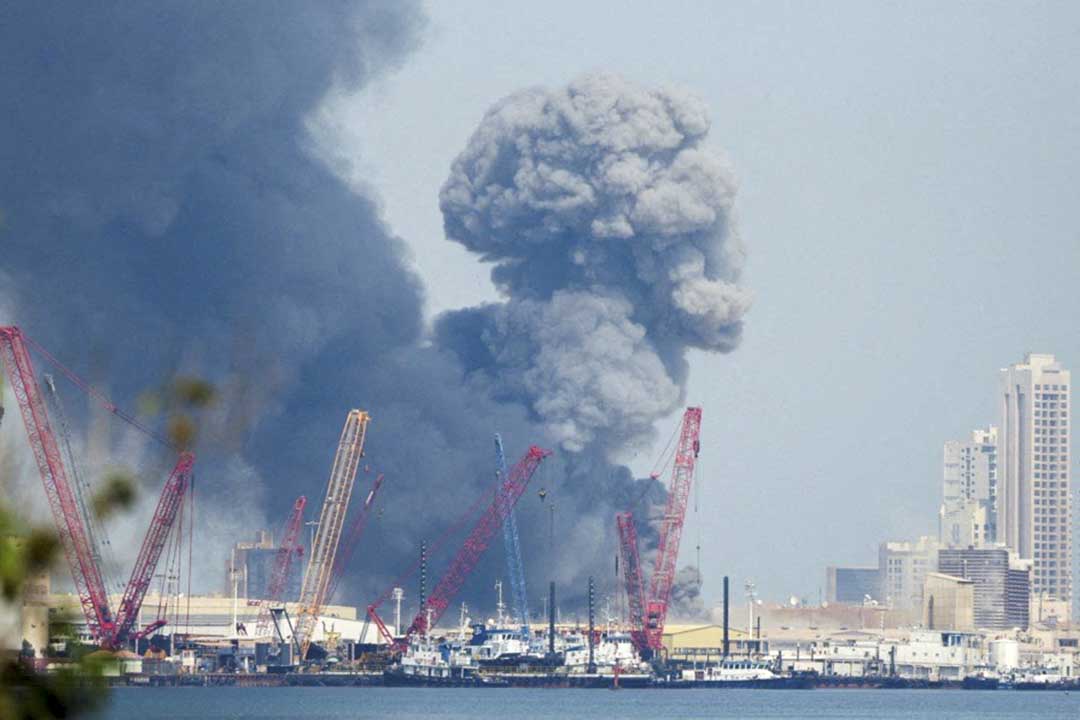

The war between Iran, United States, and Israel has intensified sharply. New airstrikes and missile attacks across the region have increased fears of a wider Middle East war. The crisis has already caused heavy casualties and major disruption to global oil supplies.
At least 112 people have been killed in attacks on Iran’s Kurdistan province, according to local officials cited by Iranian media. The conflict has also triggered military threats, economic turmoil, and emergency responses from several countries.
The situation escalated after the United States carried out major strikes on Iran’s strategic oil hub at Kharg Island. The attack has pushed the region closer to a large-scale confrontation involving multiple countries.
Global markets are also reacting strongly. Oil prices have surged above $100 per barrel as investors fear disruptions to key energy routes.
Deadly Strikes Hit Iran’s Kurdistan Region
The latest violence has severely affected Iran’s western province of Kurdistan. Local emergency authorities confirmed that at least 112 people were killed in the recent US and Israeli attacks.
Nearly 969 people were also injured in the strikes. Several victims remain hospitalized, with some in critical condition in intensive care units.
Medical officials said hospitals across the region are under pressure due to the large number of casualties. Emergency teams continue rescue and recovery operations in several affected areas.
The attacks are part of a broader military campaign targeting Iranian facilities and infrastructure. Iran has accused Washington and Tel Aviv of expanding their operations deeper into Iranian territory.
Iranian authorities also reported damage to important national landmarks. According to the country’s Culture Ministry, at least 56 historical and cultural sites have suffered structural damage since the conflict began.
Many of these sites are museums and historic monuments located in different provinces, including Tehran.
Iran Threatens Retaliation Against US-Linked Energy Facilities
Iran has issued strong warnings following the attack on Kharg Island. The country’s armed forces said they would target energy infrastructure connected to American companies if Iran’s oil facilities are attacked again.
The threat was issued by the Al‑Anbiya Central Headquarters in a statement reported by Iranian media outlets.
Iranian Foreign Minister Abbas Araghchi also warned that Tehran would respond to any strike on its energy sector.
He said facilities belonging to companies linked to the United States could become targets if Iranian oil infrastructure is damaged.
Kharg Island plays a critical role in Iran’s economy. The island handles about 90 percent of the country’s crude oil exports and is located roughly 30 kilometres from the Iranian mainland.
The attack on the island has therefore raised major concerns about energy supply stability in the region.
Iran has also launched missile and drone attacks against several targets, including Israel and Gulf states.
Trump Urges Global Naval Response in Strait of Hormuz
US President Donald Trump said the United States had “totally defeated” Iran’s military positions during the strikes.
Trump also urged international partners to deploy naval forces to protect shipping routes in the Strait of Hormuz.
The narrow waterway is one of the most important energy corridors in the world. Around 20 percent of global oil and liquefied natural gas shipments normally pass through the strait.
Trump said several countries could join the effort to secure the route, including China, France, Japan, South Korea, and the United Kingdom.
He also confirmed that the US Navy would soon begin escorting oil tankers passing through the waterway.
Meanwhile, reports suggest the United States is reinforcing its military presence in the region. Around 2,500 Marines are expected to be deployed to the Gulf along with additional naval assets.
Conflict Spreads Across the Region
The wider regional conflict is now affecting several countries beyond Iran and Israel. In Lebanon, authorities said Israeli strikes have killed hundreds of people since early March.
The Lebanese health ministry reported that at least 826 people have died, including women and children. Thousands more have been injured.
An Israeli strike on a health center in southern Lebanon recently killed 12 medical workers, according to officials.
The violence has also spread to Iraq, where explosions were reported in the capital Baghdad after strikes targeted Iran-backed militia groups.
Meanwhile, Qatar said its air defenses intercepted two missiles near the capital Doha.
Another drone strike reportedly hit the US embassy compound in Baghdad, highlighting the expanding risks for American facilities in the region.
Global Economic Impact Intensifies
The war is already shaking global energy and financial markets. Oil prices have risen sharply due to fears that shipping through the Strait of Hormuz could be disrupted.
Brent crude prices climbed above $103 per barrel, rising more than 40 percent since the start of the conflict.
Major international events are also being affected. Formula One races planned in Bahrain and Saudi Arabia are expected to be cancelled or postponed due to security concerns.
Meanwhile, the US State Department has offered a $10 million reward for information related to Iran’s new supreme leader Mojtaba Khamenei.
As the war enters a dangerous new phase, analysts warn that continued escalation could trigger a broader regional conflict with severe consequences for global security and energy supplies.
