

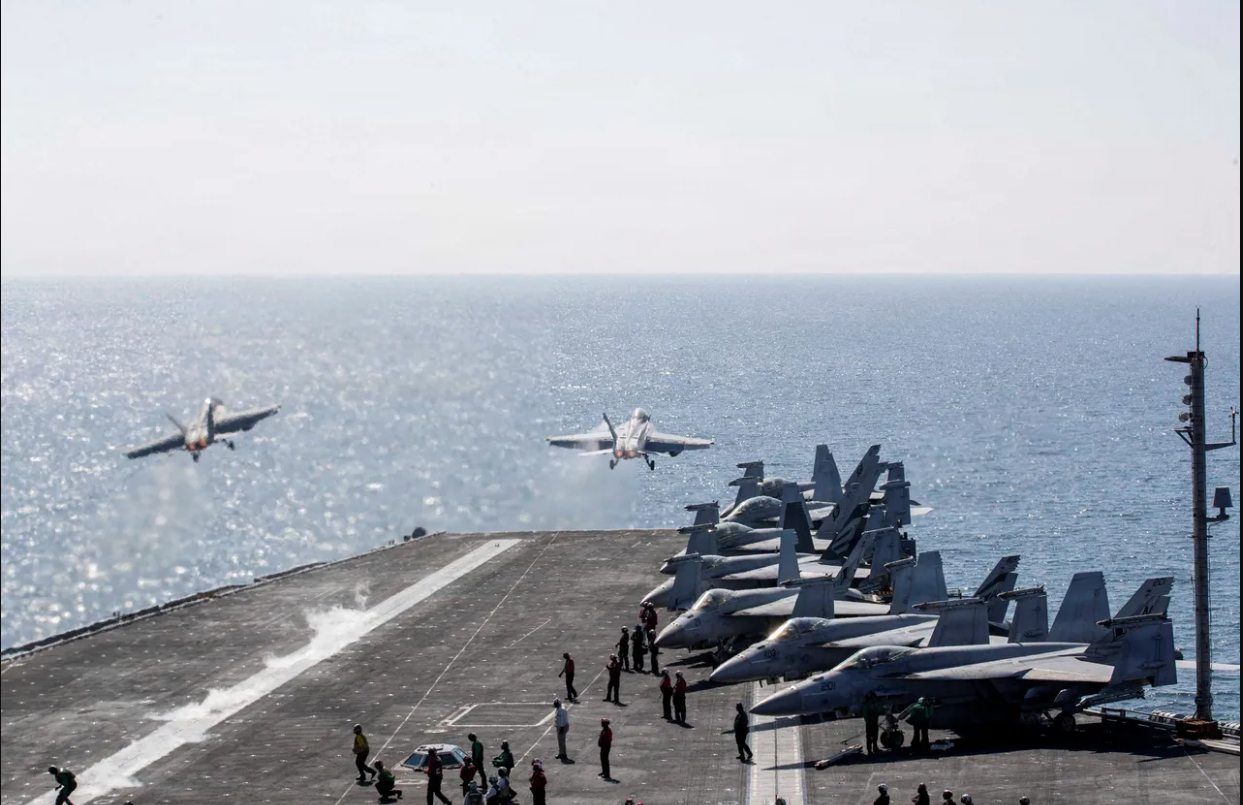

The United States is preparing to strengthen its military presence in the Middle East. The move follows rising tensions around the Strait of Hormuz.
Officials say the Pentagon is considering sending additional warships to the region. The plan aims to respond to increasing Iranian attacks on vessels near the strategic waterway.
The development reflects growing concerns about maritime security. The Strait of Hormuz remains one of the world’s most important oil shipping routes. Consequently, any disruption there quickly draws global attention.
USS Tripoli and Marines Head Toward the Region
Military officials confirmed that the amphibious assault ship USS Tripoli is moving toward the Middle East. The vessel operates from a base in Japan.
The ship carries an attached Marine force as part of its deployment. These troops form part of a Marine expeditionary unit.
Typically, such units consist of several warships and around 5,000 Marines. They provide rapid response capabilities during military crises.
Officials explained that this deployment forms part of a broader reinforcement plan. The Pentagon aims to strengthen operational readiness across the region.
Meanwhile, Marines are already stationed in the Middle East. They currently support ongoing operations linked to the conflict with Iran.
Amphibious Ready Group Deployment Under Review
Defence Secretary Pete Hegseth approved a request from US Central Command regarding the deployment. The request involves elements of an amphibious ready group.
Such groups usually include multiple naval vessels working together. They operate alongside Marine expeditionary units for coordinated missions.
These forces can conduct amphibious assaults, humanitarian missions, and security operations. Therefore, they offer flexible military options during regional crises.
The Pentagon continues to assess its future force posture in the Middle East. However, officials have not released detailed plans about additional deployments.
Rising Tensions Around the Strait of Hormuz
Security concerns have increased sharply around the Strait of Hormuz in recent weeks. The narrow passage connects the Persian Gulf with the Gulf of Oman.
A large portion of the world’s oil shipments passes through this waterway. As a result, any military escalation there threatens global energy markets.
Recent Iranian attacks on ships in the region have alarmed international shipping companies. Several vessels have reported damage during the conflict.
Because of these incidents, maritime security has become a major concern for governments and commercial operators.
The United States views the protection of shipping lanes as a strategic priority. Therefore, the Pentagon continues to monitor developments closely.
Pentagon Signals Confidence in Keeping the Strait Open
Despite the rising tensions, US officials say they remain confident about keeping the waterway operational.
Defence Secretary Pete Hegseth described Iran’s actions as signs of desperation. He suggested that the United States is prepared to handle the situation.
According to officials, the main disruption comes from Iranian attacks on ships. However, US forces continue working to maintain safe transit through the area.
The Pentagon also coordinates closely with other government agencies. This cooperation helps prepare responses for various possible scenarios.
Military planners emphasize that they will not allow the Strait of Hormuz to remain contested for long.
Strategic Importance of the Waterway
The Strait of Hormuz holds enormous economic importance. Global energy supplies rely heavily on this narrow maritime corridor.
Oil tankers and cargo vessels cross the passage every day. Consequently, stability in this region remains essential for international trade.
Any prolonged disruption could impact global markets. Energy prices could also rise sharply if shipping traffic slows.
For this reason, major powers monitor the strait closely during periods of tension.
Growing Military Presence Signals Heightened Alert
The potential deployment of additional US naval forces highlights the seriousness of the situation. It also signals Washington’s readiness to respond quickly.
Amphibious units provide flexible military options during complex crises. They can support security operations, evacuations, or combat missions.
Meanwhile, the movement of the USS Tripoli demonstrates how quickly the United States can shift forces across regions.
Although officials have not confirmed the full scale of the deployment, preparations continue.
For now, the Pentagon appears focused on ensuring that commercial shipping continues without major disruption.
