

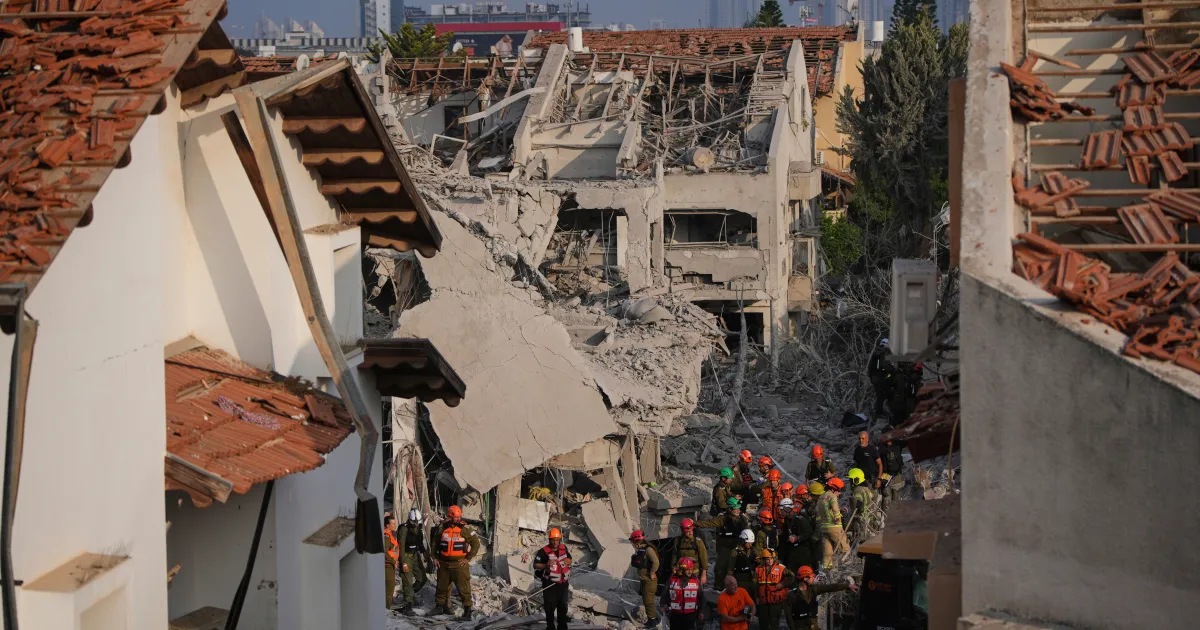

The aftermath of Iranian missile strikes in Tel Aviv reveals widespread destruction across several urban areas. Buildings, vehicles, and commercial facilities show visible damage following the retaliatory attacks launched during the recent Iran–Israel conflict. The strikes targeted multiple sites in central Israel, including locations close to the country’s financial and administrative centers.
Images and reports from the scene show shattered glass, damaged facades, and debris scattered across streets. Emergency teams and security personnel were deployed immediately after the attacks. Authorities worked to secure impacted zones and assess structural risks. The missile barrage followed Israeli and allied military actions targeting sites inside Iran, which triggered Iran’s retaliatory response against Israeli territory.
Several missiles penetrated Israeli defence systems and struck urban areas near Tel Aviv. The strikes caused injuries and significant structural damage to residential and commercial buildings. Fires broke out in some buildings after the impact. Smoke was seen rising from high-rise structures as emergency responders attempted to control the situation.
Damage Reported in Financial and Commercial Buildings
Some of the most notable destruction occurred in areas close to Tel Aviv’s financial district. Reports indicate that office complexes and commercial facilities suffered serious damage from the missile strikes. Windows were blown out, building exteriors collapsed, and vehicles parked nearby were burned or crushed under debris.
Urban planners and officials later acknowledged the scale of the damage in the wider Tel Aviv metropolitan area. According to regional planning authorities, more than 200 major buildings across the region suffered heavy structural damage. Several of these structures may require complete demolition due to safety risks.
Commercial losses have also been significant. Businesses filed thousands of compensation claims after the attacks, reflecting the scale of destruction in both private and commercial properties. Offices, shops, and business centers were among the facilities damaged during the missile barrage.
Residential Areas and Infrastructure Also Hit
Beyond financial buildings, residential neighborhoods around Tel Aviv were also affected by the strikes. Apartment buildings, homes, and parked cars were damaged by direct hits or falling debris from intercepted missiles. In nearby cities such as Ramat Gan, several buildings were destroyed while many others suffered partial damage.
Local authorities reported that some residents were forced to leave their homes due to structural risks. Emergency shelters and temporary accommodation were arranged for displaced families. The attacks also caused disruption to transport routes and essential services in parts of the city.
Despite Israel’s advanced missile defense systems, several projectiles still reached urban areas. Analysts say this highlighted the intensity of the missile barrage and the challenges of intercepting large waves of incoming missiles during wartime conditions.
Long Road to Recovery After the Strikes
The reconstruction process in Tel Aviv and surrounding areas is expected to take years. Urban planners and government officials have warned that rebuilding heavily damaged structures will require extensive planning, funding, and engineering assessments.
The economic cost of the attacks is also expected to rise as insurance claims and damage assessments continue. Thousands of compensation claims have already been submitted for destroyed homes, damaged offices, and disrupted businesses.
As cleanup efforts continue, the visible scars of the missile strikes remain across parts of Tel Aviv. The damaged buildings and debris-covered streets serve as a reminder of the growing intensity of the regional conflict and its impact on civilian infrastructure.
