

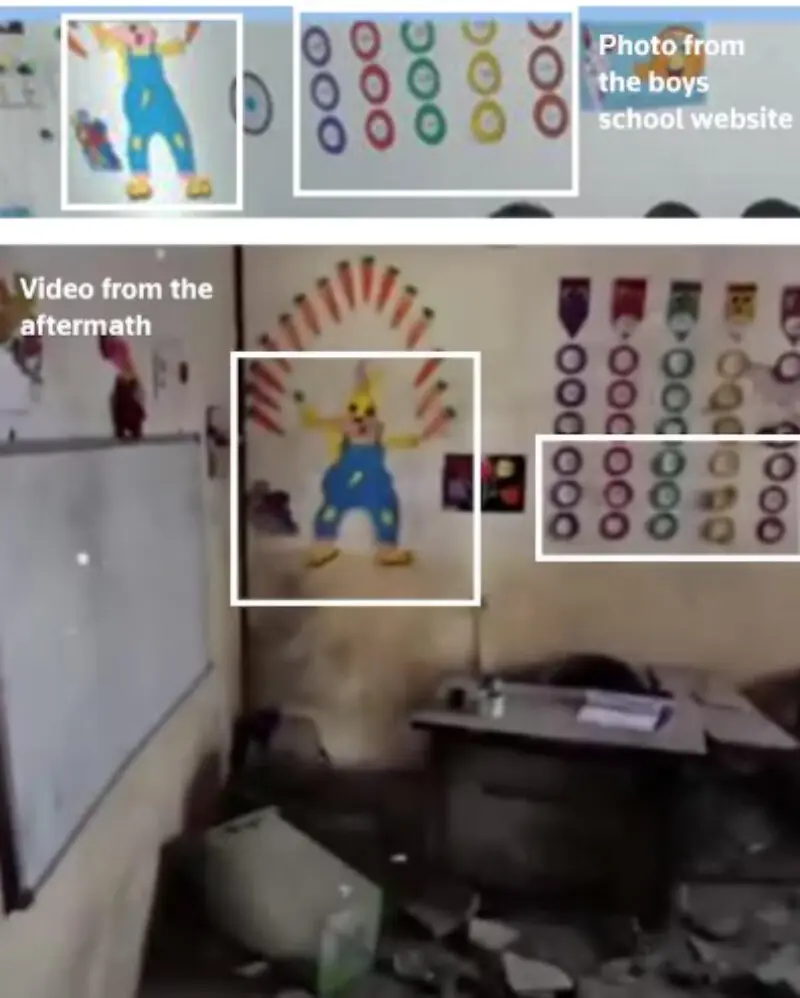

A girls’ school in southern Iran that was destroyed during the first day of the war had maintained a visible online presence for years before the strike, raising questions about how US forces reviewed potential targets.
The Shajareh Tayyebeh School, located in the city of Minab, was among several structures hit on February 28 during attacks linked to the conflict between the United States and Iran. The school stood next to a compound associated with the Islamic Revolutionary Guard Corps.
Investigators at the United States Department of Defense believe US forces were responsible for the bombing. Emerging indications also suggest the strike may have relied on outdated targeting data.
According to Iran’s ambassador to the United Nations in Geneva, Ali Bahreini, the attack destroyed the school building and killed 150 students. However, Reuters said it could not independently confirm the number of casualties. The Iranian Red Crescent Society reported the death toll at 175.
The school was separated from the nearby base by a wall decorated with bright murals. Moreover, archived versions of the school’s website and business listings displayed photographs of students participating in classroom and recreational activities. Satellite images dating back to 2018 also showed playground markings and colourful building walls consistent with a school facility.
Satellite analysis shows targeted strikes across the compound
An examination of satellite imagery, videos and photos of the attack suggested the cluster of buildings was struck by multiple munitions. Analysts identified evidence indicating that at least one Tomahawk cruise missile was used.
Video footage captured the moment of impact near the compound, with smoke rising from the area. Later satellite images revealed signs of at least seven separate explosions stretching across roughly 325 metres, including the destroyed school and several heavily damaged buildings.
Meanwhile, US President Donald Trump claimed that Iran might possess Tomahawk missiles, although he did not provide evidence for the assertion.
The Pentagon confirmed that the strike remains under investigation but declined to comment on the school’s online records, satellite imagery or the decision to target the Minab compound.
Two sources familiar with the inquiry told Reuters that outdated intelligence may have contributed to the targeting decision. The New York Times first reported that possibility.
Defence analyst Mark Cancian of the Center for Strategic and International Studies said US Central Command likely maintains a long-standing list of potential targets in the event of conflict with Iran.
He added that the incident highlights the need for periodic reviews of such lists to ensure the information remains accurate.
Minab, situated near the Strait of Hormuz, hosts one of the IRGC’s largest missile bases, according to Iranian state media. In the days following the strike, satellite analysis also detected new disturbances at the town cemetery, where rows of freshly dug graves appeared on March 2, reportedly for children killed in the attack.
