

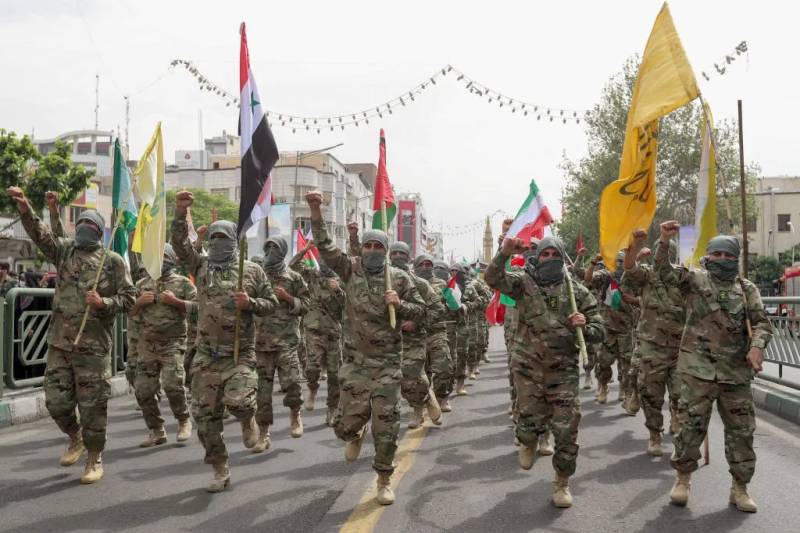

Israel’s military carried out strikes on checkpoints in Tehran operated by the Basij paramilitary force linked to Iran’s Revolutionary Guards, describing the operation as part of a wider effort to weaken government control in the capital.
In a statement, the Israeli army said the Israeli Air Force conducted the attacks over the past day based on military intelligence. According to the statement, the strikes targeted Basij roadblocks and personnel stationed across the city.
The Basij operates under the authority of the Islamic Revolutionary Guard Corps and plays a major role in enforcing domestic security in Tehran. Israeli officials claim the force has led the government’s response to internal dissent.
“These forces directed the regime’s main efforts to suppress internal protests,” the Israeli military said. It added that the group used severe violence, mass arrests and force against civilian demonstrators during recent unrest.
The strikes come as the conflict between Israel and Iran continues to expand, raising concerns about further escalation across the region.
Residents describe tightened security across the capital
Iran experienced a wave of unprecedented protests earlier this year that challenged the country’s clerical leadership. Demonstrations peaked in January before authorities moved to suppress them through a large-scale crackdown.
Human rights organisations say the government’s response resulted in thousands of deaths and the detention of tens of thousands of people.
Meanwhile, residents in Tehran told reporters that security forces have intensified their presence throughout the city. According to witnesses, members of the Revolutionary Guards established checkpoints across key streets and neighbourhoods following the recent US-Israeli strikes.
One woman in her 30s living in the capital said many smaller police stations had closed, leaving officers without regular facilities.
She explained that security forces now rely heavily on roadblocks to signal authority and reassure residents that the situation remains under control.
At the same time, both Donald Trump and Benjamin Netanyahu have publicly urged Iranians to rise up against the country’s clerical leadership, further intensifying political tensions surrounding the conflict.
