

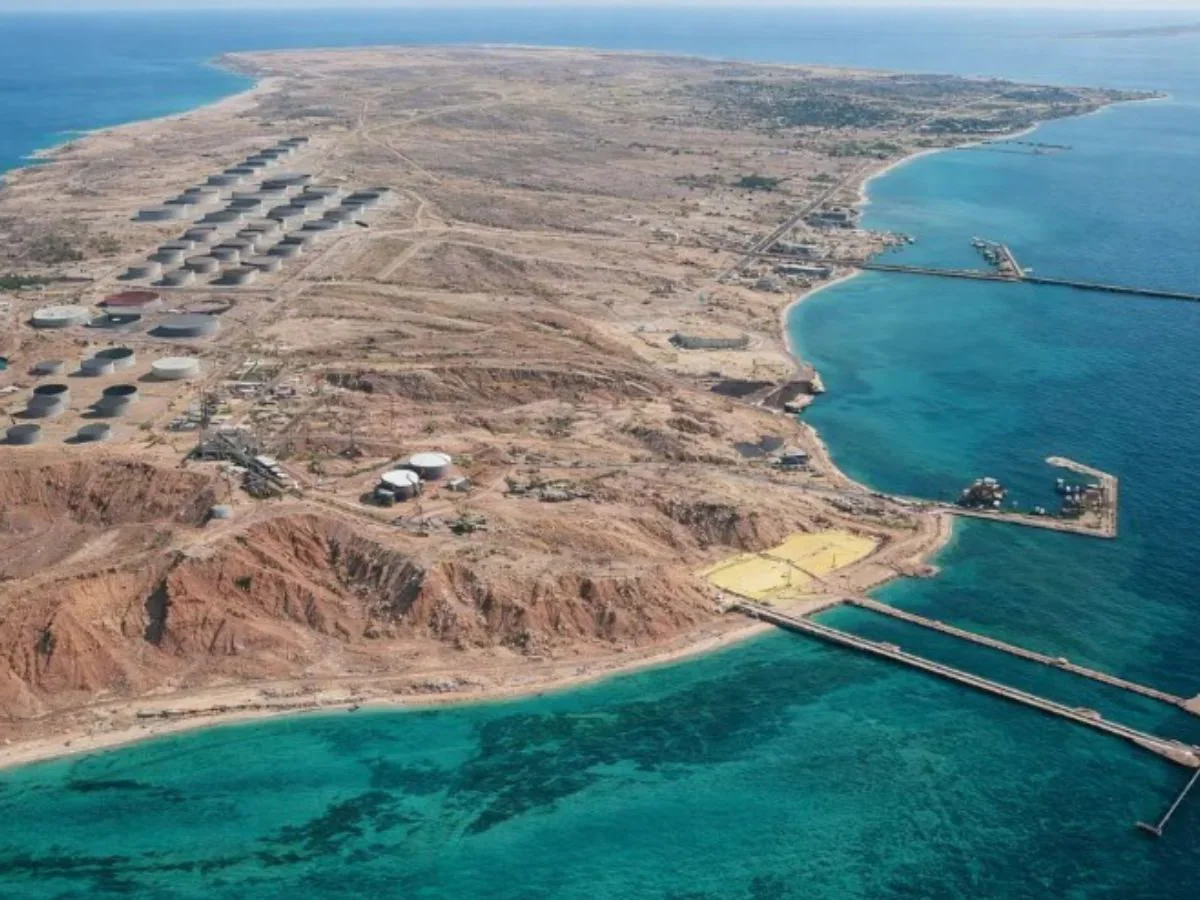

A small island in the Persian Gulf has become one of the most strategically important locations in the ongoing tensions involving Iran, United States, and Israel. The island, known as Kharg Island, plays a central role in Iran’s oil exports and economic stability.
Located around 30 kilometers off Iran’s coast in Bushehr province, Kharg Island may appear insignificant due to its small size. The island covers roughly 20 square kilometers. Despite its modest area, it serves as Iran’s main oil export hub.
Most of Iran’s crude oil shipments pass through this facility. Pipelines from major oil fields transport crude to the island for storage and export.
Energy experts say the island is a crucial economic lifeline for Iran. Any disruption there could significantly impact global oil markets and Iran’s economy.
Main Hub for Iran’s Oil Exports
Kharg Island handles the majority of Iran’s crude oil exports. Analysts estimate that nearly 90 percent of the country’s oil shipments pass through the island’s terminal facilities.
Oil from major Iranian fields such as Ahvaz, Marun, and Gachsaran is transported to Kharg via pipelines. Once the oil reaches the island, it is stored in large tanks before being loaded onto tankers for export.
The island has an estimated storage capacity of around 30 million barrels of crude oil. According to market data, roughly 18 million barrels are currently stored there.
This volume represents about 10 to 12 days of exports under normal conditions.
Iran remains one of the major oil producers in the global market. As a member of the Organization of the Petroleum Exporting Countries, the country supplies around 4.5 percent of global oil production.
Iran’s total oil output is estimated at about 3.3 million barrels per day. Additional production includes around 1.3 million barrels per day of condensate and other petroleum liquids.
Because oil exports are a major source of revenue for the Iranian government, Kharg Island has enormous economic importance.
Strategic Risks During the Ongoing Conflict
Despite the ongoing conflict involving Iran, the United States, and Israel, Kharg Island has not yet been targeted by airstrikes.
Analysts believe this is due to the potential global consequences of damaging the facility. A direct attack on the island could halt most of Iran’s crude exports overnight.
Financial institutions warn that such a move could trigger severe retaliation. Iran could respond by targeting energy infrastructure across the Gulf region or disrupting shipping routes.
One of the most sensitive routes is the Strait of Hormuz. Nearly one-fifth of global crude oil shipments normally pass through this narrow waterway.
If Iran blocks or attacks vessels in the strait, global energy markets could face major disruptions.
Experts also warn that targeting Kharg could cause oil prices to surge dramatically.
Some analysts believe prices could climb beyond $150 per barrel if exports from the island were halted.
A Long History of Strategic Importance
Kharg Island has played a key role in Iran’s oil industry for decades. Major infrastructure development took place during the 1960s and 1970s when Iran expanded its petroleum sector.
The island’s deep waters made it ideal for loading supertankers. Many other parts of Iran’s coastline are too shallow for large vessels.
During past geopolitical crises, world leaders avoided attacking the island. For example, during the 1979 hostage crisis, former US president Jimmy Carter imposed sanctions on Iran but did not authorize strikes on Kharg.
Later, during the Iran-Iraq tanker war in the 1980s, US president Ronald Reagan focused on protecting shipping routes rather than targeting the island.
Iran has attempted to diversify its export routes in recent years. In 2021, the country opened the Jask oil terminal outside the Strait of Hormuz in the Gulf of Oman.
However, Kharg Island still remains the backbone of Iran’s oil export system.
Energy experts say the island represents both strength and vulnerability for Iran. Its centralized infrastructure makes exports efficient, but it also creates a single critical point that could disrupt the entire system if damaged.
Because of these risks, analysts believe all sides in the conflict are carefully calculating their next moves.
