


European leaders have warned that the ongoing Middle East conflict has exposed serious weaknesses in the continent’s energy security.
They stressed that Europe must strengthen domestic energy sources to reduce dependence on volatile fuel imports.
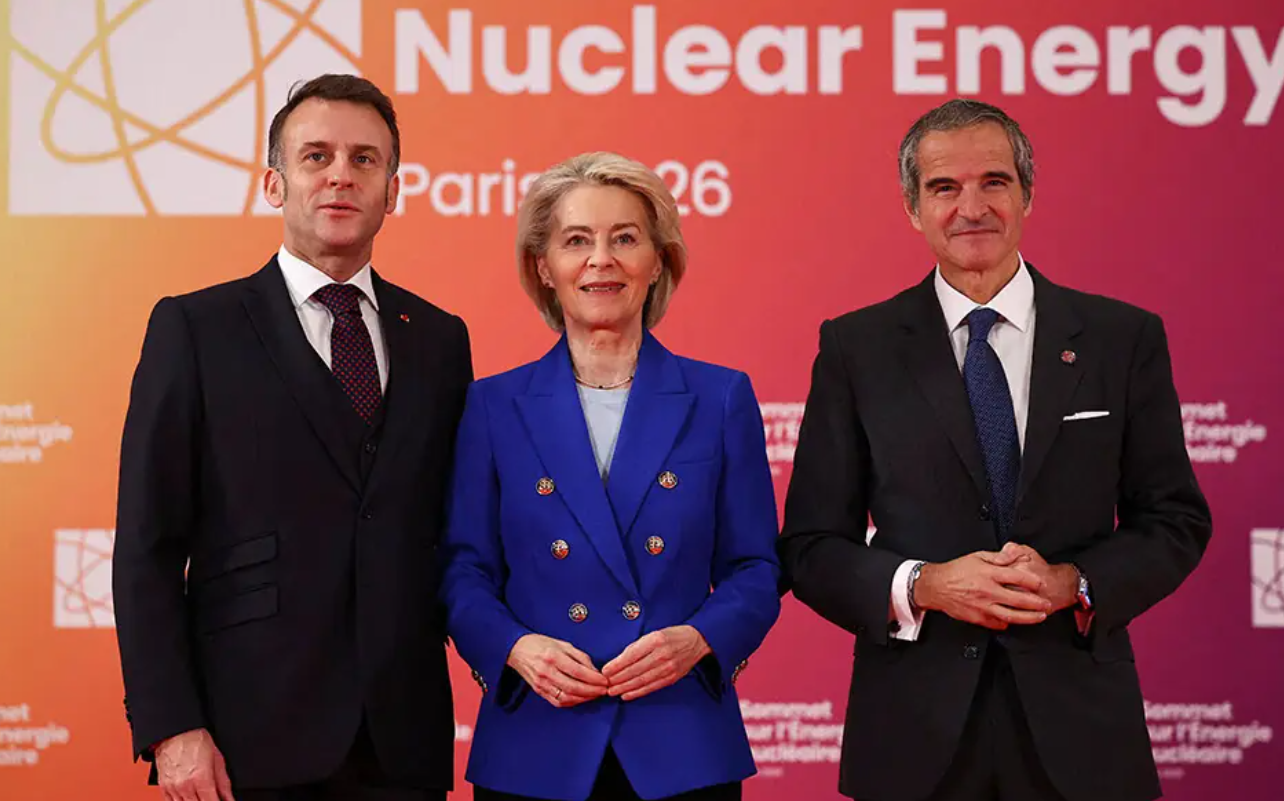
The warning came during a nuclear energy summit held near Paris. Discussions focused on long-term energy independence and supply stability.
Leaders emphasized that geopolitical tensions continue to disrupt global energy markets. Consequently, energy security has returned to the center of European policy debates.
Nuclear Power Seen as Strategic Solution
European Commission President Ursula von der Leyen said abandoning civilian nuclear energy weakened Europe’s energy resilience.
She described the earlier shift away from nuclear power as a strategic mistake. According to her, Europe became increasingly dependent on imported fossil fuels.
These imports, she explained, remain expensive and unpredictable. Therefore, they place European economies at a structural disadvantage compared with other regions.
She added that the Middle East crisis clearly demonstrates the risks of external energy dependence.
Von der Leyen highlighted that Europe possesses domestic low-carbon energy sources, including nuclear and renewable power. Together, these sources could guarantee energy independence if properly managed.
Macron Calls Nuclear Energy Key to Sovereignty
French President Emmanuel Macron echoed similar concerns during the summit discussions. He argued that civilian nuclear energy strengthens energy sovereignty.
Macron said nuclear power helps balance independence with climate goals. At the same time, it supports carbon neutrality efforts across Europe.
He warned that reliance on hydrocarbons allows energy supplies to become tools of political pressure. Consequently, reducing dependence has become a strategic necessity.
According to him, current geopolitical tensions demonstrate how energy vulnerability can threaten economic stability.
Declining Nuclear Share Raises Concerns
European leaders noted that nuclear energy once generated about one-third of Europe’s electricity in 1990. Today, its share stands close to 15 percent.
However, interest in nuclear power has grown again worldwide. Europe now aims to participate in this renewed global momentum.
A new investment guarantee worth €200 million will support innovative nuclear technologies. Officials also introduced plans for developing small modular reactors.
These advanced reactors produce up to 300 megawatts per unit. Moreover, they are simpler and more affordable than traditional nuclear plants.
Leaders hope this technology will become operational in Europe by the early 2030s.
Debate Continues Over Nuclear Energy Risks
Despite renewed interest, nuclear power remains controversial among environmental groups. Critics continue raising concerns about safety risks and nuclear waste disposal.
The nuclear sector previously faced setbacks after major disasters in Japan and Ukraine. Those events increased public fears about reactor safety.
Nevertheless, growing climate challenges and energy insecurity have revived policy discussions around nuclear expansion.
Environmental activists briefly interrupted the summit to protest nuclear cooperation policies. Security personnel quickly removed the protesters, allowing the event to continue.
Activists argued that nuclear policies should reflect broader geopolitical and environmental realities.
Energy Independence Becomes Europe’s Priority
European leaders concluded that energy sovereignty must guide future policy decisions. They believe combining nuclear energy with renewables can stabilize supply chains.
The Middle East conflict has reinforced urgency around building resilient domestic energy systems. As a result, Europe is reassessing long-term energy strategies.
Officials stressed that reliable energy sources remain essential for economic competitiveness and stability. Therefore, investment decisions taken today will shape Europe’s energy future for decades.
