

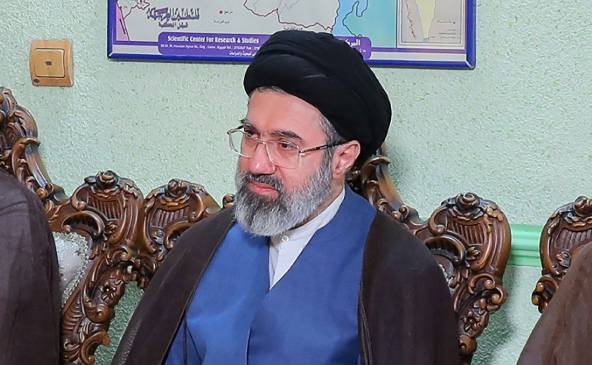

US President Donald Trump has criticised Iran’s decision to appoint Mojtaba Khamenei as the country’s new supreme leader following the death of his father, Ali Khamenei, in a US-Israeli strike at the start of the war.
Speaking in a phone interview with NBC News on Monday, Trump said Tehran had made a serious error by elevating the 56-year-old cleric, who is widely viewed as a hardliner.
“I think they made a big mistake,” Trump said. “I don’t know if it’s going to last. I think they made a mistake.”
Mojtaba Khamenei became Iran’s new supreme leader after the killing of his father during early strikes in the conflict involving the United States, Israel and Iran. Analysts say the succession has strengthened the position of hardliners within the Iranian leadership.
Trump also suggested that the United States is closely monitoring developments in Tehran and questioned whether the new leadership structure would remain stable.
Oil remarks and domestic issues raised
During the interview, Trump also addressed the possibility of the United States gaining control of Iranian oil resources. However, he said it was too early to discuss such a move.
“Certainly people have talked about it,” the president said, while declining to elaborate further on whether Washington could attempt to seize Iran’s oil.
Trump referenced recent US actions in Venezuela, where a raid earlier this year led to the capture of leader Nicolás Maduro and allowed Washington to access the country’s oil reserves.
Meanwhile, the president also discussed domestic political issues, including the proposed SAVE America Act. The legislation would require proof of citizenship for voter registration across the United States.
Although the bill has already passed the House of Representatives, it faces significant obstacles in the Senate, where it must secure 60 votes to overcome the filibuster rule.
Over the weekend, Trump attended a dignified transfer ceremony at Dover Air Force Base in Delaware for six US service members killed in the Iran war. He saluted the flag-draped containers and later met privately with the families of the fallen troops.
