

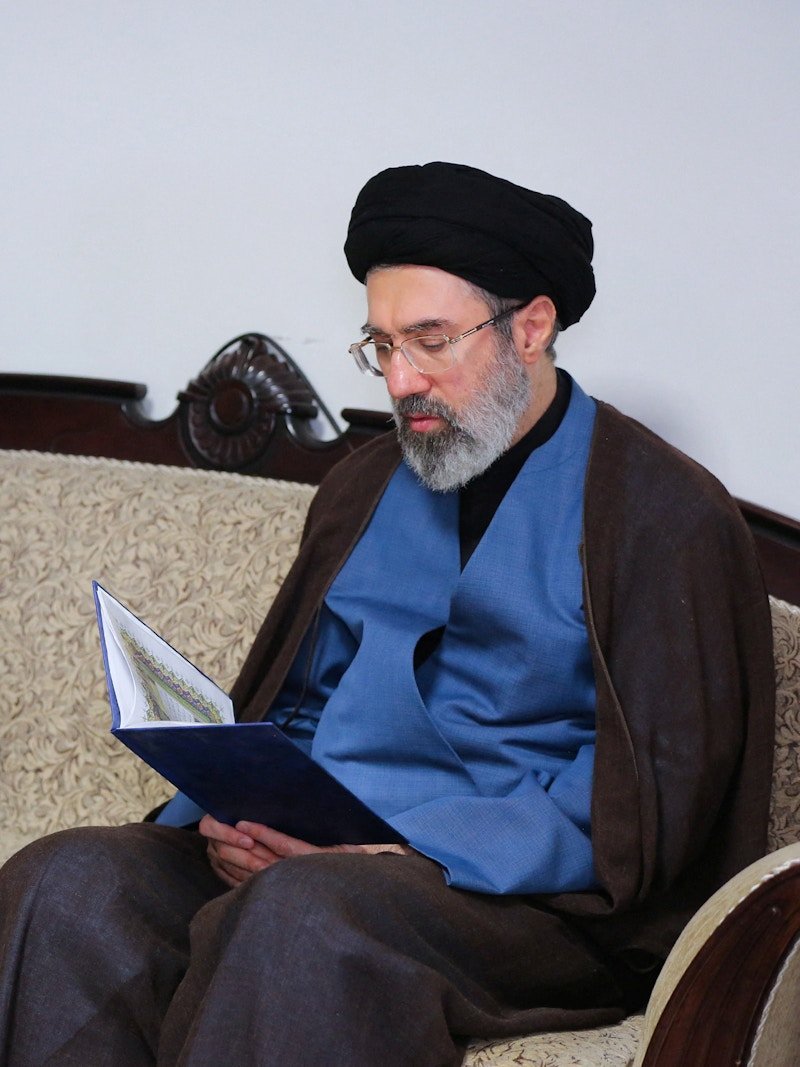

Iran’s Assembly of Experts has appointed Mojtaba Khamenei as the country’s new supreme leader following the killing of his father, Ali Khamenei, in a US-Israeli air strike. The 56-year-old cleric has now become the third supreme leader of Iran since the 1979 Islamic Revolution.
The 88-member Assembly of Experts, which holds constitutional authority to select the nation’s top religious and political leader, approved Mojtaba’s appointment amid rising regional tensions and political uncertainty inside the country.
Consequently, Mojtaba assumes leadership at a time when Iran faces military escalation in the Middle East and growing domestic pressure. Analysts say his appointment signals continuity within the existing political structure.
Early life and family background
Mojtaba Khamenei was born on September 8, 1969, in Mashhad, one of Iran’s most important religious cities. He is the second son of former supreme leader Ali Khamenei, who ruled Iran from 1989 until he died in the recent air strike.
Growing up in a politically influential household, Mojtaba witnessed his father’s rise from a senior revolutionary figure to Iran’s president and later the country’s supreme leader. Over the years, he developed close connections with key figures in Iran’s political and religious establishment.
He married Zahra Haddad-Adel, the daughter of prominent conservative politician Gholam-Ali Haddad-Adel, a former speaker of parliament. However, Zahra was reportedly among those killed in the strike that targeted the Khamenei family compound in Tehran.
Education and influence within Iran’s clerical system
Mojtaba pursued his religious education in the city of Qom, the main center of Shia theological learning in Iran. There, he studied advanced Islamic jurisprudence and later taught high-level seminary courses known as dars-e kharej.
Although Mojtaba has never held elected office, observers believe he has maintained significant influence within the inner circle of the previous leadership. Moreover, reports suggest he developed strong ties with Iran’s Revolutionary Guard.
Despite his influence, Mojtaba rarely appears in public or engages in political debates. Instead, he usually attends official ceremonies, religious gatherings, and state-sponsored events covered by Iranian media.
