

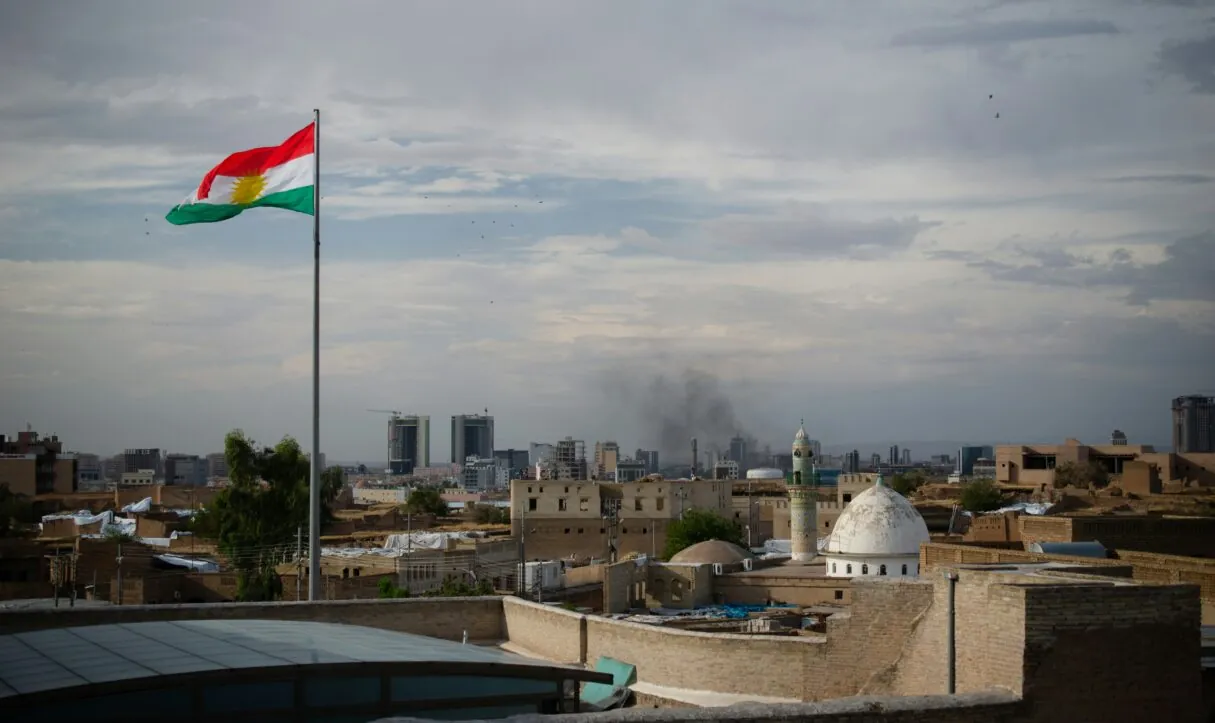

Qamishli, Syria: Residents and political figures from Kurdish regions in northeast Syria have warned Iranian Kurdish groups against aligning with the United States in any confrontation with Iran’s government, citing their own difficult experience with Washington.
The warning comes as Iranian Kurdish militias based in northern Iraq hold consultations with the United States about potentially attacking Iranian security forces in western Iran. These discussions follow intensifying US and Israeli air strikes on Iran, according to reports.
However, Syrian Kurds say such cooperation with Washington carries serious risks.
Lessons from Syria fuel caution
Saad Ali, a resident of the Kurdish-majority Syrian city of Qamishli, urged Iranian Kurds to avoid repeating what he described as Syria’s painful experience.
He said Syrian Kurdish forces aligned with the United States more than a decade ago to fight the Islamic State group and establish a semi-autonomous administration in territory they controlled.
Nevertheless, the situation changed earlier this year. In January, Syria’s newly formed national army under President Ahmed al-Sharaa launched a sweeping offensive and captured most Kurdish-held areas.
At that time, Syrian Kurdish groups appealed to Washington for support. Instead, the United States encouraged Kurdish fighters to integrate with the new Syrian government’s forces.
As a result, many Kurdish residents say they felt abandoned by their former ally.
Calls for guarantees before cooperation
Amjad Kardo, another Kurdish resident of Qamishli, said Iranian Kurdish forces should demand firm guarantees before considering any military cooperation with Washington.
He argued that Kurdish groups should not enter conflicts inside Iran without clear agreements ensuring the political future of Kurdish regions.
Meanwhile, Kurdish political leader Ahmed Barakat also urged Iranian Kurdish factions to exercise extreme caution when considering any partnership with the United States.
Although some Kurdish leaders have requested assurances from Washington, uncertainty remains about whether such guarantees will materialize.
