

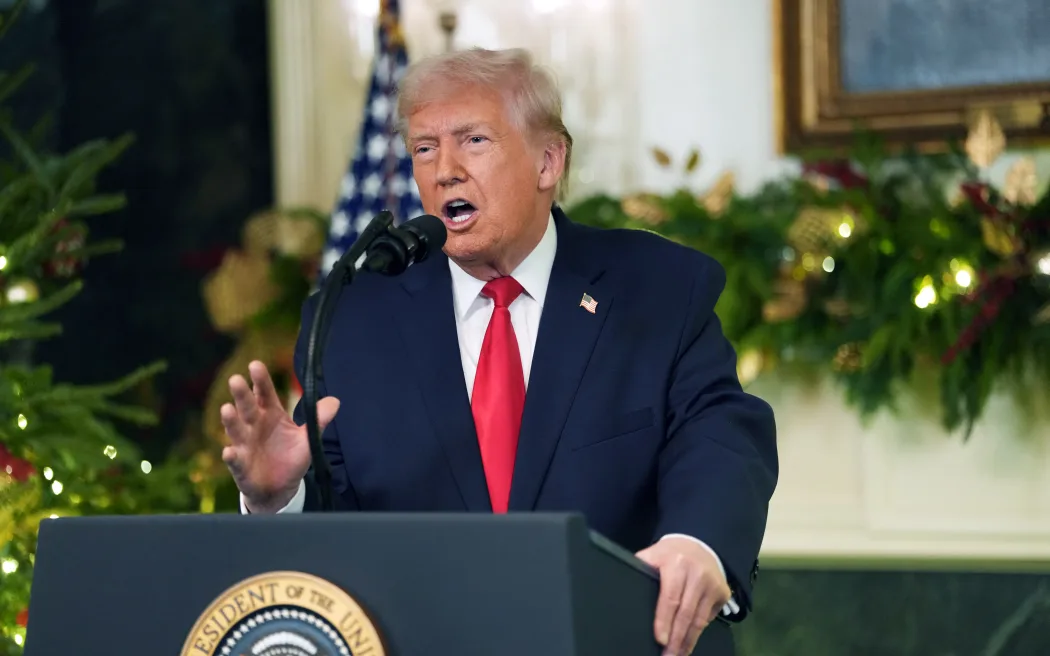

US President Donald Trump says he is not considering sending American ground troops into Iran. He believes such a move would waste valuable time.
Trump made the remarks while discussing the ongoing conflict involving Iran. He argued that Iran has already suffered major military losses.
According to his comments, Iran’s military capabilities have weakened during the confrontation. Therefore, he sees little reason for a large ground invasion.
Trump dismissed warnings from Iranian officials about the consequences of a foreign invasion. He described those warnings as unnecessary and unproductive.
Moreover, he suggested that direct troop deployment would not change the strategic outcome of the conflict.
Consequently, his comments indicate that military pressure may continue through other means rather than ground operations.
Trump Signals Interest in Iran’s Political Future
While rejecting troop deployment, Trump hinted at broader political ambitions regarding Iran’s leadership. He suggested that the country’s leadership structure should change.
Trump stated that he wants a rapid transformation rather than a slow rebuilding process. According to him, long-term political rebuilding could recreate previous tensions.
Therefore, he indicated interest in seeing a new leadership system emerge in Iran.
Trump also claimed he has ideas about possible future leadership figures. However, he declined to publicly name any candidates.
His remarks suggest that political change remains a major focus of his strategy toward Iran.
Debate Over Iran’s Next Leader Intensifies
The discussion about Iran’s future leadership has intensified after the death of Supreme Leader Ali Khamenei. His death reportedly occurred during early military strikes in the conflict.
Since then, Iran has not officially announced a permanent successor.
Under Iran’s constitution, the responsibility for choosing the next supreme leader belongs to the Assembly of Experts. This body includes eighty-eight clerical members.
Meanwhile, a temporary leadership council manages key responsibilities until a new leader is selected.
This constitutional process remains central to Iran’s political transition.
Trump Criticizes Possible Successor
Trump also criticized Mojtaba Khamenei, the son of the late supreme leader. Some observers consider Mojtaba a potential successor.
However, Trump dismissed him as an unsuitable candidate.
He warned that continuing the policies of the previous leadership could lead to future conflict. According to Trump, such a scenario might draw the United States back into confrontation within several years.
Therefore, he stressed the importance of political change in Iran’s leadership.
Although Mojtaba Khamenei holds no official government position, analysts believe he wields significant influence within Iran’s power structure.
Regional Conflict Continues to Escalate
Meanwhile, the broader conflict continues to intensify. Heavy strikes have reportedly targeted key infrastructure in Tehran.
These attacks mark a new phase of the military campaign.
The escalation increases uncertainty across the region. Consequently, global leaders closely monitor the evolving situation.
Military developments, political transitions, and diplomatic responses now shape the next phase of the crisis.
For now, Trump’s comments suggest the United States may avoid a full ground invasion. However, the political future of Iran remains uncertain as the conflict unfolds.
