

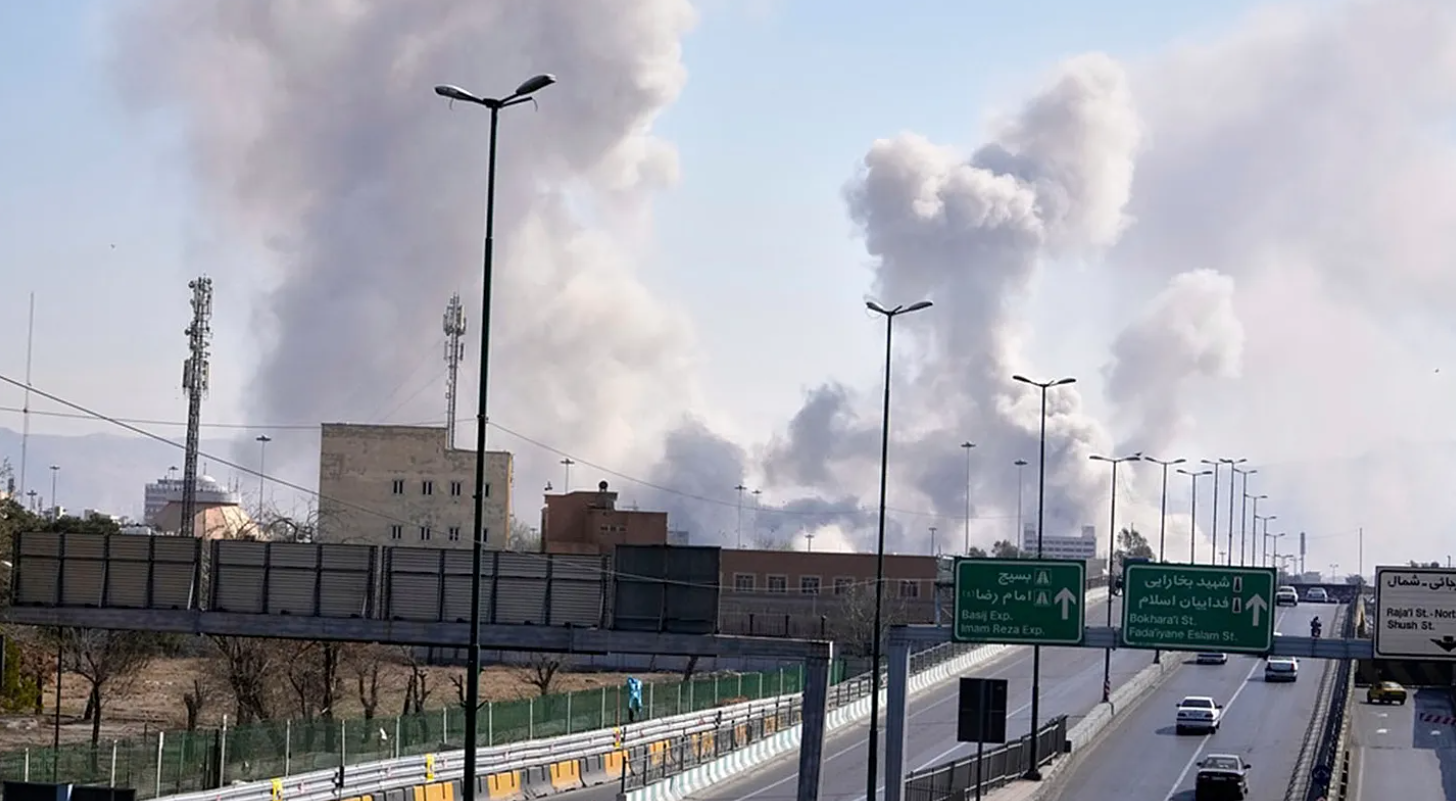

The Middle East conflict continues to intensify as missile strikes and air attacks spread across the region. The confrontation has now entered its seventh day, raising fears of wider instability. Several Gulf countries reported explosions overnight. Meanwhile, regional governments increased security as tensions escalated.
Cities such as Manama, Dubai, and Abu Dhabi reported loud blasts during the night. The attacks followed ongoing military exchanges between Iran and its adversaries. As a result, several countries now face serious security threats.
Qatar Condemns Strike on Buildings in Bahrain
Qatar strongly condemned an Iranian attack that targeted buildings in Bahrain’s capital, Manama. The buildings housed members of the Qatari Emiri Naval Forces. These personnel participated in the Gulf Cooperation Council’s Unified Maritime Operations Center.
Officials confirmed that the Qatari naval personnel remained safe despite the strike. However, the attack damaged buildings in the area. Bahrain later clarified that the missiles struck one hotel and two residential buildings in the capital.
Authorities reported no loss of life from the attack. Nevertheless, one residential building caught fire after the strike. Emergency teams quickly extinguished the blaze and secured the area.
The incident followed an earlier Iranian missile strike that caused a fire at Bahrain’s main oil refinery. Consequently, security concerns across the Gulf have increased.
Kuwaiti Soldiers Injured in Retaliatory Attacks
Kuwait reported that 67 military personnel have been injured since the beginning of Iran’s retaliation campaign. Officials described this number as the highest military casualty figure among Gulf states.
The defence ministry did not disclose the exact locations where the soldiers sustained injuries. However, authorities confirmed that Kuwait faced repeated missile and drone threats.
Military officials stated that defence systems intercepted 212 ballistic missiles and 394 drones since the conflict began. Despite these interceptions, Kuwait recorded the highest death toll among Gulf countries.
Eight people have died in Kuwait since the war started. The victims include four American service members, two Kuwaiti soldiers, and two civilians.
Radar Systems in UAE and Jordan Reportedly Targeted
Iran’s Revolutionary Guard said its forces targeted radar systems linked to missile defence networks in several countries. These locations included the United Arab Emirates, Jordan, and Qatar.
Such radar systems help detect incoming missiles and drones. Therefore, they play a vital role in regional defence strategies.
Satellite imagery suggested possible damage to some radar installations. One military site in Jordan showed large impact craters near a radar facility. Analysts noted that such damage could weaken early warning systems.
Hezbollah Issues Warning to Israeli Residents
The conflict also intensified along Israel’s northern border with Lebanon. Hezbollah warned Israeli residents living close to the Lebanese border to evacuate immediately.
The group urged people within five kilometres of the frontier to leave the area. It claimed Israeli military vehicles had deployed in those locations.
Meanwhile, Israeli forces launched strikes targeting Hezbollah infrastructure. Authorities also issued evacuation orders for Beirut’s southern suburbs.
Consequently, thousands of residents fled their homes. Heavy traffic formed as families rushed toward safer areas.
Lebanese officials reported that at least 123 people have died since the conflict expanded into the country. More than 683 people have been injured, and around 90,000 residents have been displaced.
Missile Alerts and Explosions Across the Region
Missile alerts sounded across parts of Israel after new projectiles approached the country. Explosions were heard over Tel Aviv as defensive systems attempted interceptions.
Emergency teams later responded to fires at residential buildings near the commercial hub.
At the same time, Israel launched new strikes in Tehran targeting what officials described as regime infrastructure. Explosions echoed across several parts of the Iranian capital.
Authorities also reported casualties in the southern city of Shiraz. Local officials said at least 20 people died and 30 others suffered injuries in strikes on a residential area.
Rising Casualties and Regional Impact
The conflict has also affected several Gulf countries. Officials reported that 13 people have died in attacks across the region since the war began.
Seven of the victims were civilians. In Kuwait, an 11-year-old girl was among those killed during the attacks.
Saudi Arabia reported intercepting three ballistic missiles aimed toward an air base. Meanwhile, Qatar said its air defence systems stopped a drone attack targeting the Al-Udeid air base.
Falling debris from an intercepted drone also injured several people in Abu Dhabi. These incidents highlight the growing risks faced by civilians.
Diplomatic Tensions and Political Statements
Iran’s Foreign Minister Abbas Araghchi said Tehran did not seek a ceasefire. He also stated that Iran currently sees no reason to negotiate with the United States.
Meanwhile, political tensions increased after comments from US President Donald Trump regarding Iran’s future leadership. His remarks added another political dimension to the already complex conflict.
Growing Uncertainty Across the Middle East
The widening conflict has created deep uncertainty across the Middle East. Several countries now face missile threats, military strikes, and humanitarian concerns.
Governments across the region remain on high alert. Meanwhile, civilians continue to cope with displacement and insecurity.
As military operations continue, the risk of further escalation remains high. The region now faces a critical moment as tensions show little sign of easing.
