

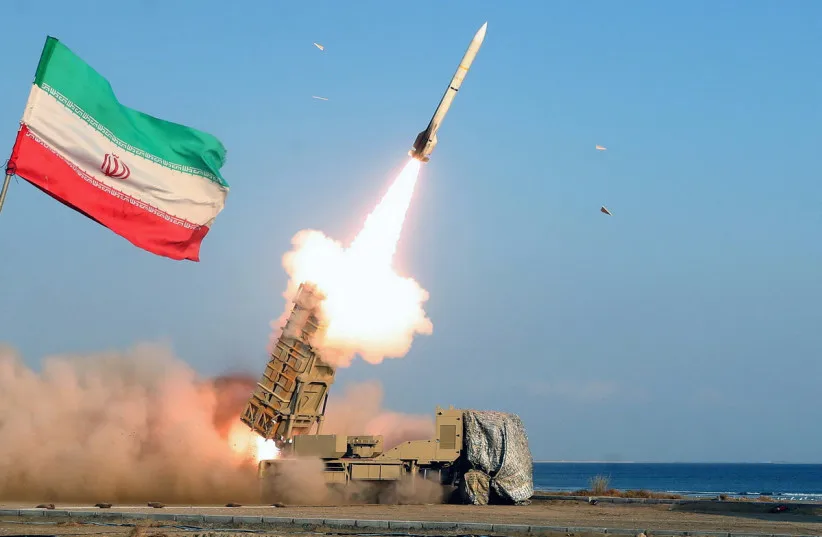

The expanding conflict across the Middle East entered its seventh day on Friday as Iran claimed that missiles launched by the Islamic Revolutionary Guard Corps (IRGC) Navy struck the United States aircraft carrier USS Abraham Lincoln near the Strait of Hormuz.
A spokesperson for Iran’s Khatam al-Anbiya Central Headquarters said the strike targeted the vessel while it operated about 340 kilometers from Iran’s maritime borders in waters close to the strategic strait. Iranian officials claimed the attack forced the carrier and its accompanying destroyers to withdraw quickly from the area. According to the statement, the ships moved more than 1,000 kilometers away after the incident.
However, the US Central Command rejected the claim and said Iranian missiles did not come close to the aircraft carrier. American officials maintained that the USS Abraham Lincoln continued its operations in the region despite the reported launch of missiles.
US radar bases reportedly targeted in Jordan and UAE
Meanwhile, new satellite imagery analyzed by international media indicates possible strikes on radar installations linked to US missile defense networks in West Asia. Several military facilities in Jordan and the United Arab Emirates appear to show damage near structures commonly used to house radar equipment.
These radar systems form part of advanced missile defense infrastructure designed to detect incoming ballistic missiles and drones. The systems also support the Terminal High Altitude Area Defense network, which intercepts missiles during flight.
One of the most visible sites of damage reportedly appears at Muwaffaq Salti Air Base in Jordan. Satellite images show large impact craters near the radar installation linked to the system.
Regional conflict spreads beyond immediate war zone
The war has rapidly expanded across the region and beyond, raising fears of a wider confrontation. Israeli forces recently announced a “next phase” of operations and launched airstrikes on Beirut’s southern suburbs after issuing evacuation warnings to residents.
At the same time, political tensions escalated after US President Donald Trump rejected the possibility of Mojtaba Khamenei replacing his late father as Iran’s supreme leader. Trump stated that Washington would prefer leadership in Tehran that could restore stability and avoid further conflict.
The ongoing hostilities have disrupted regional security, air travel and maritime activity around the Strait of Hormuz, a vital global energy route.
