

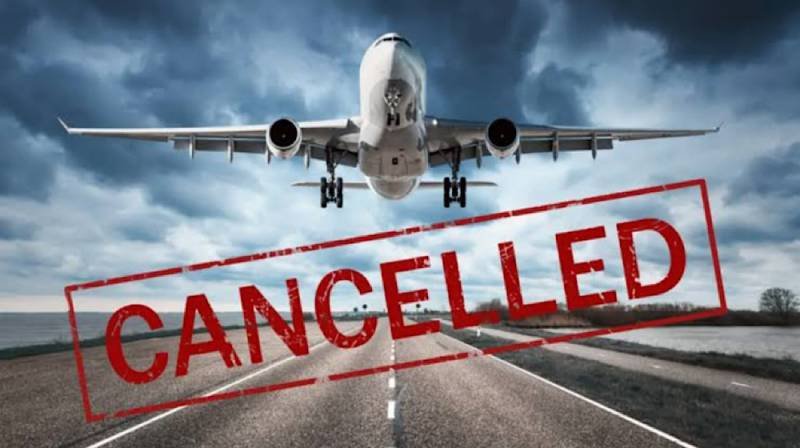

Karachi: Pakistan cancelled 145 flights to Middle Eastern destinations for the sixth consecutive day as the ongoing conflict continues to disrupt regional aviation operations. Authorities cited growing security concerns and airspace restrictions across the Gulf as the primary reasons behind the widespread cancellations.
According to aviation officials, airports across Pakistan experienced major disruptions on Thursday as airlines suspended several routes linked to the Middle East. Consequently, travellers faced uncertainty while airlines struggled to adjust schedules amid rapidly changing security conditions.
Flight Disruptions Spread Across Major Pakistani Airports
Officials reported that Karachi recorded the highest number of cancellations, with 35 flights to Middle Eastern destinations grounded. Meanwhile, Lahore saw 29 flights cancelled, and Multan suspended 12 flights due to the unstable regional airspace.
Similarly, Islamabad cancelled 35 flights, while Peshawar halted 14 services. In addition, Sialkot suspended 12 flights and Faisalabad cancelled six departures. Authorities also confirmed that two flights scheduled to depart from Quetta to Middle Eastern destinations did not operate.
Aviation sources explained that the regional conflict has significantly disrupted key air corridors linking South Asia to the Gulf. As a result, airlines have either rerouted flights or cancelled them entirely to avoid unsafe airspace.
Wealthy Dubai Residents Seek Exit Routes
At the same time, the broader Middle East crisis has intensified aviation disruptions across several countries. Officials estimate that more than 20,000 flights have been cancelled across eight nations over the past five days.
Meanwhile, many wealthy residents in Dubai have begun leaving the city amid fears that the conflict could escalate further. Some families are paying as much as $200,000 for private charter flights departing from Muscat, Oman, to destinations such as Geneva.
Because of limited commercial flights from UAE airports, travellers increasingly rely on Oman as an exit route. However, congestion at the UAE–Oman border often forces travellers to wait three to four hours before crossing.
