

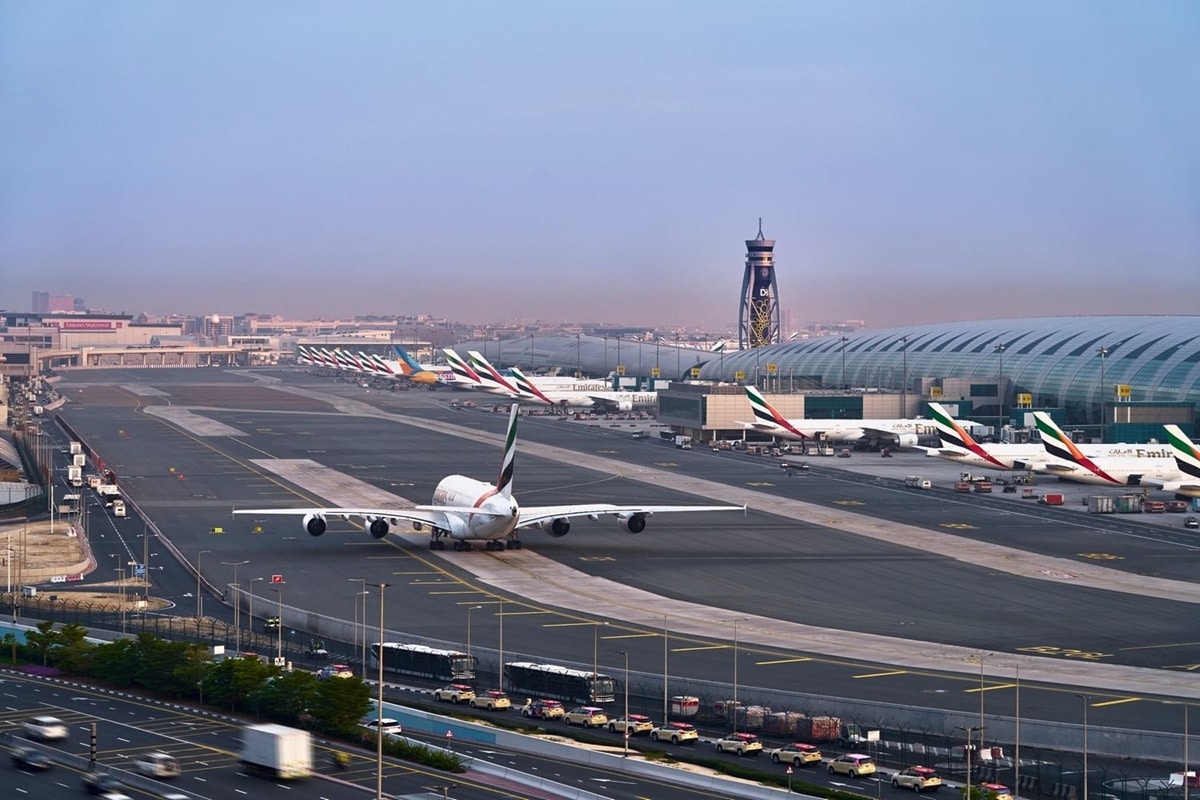

Limited Operations Restart at Dubai’s Major Airports
Dubai Airports has announced a limited resumption of flights after a three-day suspension. Operations will restart Monday evening. The reopening follows intense regional instability triggered by Iranian missile strikes across the Gulf.
Flights had been cancelled after Iran began targeting locations in the United Arab Emirates. Dubai and Abu Dhabi airports were among the affected sites. The closure caused one of the most serious aviation disruptions in recent years.
In an official statement, Dubai Airports confirmed that limited services would resume at Dubai International Airport (DXB) and Al Maktoum International Airport (DWC). Authorities said operations would remain restricted and subject to ongoing security assessments.
The decision comes as airspace conditions show slight improvement. However, many regional restrictions remain in place. Officials emphasized that passenger safety remains the top priority.
Emirates and flydubai Gradually Restart Services
Emirates confirmed it will resume selected flights on Monday evening. The airline stated that priority will be given to passengers with existing bookings. Travelers rebooked on operating flights will be contacted directly.
The airline urged passengers not to travel to the airport unless formally notified. All other services remain suspended until further notice. Emirates said it will adjust schedules based on developments in the region.
Low-cost carrier flydubai also announced a limited return of flights. Operations will resume gradually as airspace reopens.
Meanwhile, Etihad Airways confirmed it plans to restart flights from Abu Dhabi on Tuesday. The airline is reviewing operational conditions before fully restoring services.
Gulf Airspace Crisis Disrupts Global Aviation
The aviation crisis began after US and Israeli strikes reportedly killed Iranian Supreme Leader Ayatollah Ali Khamenei. Iran responded with missile attacks targeting Gulf states. Dubai, Abu Dhabi, Kuwait, and Manama airports were affected.
Authorities reported at least one fatality in Abu Dhabi following an incident near airport facilities. Civilian infrastructure, including hotels and residential areas, was also impacted.
The UAE temporarily and partially closed its airspace as a precaution. Large sections of Middle Eastern airspace remain restricted. Transit hubs such as Dubai, Abu Dhabi, and Doha faced shutdowns or severe limitations.
Dubai International Airport is the world’s second-busiest airport for international traffic. It ranks just behind Hartsfield-Jackson Atlanta International Airport, according to Airports Council International. The shutdown hit a vital economic sector. Aviation contributes nearly one-third of Dubai’s economy.
The crisis disrupted east-west travel corridors. Dubai and Doha serve as global transit gateways connecting Europe and Asia. Aircraft and crews were stranded worldwide. Airlines faced longer routes and higher fuel costs.
As limited operations resume, uncertainty remains high. Regional tensions continue to influence aviation schedules. Dubai Airports said it will monitor developments closely and adjust operations accordingly.
Passengers are advised to check flight status updates regularly. Airlines will provide direct communication regarding rebookings and schedule changes.
The Gulf aviation sector now faces a gradual recovery. However, stability in the region remains essential for full restoration of global flight networks.
