

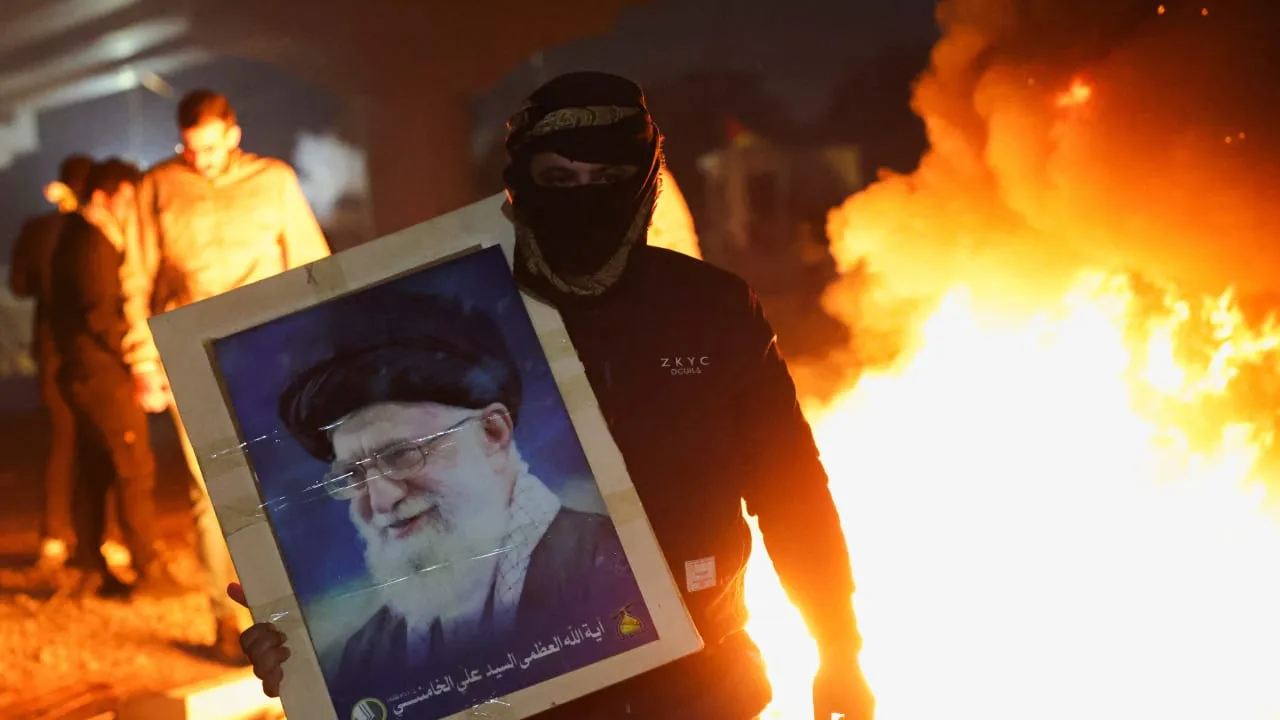

The assassination of Iran’s Supreme Leader Ayatollah Ali Khamenei in a US-Israeli airstrike has escalated the Middle East crisis. The attack has sparked retaliatory strikes, international tension, and global market disruptions.
Iran Declares Mourning Amid Missile Retaliation
Iran confirmed Khamenei’s death and announced 40 days of national mourning. Seven public holidays were declared. In response, Iranian missiles struck Israel, killing at least nine civilians and injuring dozens.
The attacks targeted multiple cities, including Beit Shemesh, while Iran’s Revolutionary Guards claimed additional strikes on US and British naval vessels in the Gulf.
Senior Iranian Leadership Decimated
Coordinated strikes killed 40 senior Iranian officials, including top military and security figures. Among them were Gen. Mohammad Pakpour, Abdolrahim Mousavi, Defence Minister Aziz Nasirzadeh, and Ali Shamkhani.
Reports also confirmed deaths among Khamenei’s family, including his daughter, granddaughter, and in-laws. The strikes marked a significant blow to Iran’s military and political hierarchy.
US-Israeli Operations Continue
US President Donald Trump announced that intelligence systems had monitored Khamenei’s movements, allowing precise targeting. He claimed that nine Iranian naval ships were destroyed and key military facilities struck.
Trump warned that the conflict could last up to four weeks, though he suggested operations might conclude sooner. He also acknowledged three US soldiers killed in Iranian retaliatory attacks, stressing that casualties were expected in war.
B-2 bombers targeted hardened missile sites in Iran, while US naval forces reportedly struck a Jamaran-class corvette in the Gulf of Oman. Hundreds of additional targets inside Iran have been attacked during the ongoing campaign.
Escalation and Regional Impact
The conflict has disrupted global shipping lanes. The Strait of Hormuz has been effectively closed by Iran’s Revolutionary Guards, causing at least 150 tankers to halt operations in international waters. Major shipping companies suspended navigation to avoid risks.
Meanwhile, Israeli forces have mobilized nearly 100,000 reservists for Operation “Roaring Lion,” signaling a significant escalation on multiple fronts.
Iran Vows Retaliation
Iranian leaders described Khamenei’s assassination as martyrdom and a “declaration of war.” Acting President Masoud Pezeshkian and senior security officials promised retaliation against US and Israeli forces.
Iran emphasized that military operations are acts of self-defence, and authorities have warned that counter-strikes would continue without limits.
Diplomatic Channels Remain Open
Despite escalating violence, Tehran indicated readiness for negotiations. Oman’s foreign ministry confirmed ongoing talks aimed at de-escalation. Iran stressed that diplomacy remains possible while defending its territorial and political interests.
International observers warn that while leadership losses weaken Iran, they are unlikely to end the clerical regime or the Revolutionary Guards’ influence. Global powers remain cautious amid rising tensions.
Ongoing Conflict
Israeli airstrikes continue targeting strategic sites in Tehran and western Iran. Reports indicate significant damage to hospitals, military bases, and border regiments. Security forces in multiple countries remain on high alert as the crisis unfolds.
The assassination of Khamenei has created unprecedented instability, highlighting the fragile state of regional security and raising concerns of a broader military confrontation.
