

Court Issues Injunction Against “Operation PARRIS”
A federal judge in Minneapolis has blocked a new refugee enforcement policy introduced by President Donald Trump’s administration. The ruling prevents authorities from arresting or detaining refugees in Minnesota solely because they have not yet obtained lawful permanent resident status.
US District Judge John Tunheim issued a preliminary injunction on Friday. The order extends an earlier temporary block on the policy. He said the court would not allow the government to “terrorise” refugees under what he described as an unlawful interpretation of immigration law.
The policy was introduced under “Operation PARRIS.” The programme was announced in January by the US Department of Homeland Security. Officials described it as a sweeping initiative to reexamine thousands of refugee cases across the country.
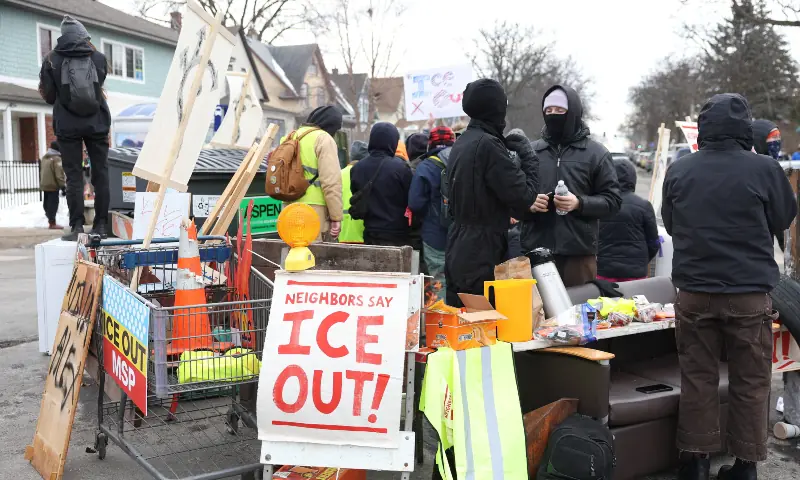
DHS said the initial focus would be on approximately 5,600 refugees in Minnesota who had not yet received green cards. The state has recently experienced heightened immigration enforcement activity.
Under US law, refugees are eligible to apply for lawful permanent residence one year after arriving in the country. Judge Tunheim noted that refugees cannot legally obtain green cards before that one-year mark. He said the administration was attempting to detain individuals immediately after the 366th day of lawful admission.
The judge ruled that the policy lacked clear authorization from Congress. He said it raised constitutional concerns and undermined long-standing refugee protections.
Refugees Challenge Arrest Policy in Class-Action Lawsuit
Refugees from Africa, Asia and Latin America filed a class-action lawsuit challenging the enforcement plan. They argued that the administration was wrongly asserting that immigration law allowed authorities to detain refugees who had not yet secured permanent residency.
The case was supported by the International Refugee Assistance Project. Lawyers for the plaintiffs said the policy created fear and uncertainty among refugee communities.
Judge Tunheim agreed with the plaintiffs’ arguments. He cited the Refugee Act of 1980, which guarantees refugees an opportunity to rebuild their lives in safety. He wrote that the court would not permit federal authorities to reinterpret the law in a way that contradicts congressional intent.
The judge emphasized that refugees were admitted to the United States under promises of protection. He said turning those promises into what he called a “dystopian nightmare” would violate both statutory and constitutional principles.
The administration did not immediately respond to requests for comment. Legal experts say the ruling represents a significant setback for expanded immigration enforcement efforts.
Broader Legal Battle May Expand Nationwide
Shortly after the Minnesota ruling, another group of refugees filed a broader lawsuit in federal court in Massachusetts. That case seeks to block the policy nationwide. Legal observers expect further court battles over the scope of federal immigration authority.
Kimberly Grano, a lawyer for the Minnesota plaintiffs, welcomed the decision. She said refugees can now live without fear of sudden detention. She added that families had been deeply worried about being separated from loved ones.
The ruling temporarily shields thousands of refugees in Minnesota from arrest under the new policy. However, the broader national implications remain uncertain.
Immigration policy continues to be a divisive issue in US politics. Courts are likely to play a central role in determining the limits of executive authority.
For now, the injunction provides relief to refugee communities in Minnesota. The legal fight over Operation PARRIS is expected to continue in federal courts.

