

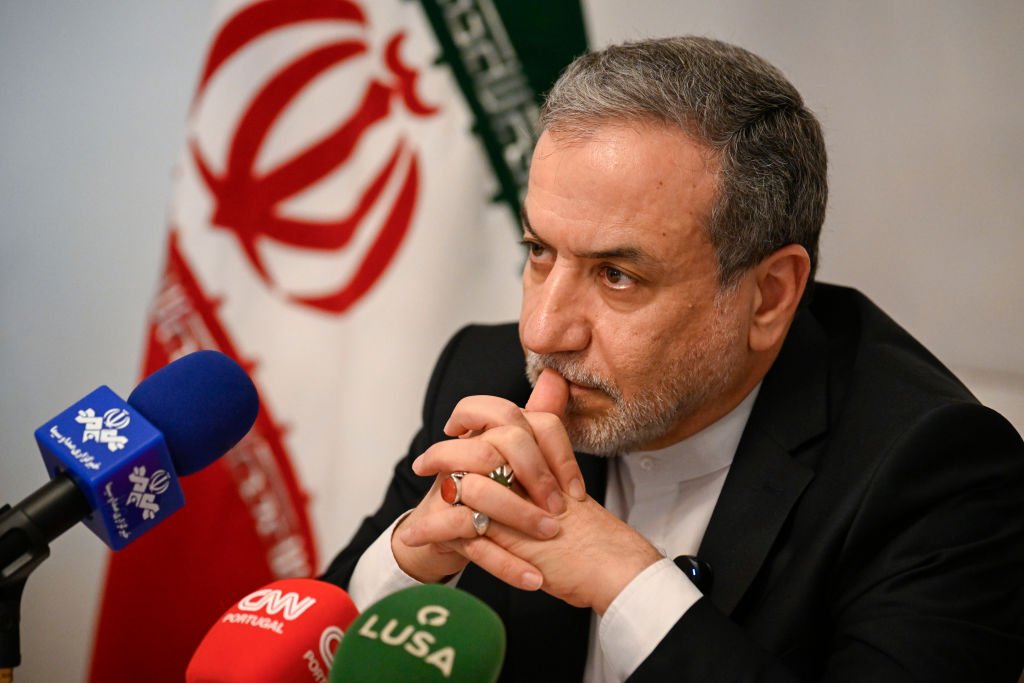

Iran’s Foreign Minister Abbas Araghchi has confirmed that the country’s top leadership remains alive following recent US-Israeli strikes. At the same time, he signaled conditional openness to de-escalation if military attacks stop.
Speaking from Tehran, Araghchi stated that nearly all senior officials survived the latest wave of strikes. He acknowledged that Iran may have lost one or two commanders. However, he stressed that key political leaders remain safe.
He confirmed that Supreme Leader Ayatollah Ali Khamenei and President Masoud Pezeshkian are alive. According to him, the government structure remains intact despite the attacks.
Iran Calls Strikes ‘Illegal’
Araghchi described the US-Israeli strikes as unprovoked and illegal under international law. He argued that Iran’s response targets American military bases strictly in self-defense.
“We cannot just sit and watch as they attack us,” he said, defending Iran’s missile strikes on US facilities in the region.
Nevertheless, he clarified that Iran does not seek broader confrontation. He emphasized that Tehran does not require outside assistance and remains capable of defending itself independently.
Conditional Openness to Talks
Despite escalating exchanges, Araghchi left the door open for diplomacy. He stated that Iran is ready for de-escalation, but only if attacks against it stop first.
“There is no communication right now,” he said. However, he added that if the United States wants dialogue, it knows how to reach him.
Furthermore, Araghchi noted that a deal remains possible regarding Iran’s nuclear program. He said such an agreement could guarantee that Iran’s program remains peaceful.
However, he made it clear that Iran will not give up uranium enrichment. He described enrichment as a sovereign right.
He also stated that Iran does not currently possess and will not build missiles capable of reaching the United States.
Rejecting Regime Change Rhetoric
Addressing speculation about political change in Tehran, Araghchi dismissed the idea of regime change as unrealistic. He argued that foreign leaders have no authority to decide Iran’s political future.
According to him, millions of citizens support the current system. Therefore, he described any attempt at forced political change as impossible.
He also suggested that external actors may have influenced the United States to enter the conflict. However, he did not name specific countries.
Concerns Over Disrupted Diplomacy
Araghchi criticized the timing of the strikes, noting that nuclear negotiations were ongoing. He argued that the attacks undermined diplomatic efforts aimed at peaceful resolution.
Meanwhile, missile exchanges between Iran, Israel, and the United States continue. Regional tensions remain high, and security concerns persist across the Middle East.
A Dual Message from Tehran
Iran’s latest statements present a dual message. On one hand, Tehran insists on defending itself against military pressure. On the other hand, it signals readiness to return to negotiations if aggression stops.
As the crisis unfolds, diplomatic channels may determine whether tensions ease or escalate further.
