

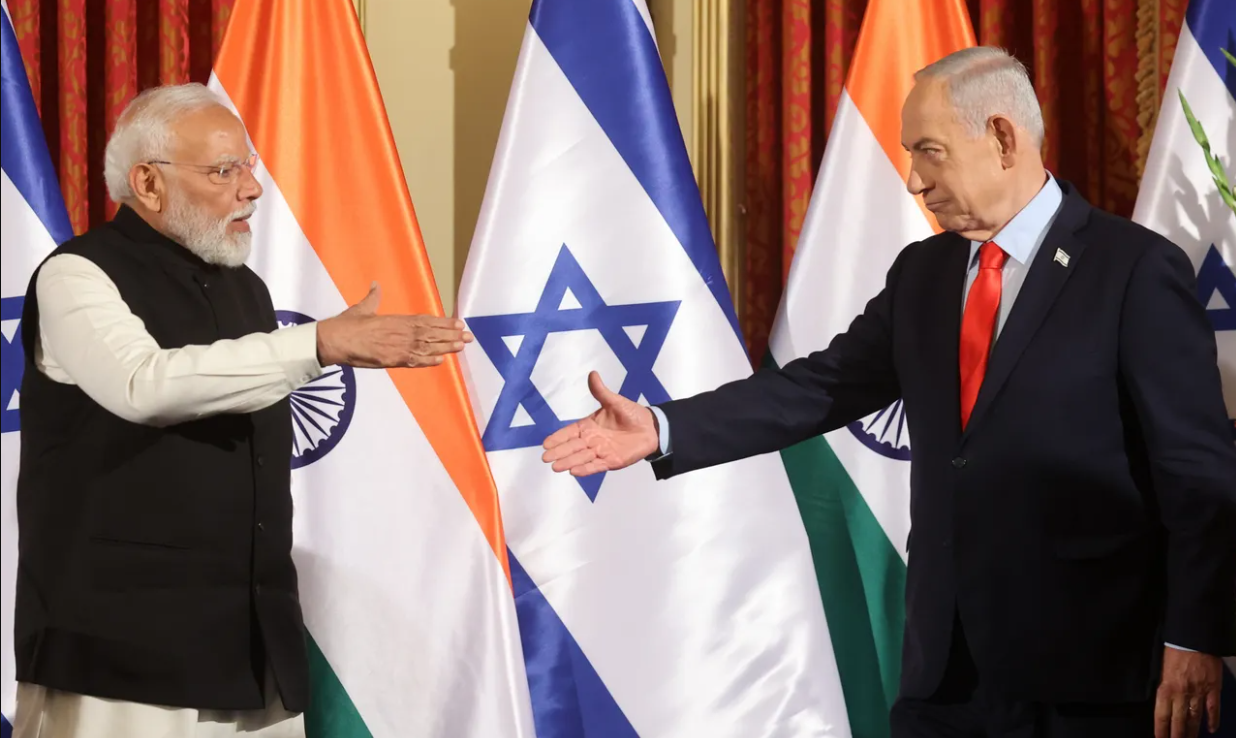

India and Israel strengthened their strategic partnership during Prime Minister Narendra Modi’s recent visit to Israel. Both sides signed 17 agreements covering trade, technology, cybersecurity, defence, and emerging sectors. They also agreed to work toward a future free trade agreement.
However, despite speculation in sections of Indian media, the visit did not result in any transfer of Israel’s Iron Dome missile defence system or its successor, Iron Beam. While defence cooperation expanded, officials did not finalize any deal involving these high-profile air defence platforms.
Why Iron Dome Was Not Included
Although India and Israel maintain close defence ties, legal and technical barriers complicate any Iron Dome transfer. Israel developed Iron Dome and Iron Beam with significant financial support and components from the United States. Therefore, American export-control laws require formal US approval before Israel can transfer such systems to a third country.
This regulatory framework limits Israel’s ability to share full design data or core technology without US oversight. As a result, discussions during Modi’s visit focused on broader cooperation rather than direct platform sales. Both countries emphasized joint development, production partnerships, and technology collaboration instead.
Iron Dome serves as Israel’s short-range air defence system. It detects incoming rockets, artillery shells, and drones through radar systems and launches interceptor missiles to destroy threats. Meanwhile, Iron Beam uses high-energy laser technology to target rockets and drones, offering a lower-cost alternative to missile interceptors.
Opposition Criticism and Worker Agreements
Modi’s visit also triggered strong reactions at home. Opposition leaders criticized the trip and questioned India’s shifting foreign policy priorities. They argued that the government moved away from India’s traditional diplomatic stance.
At the same time, Israel agreed to allow 50,000 additional Indian workers over the next five years, particularly in manufacturing sectors. This arrangement followed Israel’s earlier restrictions on Palestinian workers after October 2023. Consequently, India stepped in to supply labor for key industries.
Growing Strategic Alignment
Under Modi’s leadership, India and Israel have deepened cooperation across defence and technology sectors. Reports indicate that Indian firms exported arms-related items to Israel during the Gaza conflict. Additionally, reports suggest Israeli forces used AI-based weapons systems co-produced with an Indian company.
India also abstained from several United Nations resolutions critical of Israel, including a 2024 General Assembly vote calling for an immediate and permanent ceasefire in Gaza. In December 2024, India defended its defence supplies to Israel by citing national interests and international commitments.
Although the visit strengthened bilateral ties, it stopped short of delivering the highly anticipated Iron Dome system. Instead, both nations chose to expand cooperation within legal and strategic limits.
