

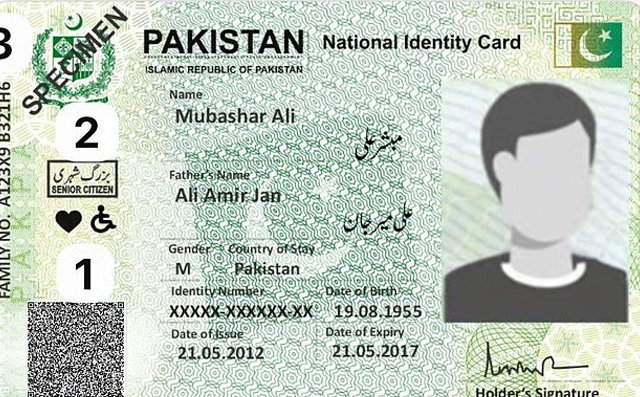

In a significant move toward a unified and digitally secure identity ecosystem, the Federal Government has formally upgraded Pakistan’s National Identity Card (NIC) and Pakistan Origin Card (POC) frameworks. The amendments introduce a suite of modern features including QR-based verification, enhanced biometric security, stronger fraud prevention measures, and citizen-friendly services designed to reduce administrative burdens on vulnerable populations.
The reforms, enacted in 2026, represent the most comprehensive update to Pakistan’s national identity system in years, reinforcing the legal and technological foundations that underpin everything from voting rights to financial transactions and government service delivery.
QR Code Becomes Standard
A centerpiece of the reform is the statutory adoption of the Quick Response (QR) code as a secure, machine-readable feature on all identity documents. The QR code enables instant verification of encoded identity information through both online and offline channels, significantly reducing the time and manual handling required for identity checks.
Crucially, the QR system replaces the previous dual-format approach that required separate chip and non-chip cards. All citizens will now receive a uniform identity document with consistent security features, eliminating the complexity and cost of maintaining parallel systems.
The rules also grant the National Database and Registration Authority (NADRA) the flexibility to adopt “QR code or any other technological feature” in the future, allowing the system to incorporate innovations—such as blockchain-based verification or advanced encryption methods—without requiring repeated legal amendments.
Strengthening the Digital ID Ecosystem
The QR-enabled system integrates with Pakistan’s National Data Exchange Layer, creating a seamless verification infrastructure that supports both government agencies and private sector partners. Fast offline and online verification reduces reliance on paper documents and manual inspection, lowering the risk of fraud and impersonation.
Fraud controls have been significantly tightened under the new framework. The rules now stipulate that any suspended card immediately loses all verification and authentication privileges across digital and institutional channels. This real-time revocation prevents the misuse of compromised or fraudulent cards, closing a vulnerability that existed in previous systems where suspension notices could take days or weeks to propagate through all verification points.
Biometric Security Upgrades
Biometric security has been formally upgraded through the recognition of both fingerprints and iris scans as official authentication methods. This multi-modal approach enhances security by providing redundancy—if one biometric trait is damaged or unavailable, the other can be used for verification.
The inclusion of iris recognition is particularly significant for populations such as manual laborers whose fingerprints may be worn down, or for elderly citizens whose fingerprints may have faded. It also strengthens the system against spoofing attempts, as iris patterns are exceptionally difficult to replicate.
Citizen-Friendly Services
The amendments introduce several measures designed to make life easier for ordinary Pakistanis. Most notably, citizens aged 60 and above will now receive lifetime-valid ID cards marked with a distinct senior-citizen logo. This eliminates the burden of periodic renewals for elderly citizens, many of whom face mobility challenges or live in areas with limited access to NADRA offices.
For residents of Pakistan-administered Azad Jammu and Kashmir, the reforms introduce standardized identification that ensures uniform geographic representation on identity documents, resolving previous inconsistencies in how the region was referenced across different card types.
Modernized Document Formats
The government has further modernized specimen formats for all major ID categories, creating a cohesive, modern identity document framework. The updated categories include:
Resident citizens
Overseas Pakistanis
Child registration certificates
Persons with disabilities
Organ donors
Combined categories for individuals with multiple status designations
Each format now incorporates QR-based security features and updated layouts, ensuring that regardless of which document a citizen holds, it meets the same security standards and verification capabilities.
Preparing for Digital Governance
These 2026 amendments position Pakistan’s national identity system as a foundation for broader digital governance initiatives. With secure, real-time verification capabilities, the updated framework enables everything from paperless government services to secure financial inclusion and remote authentication for overseas Pakistanis.
By reducing fraud risks, improving citizen services, and building flexibility into the legal framework, Pakistan has taken a significant step toward an integrated digital identity ecosystem that can evolve alongside technological change. The QR code may be today’s standard, but the system is now designed to accommodate whatever comes next.
