


Roberts Says President Exceeded Authority Without Congress
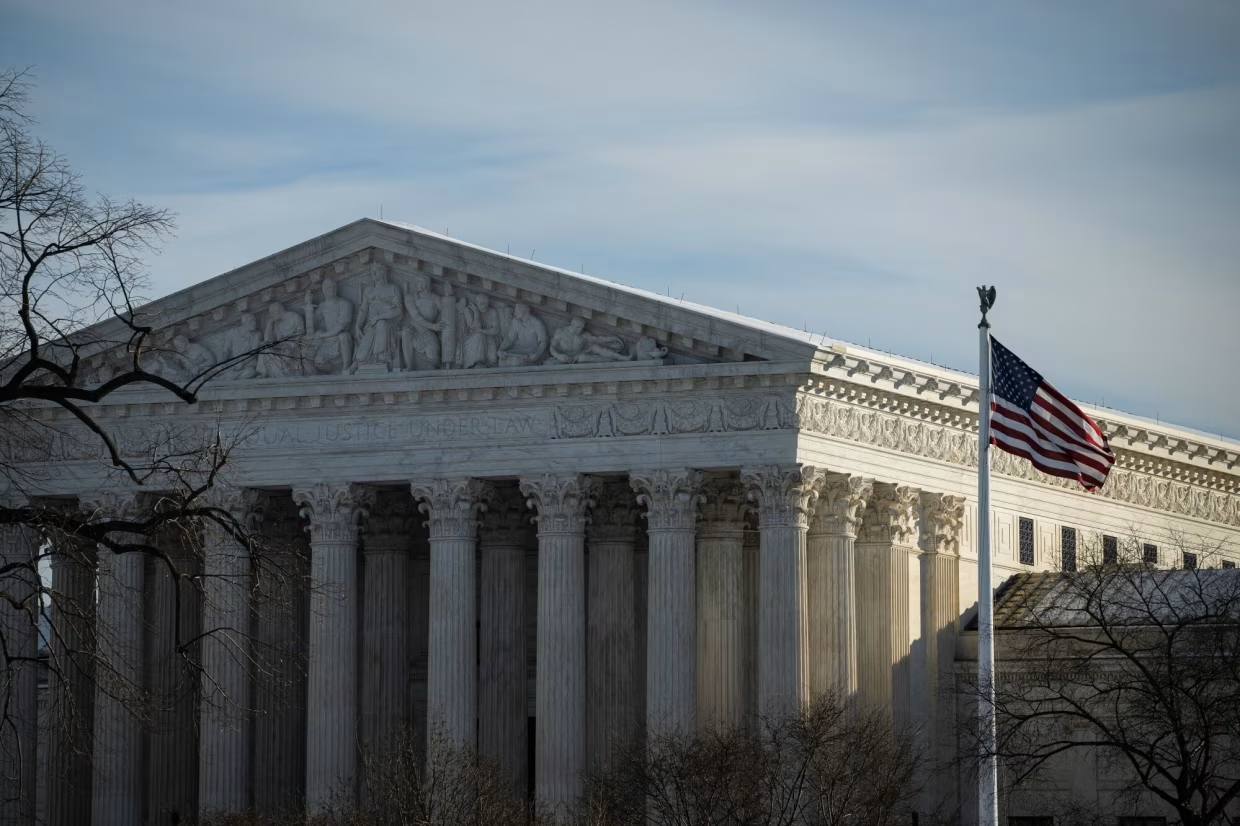
WASHINGTON — The Supreme Court ruled Friday that President Donald Trump violated federal law by unilaterally imposing sweeping global tariffs, delivering a significant setback to the White House on a cornerstone policy issue.
In a 6-3 decision, the court held that the president exceeded his statutory authority when he invoked emergency powers to enact broad trade levies. Chief Justice John Roberts wrote the majority opinion, concluding that Trump failed to demonstrate clear congressional authorization for such expansive action.
“The president asserts the extraordinary power to unilaterally impose tariffs of unlimited amount, duration, and scope,” Roberts wrote. He added that, given the constitutional framework and historical limits on executive authority, the administration needed explicit approval from Congress. The emergency authority cited by Trump, the court determined, “falls short.”
Decision Marks Rare Defeat for Administration
The ruling represents one of the most consequential losses for Trump’s second administration at a court that has frequently sided with him. Last year, the conservative majority supported the president in several high-profile emergency cases involving immigration enforcement, dismissals of independent agency leaders and reductions in federal spending.
However, the justices drew a clear line on trade powers, emphasizing that tariff authority rests primarily with Congress under the Constitution. While presidents may act during genuine national emergencies, the court signaled that such authority has limits and must align with statutory language.
The decision could reshape ongoing trade negotiations and force the administration to seek legislative backing for future tariff measures. Moreover, it reinforces judicial oversight of executive power in economic policymaking, particularly when actions carry broad domestic and international consequences.
