


Crackdown at Home, Pressure Abroad Test Supreme Leader’s Grip
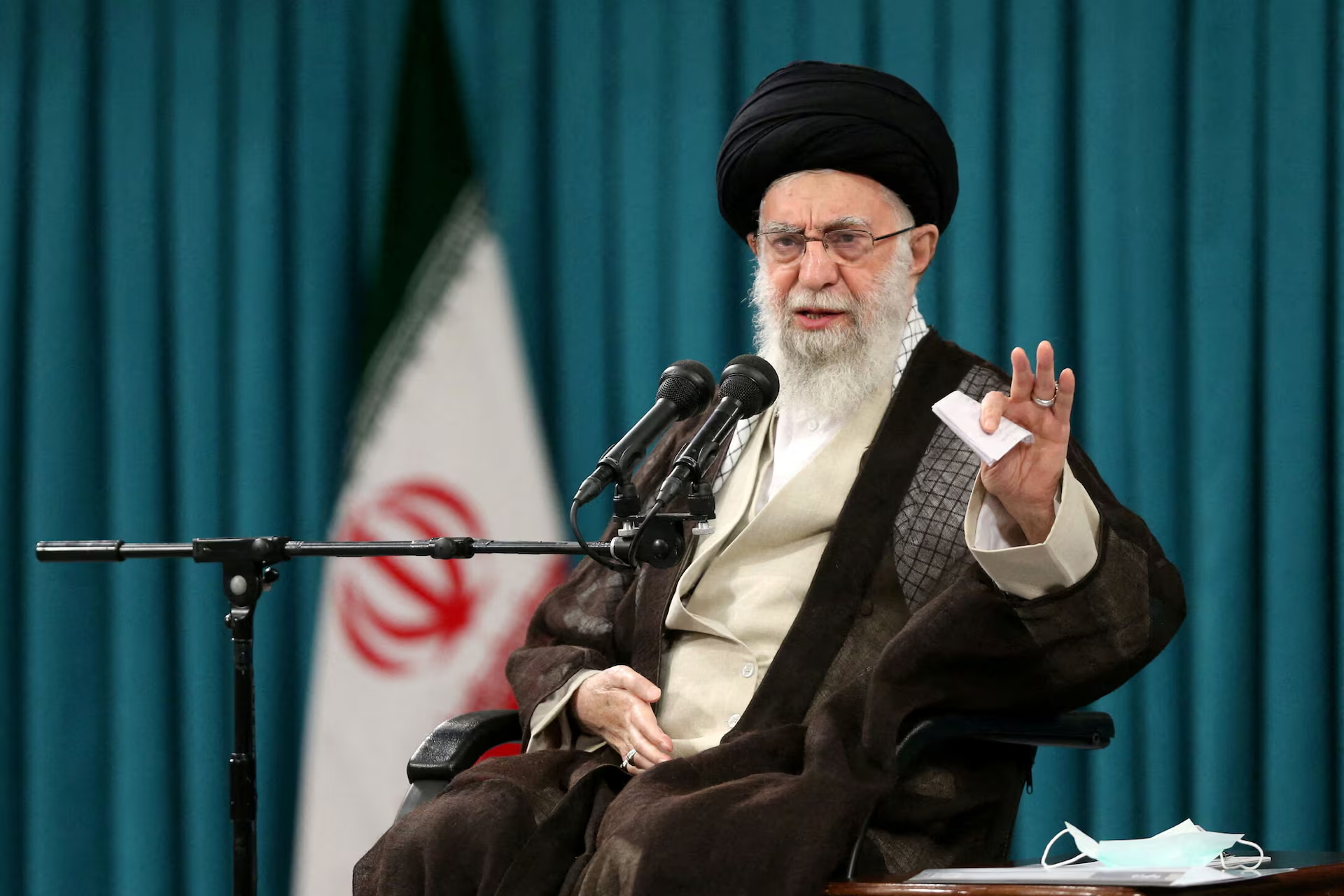
Feb 20 — Iran’s Supreme Leader Ayatollah Ali Khamenei confronts the most severe crisis of his 36-year rule as U.S. airstrike threats loom and domestic unrest simmers. While Iranian envoys race to ease tensions through talks, regional instability and economic hardship intensify pressure on the 86-year-old leader.
In January, authorities crushed massive protests in the deadliest crackdown since the 1979 Islamic Revolution. Security forces opened fire after demonstrators chanted against Khamenei, leaving thousands dead. Meanwhile, sanctions continue to batter Iran’s economy, deepening public anger.
Externally, Israeli and U.S. strikes last year damaged key nuclear and missile facilities. In addition, Iran’s regional influence has weakened. Hezbollah has suffered setbacks in Lebanon, Syria’s Bashar al-Assad has fallen, and other Tehran-backed groups face mounting challenges.
Nevertheless, Khamenei refuses to negotiate limits on Iran’s ballistic missile arsenal, which he views as a vital deterrent against Israel. Although Tehran has signaled possible concessions on its nuclear programme, it maintains that its activities remain civilian.
Power Built on Security and Strategic Flexibility
Since assuming leadership in 1989, Khamenei has consolidated authority over Iran’s government, military and judiciary. While elected officials manage daily governance, he controls major policy decisions, especially those involving the United States.
Over time, he strengthened his rule by empowering the Revolutionary Guards and the Basij militia to suppress dissent, including protests in 2009, 2022 and this year. Furthermore, his financial network, Setad, has expanded significantly, reinforcing his influence.
Despite ideological rigidity, Khamenei has occasionally shown tactical pragmatism. He endorsed the 2015 nuclear deal to ease sanctions, invoking “heroic flexibility” when survival demanded compromise. Now, as U.S. military pressure builds, his next move may determine both his legacy and regional stability.
