

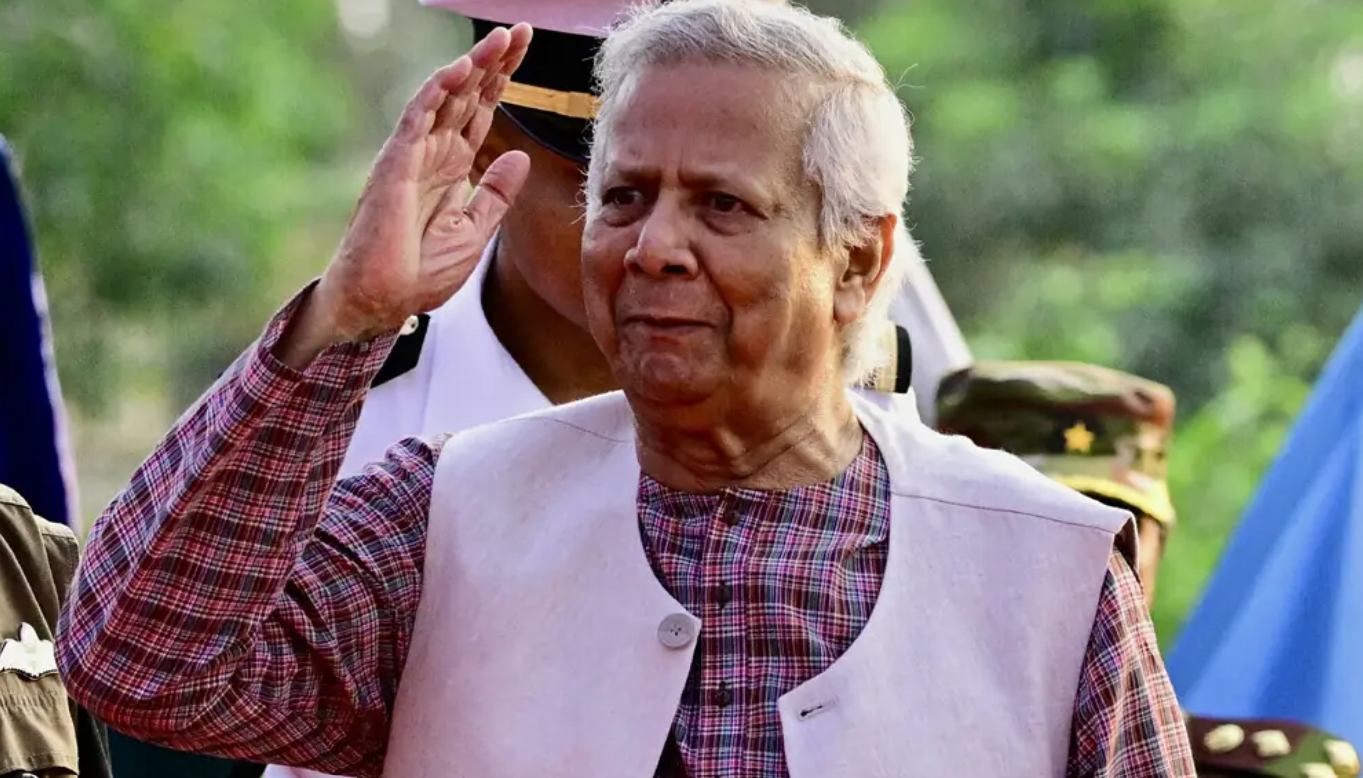

Muhammad Yunus has stepped down as Bangladesh’s interim leader. He made the announcement during a farewell address to the nation.
“Today, the interim government is stepping down,” he said. However, he urged citizens to protect democracy and freedom of speech.
Yunus emphasized that fundamental rights must continue without interruption. Therefore, he called on the incoming leadership to preserve democratic progress.
At 85, the Nobel Peace Prize laureate leaves office after guiding the country through a turbulent transition.
From Uprising to Interim Leadership
Yunus returned to Bangladesh in August 2024. His return followed the overthrow of Sheikh Hasina’s government.
A student-led uprising forced Hasina to leave the country. Consequently, Yunus assumed leadership as chief adviser of the interim administration.
He described that moment as a day of liberation. Moreover, he praised the youth for their decisive role in political change.
Since then, he has overseen the country’s transition toward fresh elections and institutional reforms.
BNP Secures Landslide Victory
The Bangladesh Nationalist Party secured a sweeping victory in the recent elections. Yunus congratulated the BNP and its leader Tarique Rahman.
He described the election as a commendable example of democratic participation. Furthermore, he said the process set a benchmark for future polls.
The BNP alliance won 212 seats. In comparison, the Jamaat-e-Islami-led alliance secured 77 seats.
Rahman, 60, will now lead the nation of 170 million people. Newly elected lawmakers are expected to take oath on Tuesday.
Reform Agenda Gains Public Backing
On election day, voters also endorsed a national referendum on sweeping reforms. The document, known as the July Charter, outlines major constitutional changes.
It proposes term limits for prime ministers and the creation of an upper parliamentary house. Additionally, it calls for stronger presidential powers and greater judicial independence.
Yunus said his administration did not start from zero. Instead, it inherited institutional deficits and political instability.
He claimed his government rebuilt key institutions and laid foundations for reform. However, the new parliament must ratify the proposed changes.
Although some parties raised concerns before the vote, the referendum received approval. Therefore, winning parties are expected to honor its provisions.
Campaign Turbulence but Calm Voting Day
Political tensions marked the campaign period. Clashes reportedly killed five people and injured more than 600.
Despite earlier unrest, voting day remained largely peaceful. Moreover, the public responded to results with relative calm.
Jamaat leader Shafiqur Rahman conceded defeat. He stated his party would serve as a peaceful and principled opposition.
A Turning Point for Bangladesh
Yunus framed his resignation as a step toward democratic continuity. While his interim role ends, the reform process continues.
The transfer of power marks a significant political transition. Furthermore, it reflects public endorsement of electoral and constitutional reform.
As Tarique Rahman prepares to assume office, expectations remain high. Citizens now look to the new government for stability and sustained democratic governance.
Ultimately, Muhammad Yunus resignation Bangladesh signals the close of a transitional chapter. However, it also opens the door to a new era shaped by electoral legitimacy and reform commitments.
