

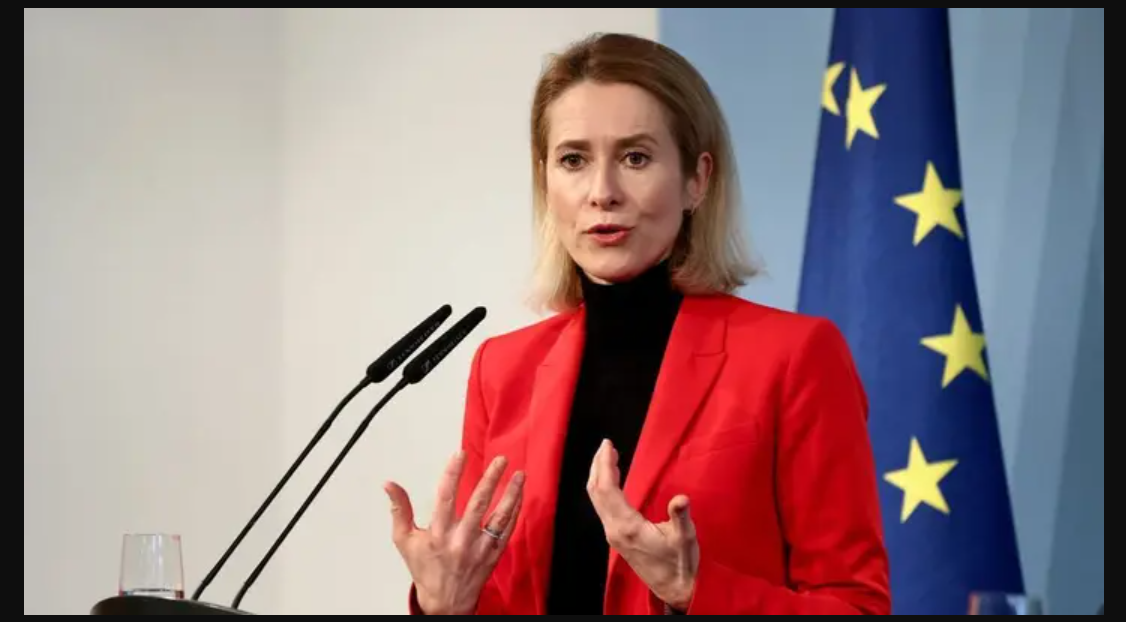

The European Union appears reluctant to assign a fixed membership date to Ukraine. EU foreign policy chief Kaja Kallas indicated that member states are not ready to offer a concrete timeline.
Speaking at a major security forum, Kallas said significant work remains before accession can advance. She emphasized that EU enlargement follows a merit-based process. Therefore, progress depends on reforms and legal alignment with EU standards.
Ukraine, however, continues to push for clarity. President Volodymyr Zelenskiy has requested a firm date as part of broader security guarantees. He views membership as a cornerstone of a future peace arrangement with Russia.
Ukraine’s Push for 2027 Membership
Diplomatic discussions have referenced 2027 as a potential accession year. This timeline reportedly appeared in a broader peace framework involving the United States, Ukraine, and the European Union.
The proposed date aims to strengthen Ukraine’s economic recovery after the war. Moreover, it seeks to anchor the country firmly within Western institutions.
However, several EU governments consider the 2027 target unrealistic. EU accession requires candidate states to harmonize laws and institutions with EU standards. This process often takes years.
Consequently, many member states resist committing to a specific deadline. They argue that progress must determine timing rather than political urgency.
Enlargement Tied to Broader Regional Dynamics
Latvian President Edgars Rinkevics echoed similar concerns. He acknowledged Ukraine’s importance to the European Union. However, he also noted that leaders show little readiness to accept a fixed date.
At the same time, Rinkevics pointed out that the EU has demonstrated flexibility in past crises. He suggested that creative solutions could emerge if circumstances demand them.
Nevertheless, enlargement remains sensitive. Western Balkan states and Moldova have long awaited membership progress. Therefore, any accelerated timeline for Ukraine could raise concerns among other candidates.
Balancing fairness and geopolitical urgency remains a complex challenge for EU leaders.
Peace Deal Uncertainty Complicates Prospects
Ukraine’s membership aspirations remain closely linked to the war’s outcome. Many observers believe accession discussions depend on a viable peace agreement.
Rinkevics expressed skepticism about an imminent breakthrough. He suggested that if Russia does not shift its position, a comprehensive peace deal may remain out of reach.
Without peace, the broader political environment could limit progress. Therefore, EU leaders must weigh both legal criteria and security realities.
Ukraine’s Strategic Shift Toward the West
Ukraine formally applied for EU membership days after Russia launched its full-scale invasion in February 2022. The move reflected Kyiv’s determination to strengthen political and economic ties with the West.
Since then, Ukraine has accelerated reform efforts despite wartime challenges. However, internal EU disagreements persist. Hungary, for instance, has blocked the launch of detailed membership negotiations.
These political obstacles add another layer of complexity. Consequently, accession talks may advance gradually rather than rapidly.
A Delicate Balancing Act for the EU
The European Union faces a difficult decision. On one hand, it seeks to demonstrate solidarity with Ukraine. On the other hand, it must preserve the integrity of its enlargement process.
Kallas’s remarks highlight this balancing act. While support for Ukraine remains strong, consensus on a specific timeline does not yet exist.
Ultimately, Ukraine’s path toward membership will depend on reforms, political unity within the EU, and developments in the war. For now, a concrete date remains uncertain, even as diplomatic engagement continues.
