

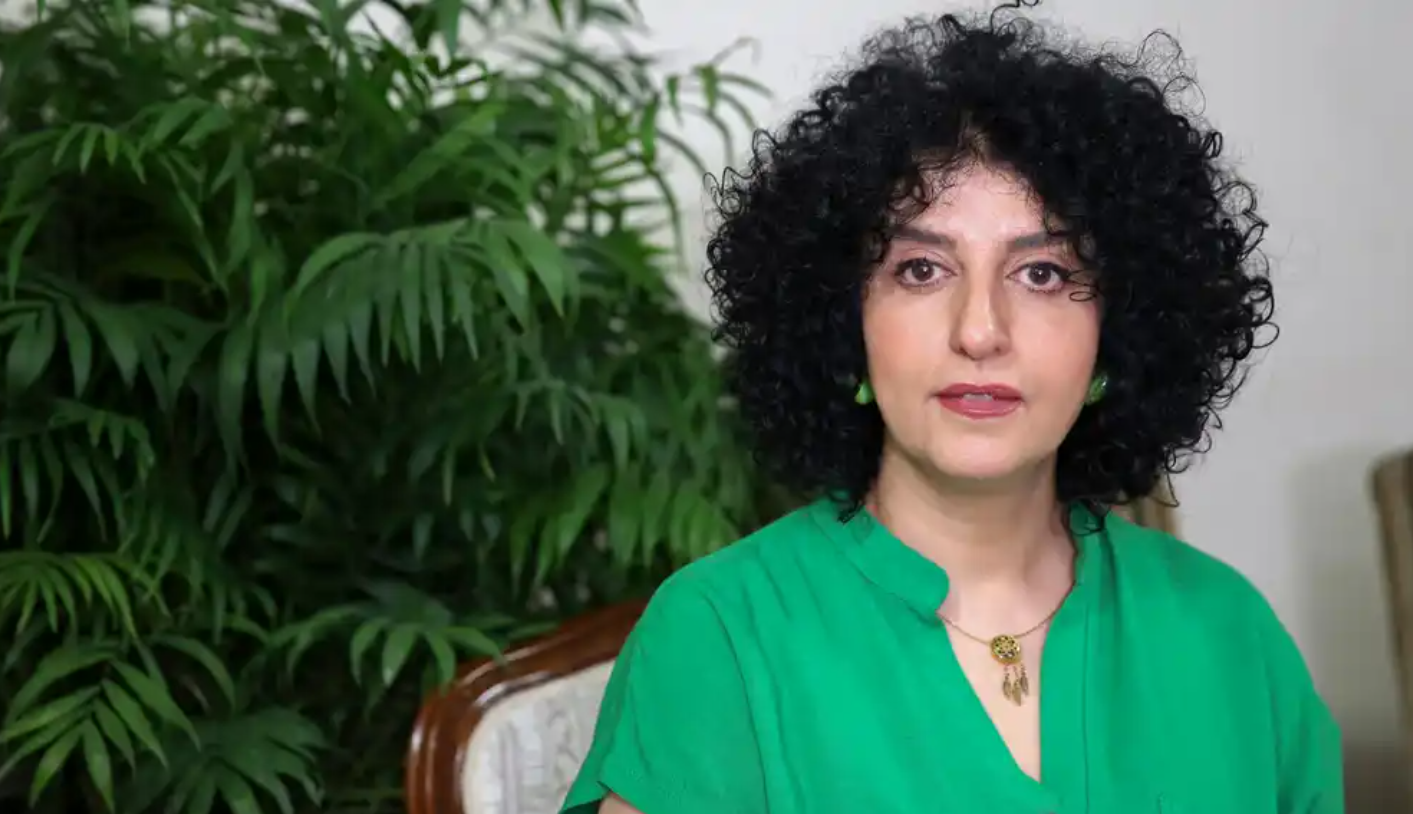

Iranian human rights activist and Nobel Peace Prize winner Narges Mohammadi has received a new prison sentence of 7.5 years. She informed her lawyer during a brief phone call from prison on Saturday. The activist recently ended a week-long hunger strike to protest her detention. Supporters say the sentence is part of Iran’s ongoing crackdown on dissent and women’s rights advocacy.
Details of Sentence and Restrictions
Mohammadi was sentenced to six years for assembly and collusion against national security. She also received one and a half years for alleged propaganda against the government. Additionally, she faces two years of internal exile in Khusf and a two-year travel ban. The restrictions limit her advocacy and movement after release.
Arrest Linked to Memorial Speech
Mohammadi was arrested on December 12 after condemning the suspicious death of lawyer Khosrow Alikordi. Authorities claimed her memorial speech encouraged slogans that “disturbed the peace.” She has been held in a Mashhad detention center with highly restricted communication. Her brief phone call this week was the first opportunity to speak with her lawyer.
Hunger Strike Highlights Prison Conditions
Mohammadi conducted a week-long hunger strike protesting total isolation and restricted communication. She ended it after speaking briefly to her lawyer. Human rights groups highlight her case as an example of psychological pressure on political prisoners. Her health remains a concern under harsh prison conditions.
Context of Wider Crackdown
Mohammadi’s sentencing coincides with intensified government actions following anti-government protests in late December. Several activists have been arrested, and public gatherings restricted. Human rights organizations warn these measures aim to silence peaceful dissent. Mohammadi’s case has gained global attention as a symbol of Iran’s oppression of human rights defenders.
International Recognition and Symbolism
Mohammadi won the Nobel Peace Prize in 2023 while imprisoned for advocating women’s rights and abolishing the death penalty. The award recognized her courage in fighting systemic oppression. Despite international attention, she continues to face legal and political persecution. Her struggle highlights ongoing human rights challenges in Iran.
