

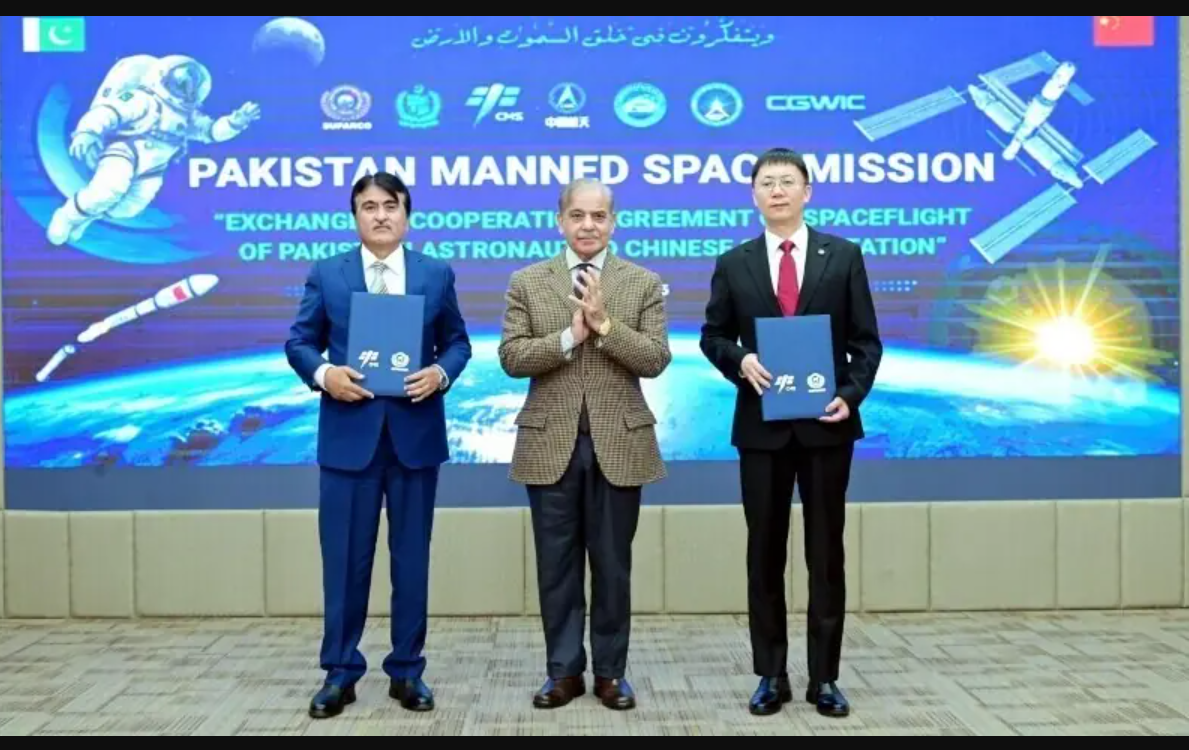

Pakistan has moved a significant step closer to its first human spaceflight mission. The Pakistan Space and Upper Atmosphere Research Commission (Suparco) successfully completed the second phase of astronaut candidate selection. This achievement marks a key milestone in Pakistan’s Human Spaceflight Programme.
Following an initial screening in Pakistan, two candidates were shortlisted. They underwent comprehensive medical, psychological, and aptitude assessments at the Astronauts Centre of China (ACC). The evaluations followed international human spaceflight standards, ensuring the candidates meet rigorous requirements.
Advanced Training at China’s Astronaut Centre
The two shortlisted astronauts will now undergo six months of advanced training at the ACC. The training includes simulation exercises, zero-gravity preparation, and other essential spaceflight protocols. Upon completion, one candidate will be selected to fly aboard the Chinese Space Station (CSS). The mission is scheduled for October or November 2026, depending on training outcomes.
This phase emphasizes Pakistan’s commitment to advancing its human spaceflight capabilities and fostering international collaboration.
Bilateral Cooperation and Strategic Support
The spaceflight initiative stems from the Astronaut Cooperation Agreement signed in February 2025. The agreement, led by Prime Minister Shehbaz Sharif, reflects Pakistan’s strategic vision for scientific advancement. It also highlights the government of China’s support, which selected Pakistan as the first foreign partner in its astronaut programme.
The collaboration underscores growing bilateral relations in science, technology, and space exploration. Experts note that Pakistan’s involvement positions the country as a rising player in global human spaceflight efforts.
Significance for Pakistan’s Space Ambitions
The development represents a landmark achievement for Pakistan’s space ambitions. It demonstrates the country’s capability to meet international spaceflight standards and operate in advanced technological domains. The program also opens opportunities for future cooperation in scientific research, astronaut training, and space missions.
Suparco officials emphasized that the programme is aligned with Pakistan’s long-term strategy to expand its presence in outer space. Moreover, it reflects a growing focus on STEM education and aerospace technology development within the country.
Looking Ahead
As the training progresses, public interest in Pakistan’s first astronaut mission is increasing. The shortlisted candidates symbolize national pride and scientific progress. Their eventual participation in a Chinese space mission will mark Pakistan’s historic entry into human space exploration.
This initiative could inspire future generations and strengthen Pakistan’s role in international space cooperation.
