

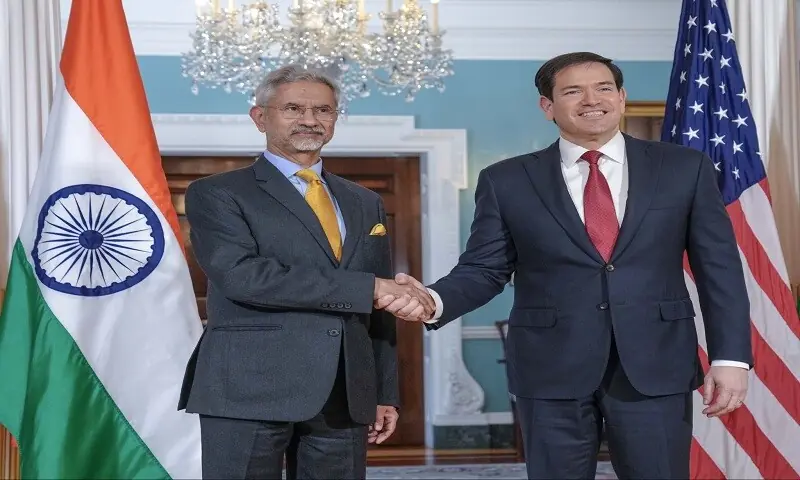

The United States and India held high-level talks in Washington . They focused on cooperation in critical minerals, trade, and strategic ties. The meetings came after a recently signed bilateral trade deal, which has drawn attention across the region.
US Secretary of State Marco Rubio met Indian External Affairs Minister Subrahmanyam Jaishankar during his three-day visit. Together, they aimed to strengthen economic and strategic ties in the Indo-Pacific. In particular, they discussed ways to boost collaboration in emerging sectors.
The US State Department said Secretary Rubio and Minister Jaishankar discussed formalizing cooperation on critical minerals. This includes exploration, mining, and processing. As global supply chains shift, the topic has become increasingly important. Moreover, competition for resources needed for energy transition is intensifying.
Trade agreement and economic opportunities
The meeting followed the conclusion of a long-pending trade agreement between Washington and New Delhi. Under the deal, the United States agreed to reduce tariffs on Indian goods to 18 percent after nearly a year of negotiations.
Secretary Rubio and Minister Jaishankar welcomed the agreement. They emphasized that democratic cooperation can unlock new economic opportunities and strengthen energy security. Rubio later posted on social media, noting the discussion covered critical minerals and ways to expand trade ties.
Jaishankar described the talks as wide-ranging. He said they discussed trade, energy, nuclear, defense, critical minerals, and technology. Additionally, both sides agreed to hold early meetings of mechanisms to advance shared interests.
Strategic coordination and regional cooperation
The talks also reaffirmed the countries’ commitment to the Quadrilateral Security Dialogue (Quad), which includes the United States, India, Japan, and Australia. Officials said the leaders stressed that a prosperous Indo-Pacific is vital for their shared interests.
Meanwhile, diplomatic observers in Washington noted that the trade deal is unlikely to affect recently improved ties between Pakistan and the United States. These relations are independent of India. Furthermore, regional developments in South and Central Asia, along with the Middle East, have increased Pakistan’s strategic importance in Washington’s calculations.
Pakistan also participated in the critical minerals discussions. It aims to position itself as a key destination for strategic mineral investment. The country has signed deals worth $500 million with US partners for developing and processing critical minerals.
In addition, the US and India highlighted the importance of collaboration in technology, energy, and defense. They also stressed regional stability and shared economic growth as top priorities.
