

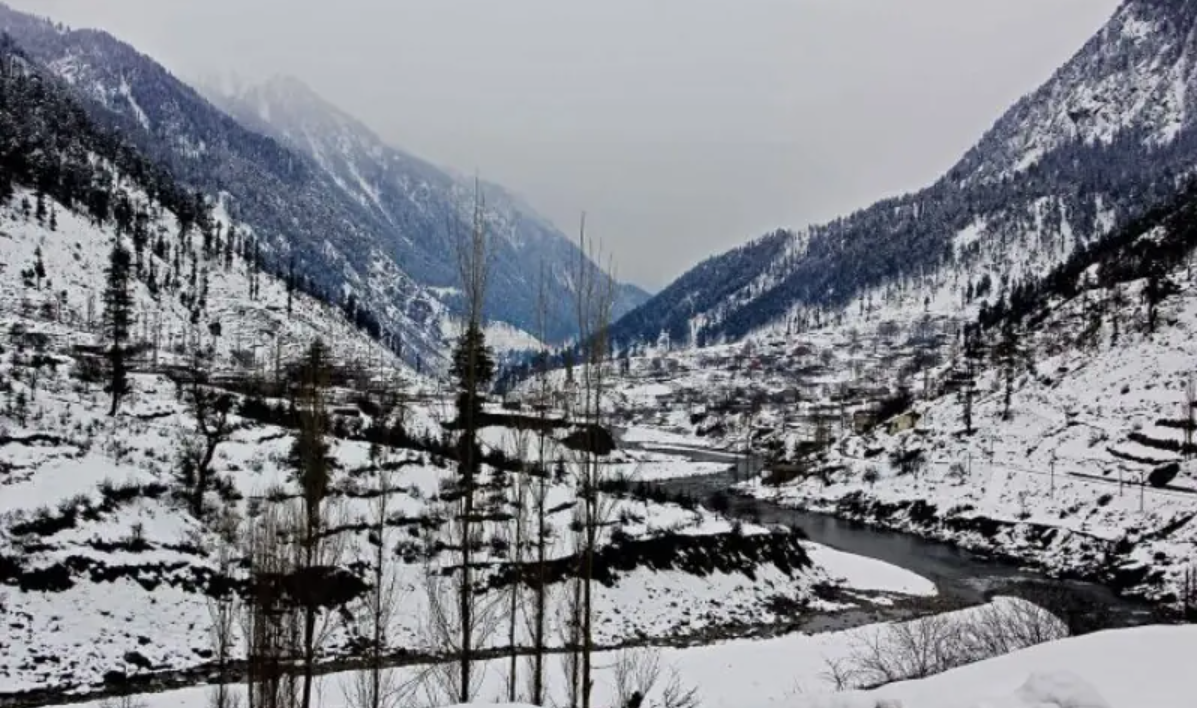

Heavy Snowfall Disrupts Life Across Northern Pakistan and Balochistan
A fresh wave of snowfall has disrupted daily life across several parts of northern Pakistan and Balochistan. As a result of freezing temperatures, closed highways, and extended power cuts, the public’s suffering has increased. Snow fell for two consecutive days in many regions, prompting authorities to restrict travel and issue safety advisories.
Furthermore, major roads, including the Karakoram Highway, closed due to snow accumulation and slippery conditions. Officials also warned that traveling in mountainous regions remains perilous as temperatures plunge far below freezing.
Gilgit-Baltistan Struggles Amid Extreme Cold and Road Closures
In Gilgit-Baltistan, snowfall brought routine life to a standstill in multiple districts. Meanwhile, temperatures in upper regions dropped below minus 15 degrees Celsius. Police reported up to six inches of snow in Skardu, Astore, Hunza, Nagar, Ghizer, Shigar, Ghanche, and Kharmang.
Consequently, the Karakoram Highway, Ghizer-Shandur Road, Baltistan Road, and several link routes became blocked. Authorities suspended travel between Gilgit-Baltistan and other parts of the country at several points. They also warned of rockfall risks, particularly in the Gilgit-Kohistan section of the highway.
Residents stated that snowfall further worsened existing problems. In Astore, snow cut off roads to Shounter, Rattu, Minimarg, Gultari, and other areas, leaving many villages inaccessible and raising concerns about food and fuel shortages.
Similarly, in Hunza, Nagar, and Ghanche, icy roads created hazardous conditions. Additionally, earthquake-affected families in Chipurson and flood-hit communities in Ghizer faced severe difficulties. Many residents still live in tents or temporary shelters, and blocked roads slowed relief operations.
In Diamer, snowfall paralyzed upper areas including Babusar, Tangir, and Daril. Moreover, electricity outages added to residents’ worries, while police reported that disrupted communication links increased fears of isolation.
In response, Caretaker Chief Minister Justice (retd) Yar Muhammad instructed departments to clear snow from highways urgently. He also urged residents to avoid unnecessary travel and directed authorities to use all available resources to reduce public hardship.
Murree Records Heavy Snow as Authorities Restore Traffic
Murree and surrounding hill areas received heavy snowfall. In particular, the Murree observatory recorded nine inches, while upper hills received one to two inches. Temperatures also dropped to minus three degrees Celsius.
Initially, the district administration temporarily restricted traffic, but it later reopened the GT Road after snowfall subsided. Meanwhile, officials kept the Murree Expressway open throughout, although some link roads remained snow-covered as clearing work continued.
Deputy Commissioner Agha Zaheer Shirazi confirmed that hospitals remained fully functional and medicine supplies were adequate. He also added that no major electricity breakdowns occurred, and officials deployed on roads assisted travellers.
Furthermore, Divisional Commissioner Amir Khattak visited Murree to review arrangements. He directed authorities to keep machinery ready and clear roads quickly. He also advised tourists to follow official guidelines and avoid unnecessary travel.
Quetta and Northern Balochistan Covered in White
In Balochistan, heavy snowfall hit Quetta and nearby areas. Snow began around midnight and continued until noon with short breaks. Consequently, many residents welcomed the snow, which ended a long dry spell.
Snowfall forced the closure of the Quetta-Ziarat Road, temporarily suspending traffic in Ziarat. In addition, snow blanketed Hanna in Urak Valley, attracting families from Quetta eager to enjoy the winter scenery.
Authorities also reported snowfall in Zhob, Qila Abdullah, Chaman, Khojak Pass, Muslim Bagh, Qila Saifullah, Harnai, Kalat, Mastung, and other towns. As a result, snow affected the Quetta-Zhob-Dera Ismail Khan highway, disrupting inter-provincial travel.
Overall, authorities remain on alert as cold weather persists across the region. Meanwhile, emergency teams continue to monitor highways, restore power, and ensure public safety.
