

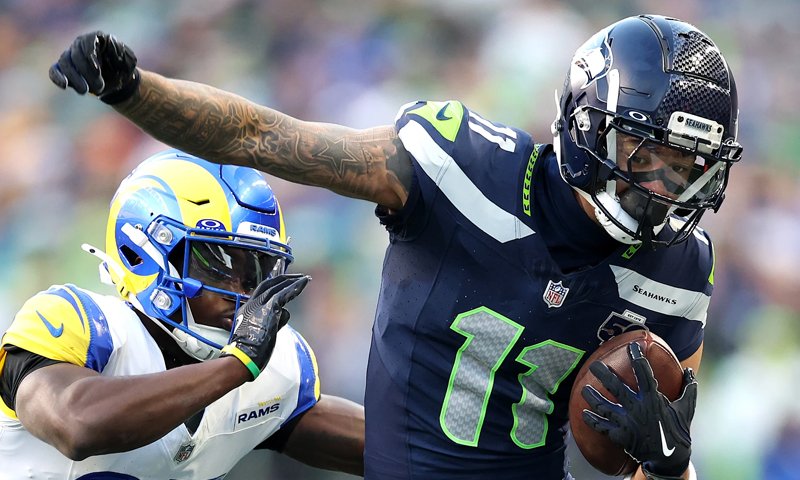

The Los Angeles Rams losing to the Seattle Seahawks wasn’t surprising on its own. These two teams played each other close throughout the season, splitting the first two meetings before Seattle claimed the rubber match when it mattered most — in the playoffs.
What was predictable, however, was how the Rams lost. The same glaring issues that haunted Los Angeles all season reappeared on the biggest stage. Some of these problems were rooted in offseason decisions, others were temporarily patched during the year, but none were fully solved.
Here are the three major areas that ultimately sent the Rams home early — and why they were season-long concerns.
1. Special Teams Woes Finally Caught Up to LA
The Rams began the season with Chase Blackburn as special teams coordinator before firing him and promoting Ben Kotwica, along with making changes at specialist positions:
-
Long snapper: Alex Ward → Jake McQuaide
-
Kicker: Josh Karty → Harrison Mevis
While the field-goal operation stabilized, the rest of the unit remained a liability. Just weeks earlier, LA surrendered a punt return touchdown to Rashid Shaheed — a play that effectively cost them the NFC West title and home-field advantage.
The problems didn’t stop there. The Panthers blocked a punt in the opening playoff round. The following week, Ethan Evans shanked a punt that gifted Chicago favorable field position, leading directly to points.
Against Seattle, the return game imploded again. Xavier Smith fumbled twice on punt returns. He recovered the first, but the second handed the Seahawks the ball deep in Rams territory. Seattle capitalized immediately, scoring a touchdown that pushed the game out of reach.
There’s a sense of poetic justice here. The Rams have consistently underinvested in special teams coaching and specialists, and it has plagued them for years. This loss should force the organization to finally address a long-neglected area.
2. Cornerback Depth Was Never Truly Fixed
One of the biggest surprises of the 2025 offseason was how little the Rams did to improve at cornerback. Claiming Emmanuel Forbes off waivers was a low-risk move, but expecting him to develop into a reliable starter was optimistic at best.
Re-signing Ahkello Witherspoon late in his career felt like a temporary solution. Cobie Durant emerged as the best of the group, but his undersized frame and inconsistent play made him volatile.
The Rams may have hoped the trade deadline would offer answers. Instead, they acquired Roger McCreary from Tennessee — and barely used him. McCreary didn’t see extended action until the playoffs, and even then the coaching staff seemed unsure who their top two outside corners actually were.
Looking ahead, the situation remains bleak. Only Forbes, Darious Williams, Josh Wallace, and Quentin Lake (if counted as a corner) are under contract for 2026. Cutting Williams could save cap space, while Forbes and Wallace project more as depth.
Durant’s three-interception playoff performance may price him out of LA’s range. Even with two first-round picks, relying on rookie corners for a Super Bowl run is risky. Fixing this position may be even harder next season.
3. Questionable Game Management
Sean McVay’s game management again came under scrutiny. In both recent matchups against Seattle, the Rams failed to chase two-point conversions early — a growing trend in modern NFL analytics designed to clarify late-game decisions.
After Puka Nacua’s long touchdown brought LA within one score, McVay should have gone for two. Knowing earlier whether you need a field goal or a touchdown can drastically change late-game strategy.
While McVay’s decision not to challenge Cooper Kupp’s first-down catch late was defensible, the bigger issue was math. Had the Rams only needed three points instead of four, Matthew Stafford’s final drive would have looked very different.
McVay’s end-of-half management also hurt. With under two minutes left in the first half, LA called consecutive pass plays on second and third down. A run would have burned clock while still preserving scoring opportunities — and limited Seattle’s chance to answer with a touchdown.
It’s notable that John Streicher, McVay’s former in-game strategist, left to rejoin Mike Vrabel in New England — a team now back in the Super Bowl, fueled by elite decision-making.
McVay remains one of the NFL’s best offensive minds, but game management is still an area where improvement is needed.
