

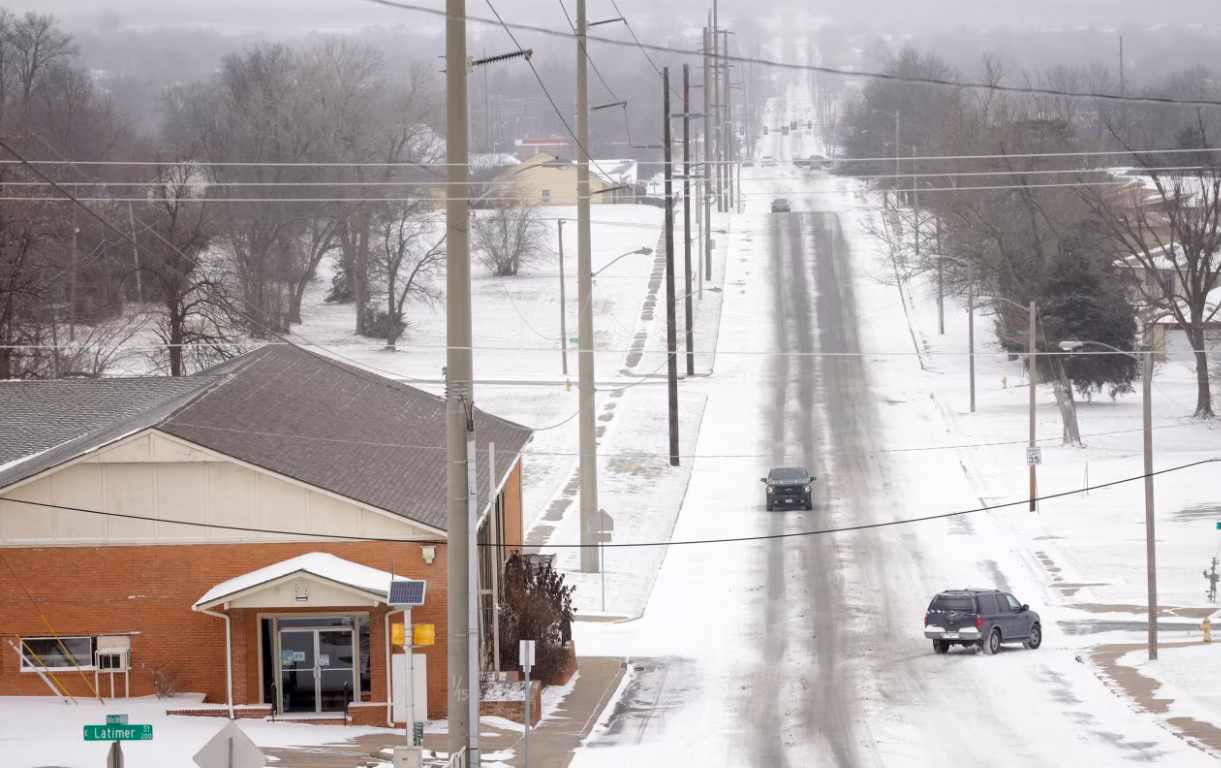

A powerful winter storm has disrupted daily life across large parts of the United States. Snow, ice, and freezing rain spread rapidly across multiple regions. As a result, more than 160,000 electricity customers lost power.
The storm also caused widespread travel chaos. Thousands of flights were cancelled across the country. Airports struggled to operate amid extreme cold and icy conditions.
Power Outages Spread From Texas to the Southeast
Electricity outages were reported as far west as Texas. Louisiana and Texas recorded the highest number of affected customers. Utility companies worked to restore power as conditions worsened.
Meanwhile, federal authorities approved emergency measures to stabilise the energy system. Backup generation resources were authorised to prevent larger blackouts. These steps aimed to protect major facilities and critical infrastructure.
Emergency Declarations Approved in Multiple States
President Donald Trump approved emergency disaster declarations in 12 states. These included South Carolina, Virginia, Tennessee, Georgia, and North Carolina. Other affected states included Maryland, Arkansas, Kentucky, Louisiana, Mississippi, Indiana, and West Virginia.
In addition, weather emergencies were declared in 17 states and Washington, D.C. Federal agencies coordinated closely with state authorities. Officials urged residents to remain cautious and prepared.
Dangerous Weather Conditions Expand Eastward
Forecasters warned that the storm would intensify across the eastern two-thirds of the country. Snow, sleet, and freezing rain were expected to persist into next week. Frigid temperatures increased the risk of ice accumulation.
The southeast faced particularly severe conditions. Heavy ice threatened power lines and transportation networks. Meteorologists described the potential impact as crippling in some areas.
Flight Cancellations Reach Record Levels
Air travel suffered major disruption as the storm advanced. More than 4,000 flights were cancelled on Saturday. Over 9,400 additional flights were cancelled for Sunday.
Airlines warned passengers to expect sudden schedule changes. Several carriers adjusted operations to manage de-icing and ground delays. Crews and equipment were repositioned to support affected airports.
Some airlines cancelled flights proactively. These decisions focused on regions facing the worst conditions. Passengers were advised to monitor updates closely.
Grid Operators and Utilities Heighten Precautions
Electric grid operators increased monitoring efforts nationwide. Companies took steps to avoid rotating blackouts. Data centres and essential services received priority protection.
In Virginia, utility officials warned of one of the largest winter impacts in years. Ice accumulation posed a serious threat to infrastructure reliability. Crews remained on standby as conditions evolved.
Officials Urge Public to Prepare for Extreme Cold
Government officials warned residents about dangerously low temperatures. Wind chills were expected to drop further by Monday. The Great Plains region also faced record cold risks.
People were encouraged to stock food and fuel supplies. Authorities stressed the importance of staying indoors when possible. Emergency services remained on alert nationwide.
The storm is expected to test infrastructure resilience. Officials continue to monitor developments closely. Americans were urged to stay informed and prioritize safety.
