

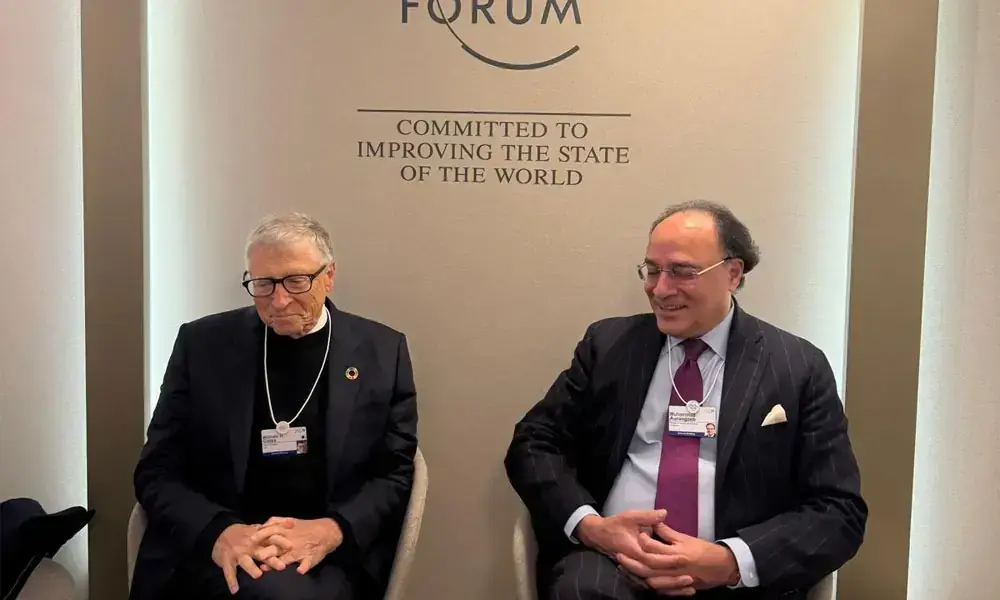

Finance Minister Muhammad Aurangzeb met Microsoft co-founder and philanthropist Bill Gates on Thursday on the sidelines of the World Economic Forum Annual Meeting in Davos, where they discussed Pakistan’s reform agenda, public health priorities and continued cooperation with the Gates Foundation.
According to the Finance Division, the meeting focused on ongoing institutional reforms, polio eradication efforts and ways to strengthen collaboration in support of sustainable development and capacity building across the country.
The finance minister acknowledged the Gates Foundation’s longstanding engagement in Pakistan, particularly its critical role in polio eradication, and expressed appreciation for its continued support in addressing public health challenges and improving service delivery. Pakistan remains one of the few countries where polio has yet to be fully eliminated.
Bill Gates briefed Aurangzeb on the Foundation’s current and future initiatives in Pakistan, stressing the importance of sustained and coordinated efforts to eradicate polio. Both sides discussed the need for closer coordination with provincial governments and other stakeholders to ensure effective implementation of health programmes, especially in high-risk and underserved areas.
The meeting also covered the digitisation of Pakistan’s taxation system, which the government views as a cornerstone of its broader reform agenda. Aurangzeb thanked Gates for the Foundation’s recent communication supporting tax digitisation, noting that strengthening domestic resource mobilisation through transparency and digital tools remained a top priority and was being monitored at the highest levels.
Gates highlighted the importance of efficient and transparent tax systems in achieving long-term economic self-reliance. He said digital solutions could significantly improve tax collection, governance and public service delivery, helping governments better respond to development challenges.
Aurangzeb said improved fiscal resilience had strengthened Pakistan’s ability to cope with economic and climate-related shocks, underscoring the need for sustained reforms aimed at long-term stability.
The two also discussed expanding cooperation in the health sector, including local vaccine production and stronger supply chains, and agreed to continue engagement to explore practical and sustainable options for future collaboration.
