

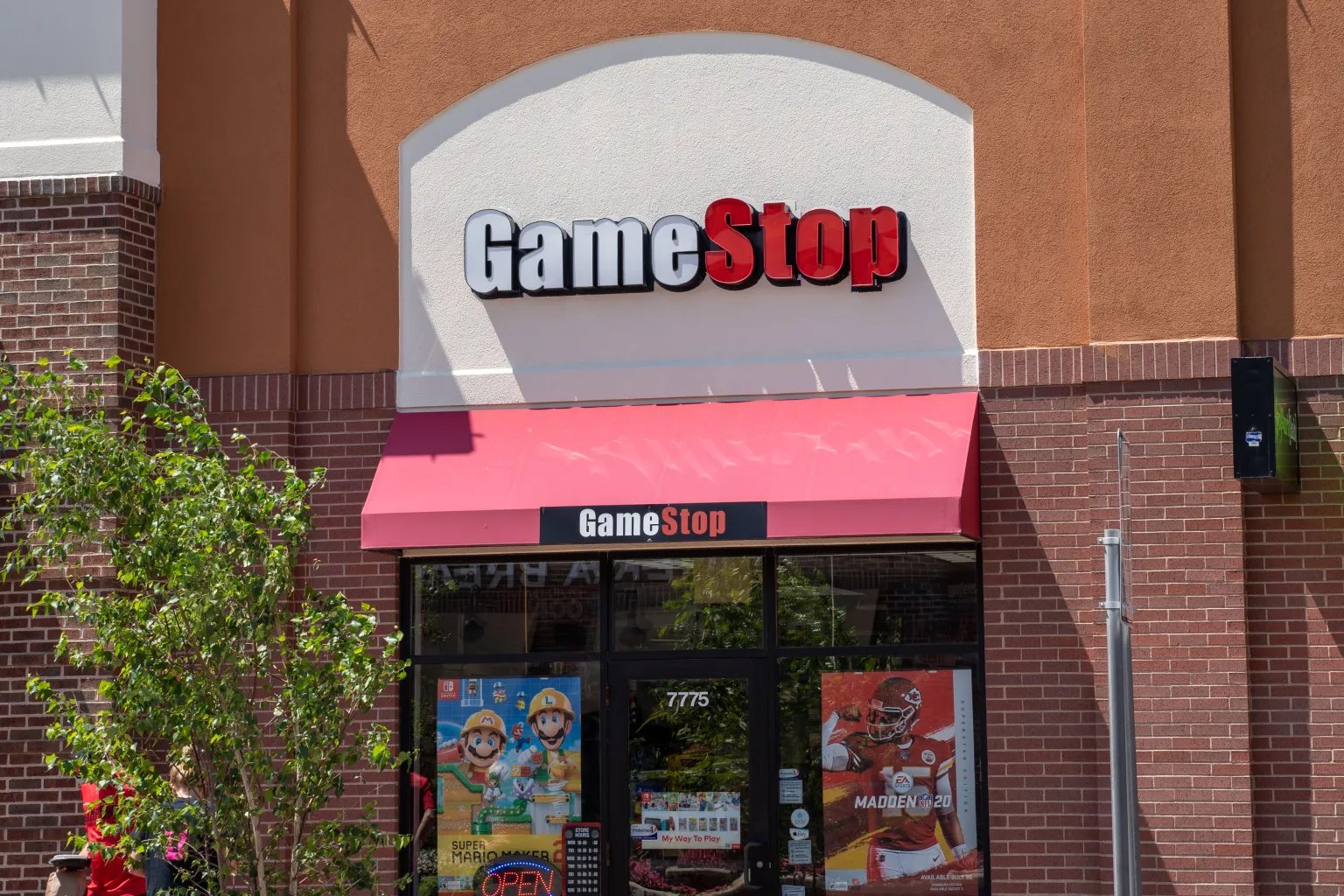

GameStop has acknowledged and fixed an unusual loophole that briefly allowed some customers to generate hundreds of dollars in in-store credit through a repeatable trade-in exploit.
The issue came to light after gamers began sharing online that they were able to buy and trade in a Nintendo Switch 2 repeatedly, each time earning more store credit than before due to a promotional bonus. The trend gained traction after being highlighted by gaming outlets and content creators, including YouTuber RJCmedia, who dubbed the exploit the “GameStop Infinite Money Glitch.”
According to reports first highlighted by IGN, the loophole allowed customers to gradually increase their trade credit with each transaction, effectively turning a retail promotion into a profit-generating cycle.
How the Glitch Worked
GameStop later confirmed the issue in a statement posted on X, explaining that a specific combination of purchases unintentionally triggered a promotional bonus.
“By purchasing a Nintendo Switch 2 for $414.99 and then immediately trading it back in along with the purchase of a pre-owned game, a promotional bonus was triggered that increased the Switch 2 trade credit to $472.50,” the company said.
That meant customers could walk away with more than $50 in profit per transaction, paid out as store credit. As demonstrated in RJCmedia’s YouTube video, the process could be repeated multiple times, allowing users to rack up several hundred dollars in credit.
“In short, our system briefly valued the pre-owned trade more than the new retail cost of the console itself,” GameStop explained. “This created a narrow window where customers could repeat this transaction over and over again to amass infinite trade credit.”
GameStop Responds
GameStop confirmed that the issue has now been fully resolved.
“Effective immediately, this glitch has been patched,” the company stated. “Trade promotions have been updated to ensure customers can no longer convert basic arithmetic into an endless revenue stream, and balance has been restored.”
Despite the viral nature of the story, there is little evidence that the loophole was exploited on a large scale. GameStop told IGN that it became aware of the issue quickly after the YouTube video surfaced.
“I can reveal an anonymous person clued us in by sending an email to a completely irrelevant inbox exposing the loophole,” a GameStop spokesperson said, jokingly adding, “So, if anything, this proves we are actually checking our inbox.”
The quick response likely prevented widespread abuse of the system, limiting the financial impact on the retailer.
A Company Under Pressure
The timing of the glitch comes as GameStop continues to navigate significant financial challenges. The company is currently in the process of closing approximately 470 stores, following around 590 closures in 2025 alone.
As of now, GameStop operates roughly 2,300 stores nationwide, a sharp decline from its peak of more than 6,000 locations.
Several states are expected to be hit particularly hard by the closures. Indiana is set to lose at least 13 stores, while Colorado will see seven locations shut down. Nine stores in and around Seattle, Washington, are also closing, along with four in California. Additional closures have already occurred or are planned in Delaware, Iowa, Ohio, and other states.
These shutdowns have been disclosed through filings with the U.S. Securities and Exchange Commission, with GameStop labeling the affected locations as underperforming.
Signs of a Turnaround?
Despite the downsizing, some cost-cutting measures appear to be paying off. GameStop reported a net income of $77.1 million for the third quarter of 2025, a significant increase from $17.4 million during the same period previously.
However, revenue remains under pressure. Net sales year-over-year stood at $821 million, reflecting a 4.6% decline.
The retailer has also faced criticism from customers over other changes, including a recently spotted $14.99 return fee, which surprised and frustrated some shoppers.
Meanwhile, GameStop’s recent attempt to launch a “retro” store concept has drawn mixed reactions, with some longtime fans dismissing the idea as unnecessary or “pointless.”
While the “Infinite Money Glitch” may have been short-lived, it added yet another strange chapter to GameStop’s ongoing struggle to adapt in a rapidly changing gaming retail landscape.
