

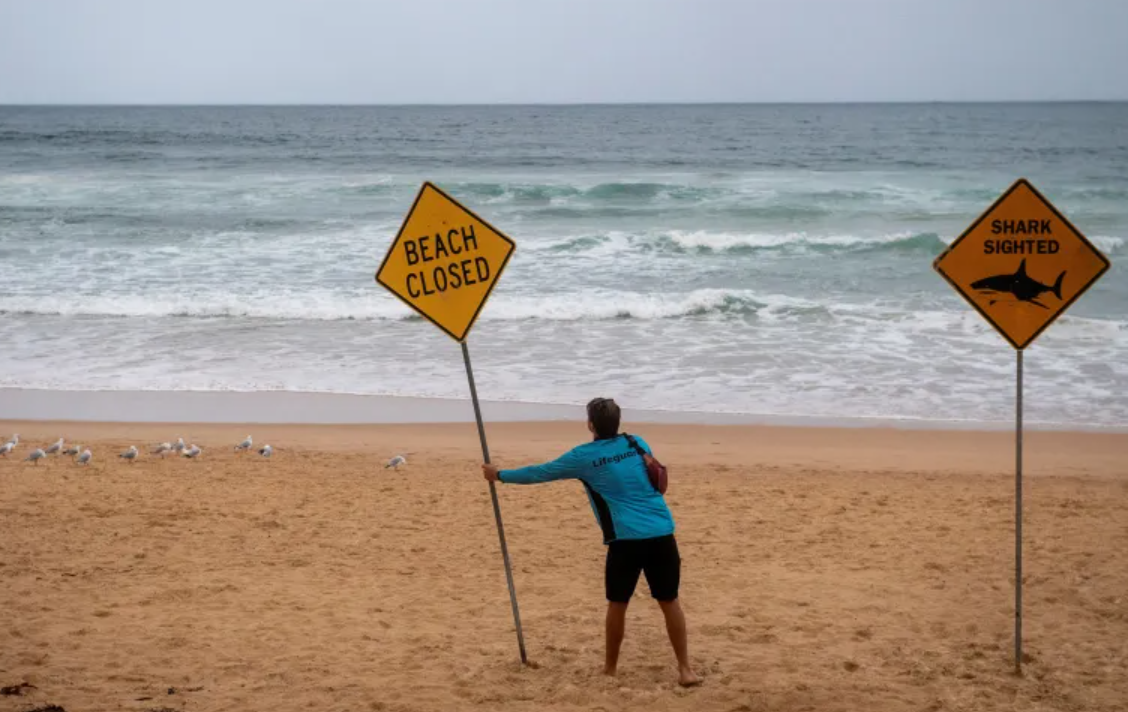

Dozens of beaches along Australia’s east coast have been closed following a series of shark attacks. Authorities acted after four separate incidents occurred over just two days. Heavy rains have left the water murky, increasing shark activity.
Beaches from Sydney to Port Macquarie, about 400 km north, are now off-limits. A man was bitten while surfing near Port Macquarie and is currently in stable condition in hospital.
Steven Pearce, CEO of Surf Life Saving New South Wales, warned that the beaches are unsafe for swimming. He advised locals to consider pools instead of the ocean.
Shark Attacks Raise Alarm
The attacks began earlier in the week, starting with a surfer in Sydney’s Manly area. He was in his 20s and suffered serious leg injuries. Fellow surfers helped keep him conscious using a makeshift tourniquet. Paramedics treated him before taking him to hospital.
Another incident involved a 10-year-old boy who was unhurt despite a shark knocking him off his surfboard and damaging it. Yet another boy was left in critical condition after being bitten at a city beach.
All beaches in the Northern Beaches council area will remain closed until further notice. Police and local authorities continue to monitor the situation.
Why Shark Activity is Increasing
Experts link the attacks to recent heavy rain. Floodwaters created brackish, murky conditions ideal for bull sharks. These sharks often thrive in such environments.
Brackish water reduces visibility, causing sharks to accidentally bite humans while investigating objects. The murky water, combined with sewage runoff, also attracts bait fish, which in turn draws the sharks closer to shore.
Chris Pepin-Neff, a shark behaviour expert, explained that reduced visibility leads sharks to bite defensively or out of curiosity.
Context: Shark Attacks in Australia
Shark attacks in Australia are relatively rare. The country records about 20 attacks per year. Most attacks are non-fatal, with fewer than three deaths annually.
Despite the risk, drowning still remains a far greater threat on Australian beaches. Authorities urge swimmers and surfers to remain vigilant and avoid risky waters during heavy rainfall.
Safety Measures and Precautions
Beaches along the east coast now feature warning signs and patrolling lifeguards. Authorities recommend avoiding swimming in brackish or turbid waters. Swimmers should stay in pools or safe designated areas until the water clears.
Emergency services are on high alert. Officials are also increasing monitoring of shark activity in affected regions.
By taking these precautions, locals and tourists can enjoy a safer summer despite unusual shark behaviour along Australia’s east coast.
