

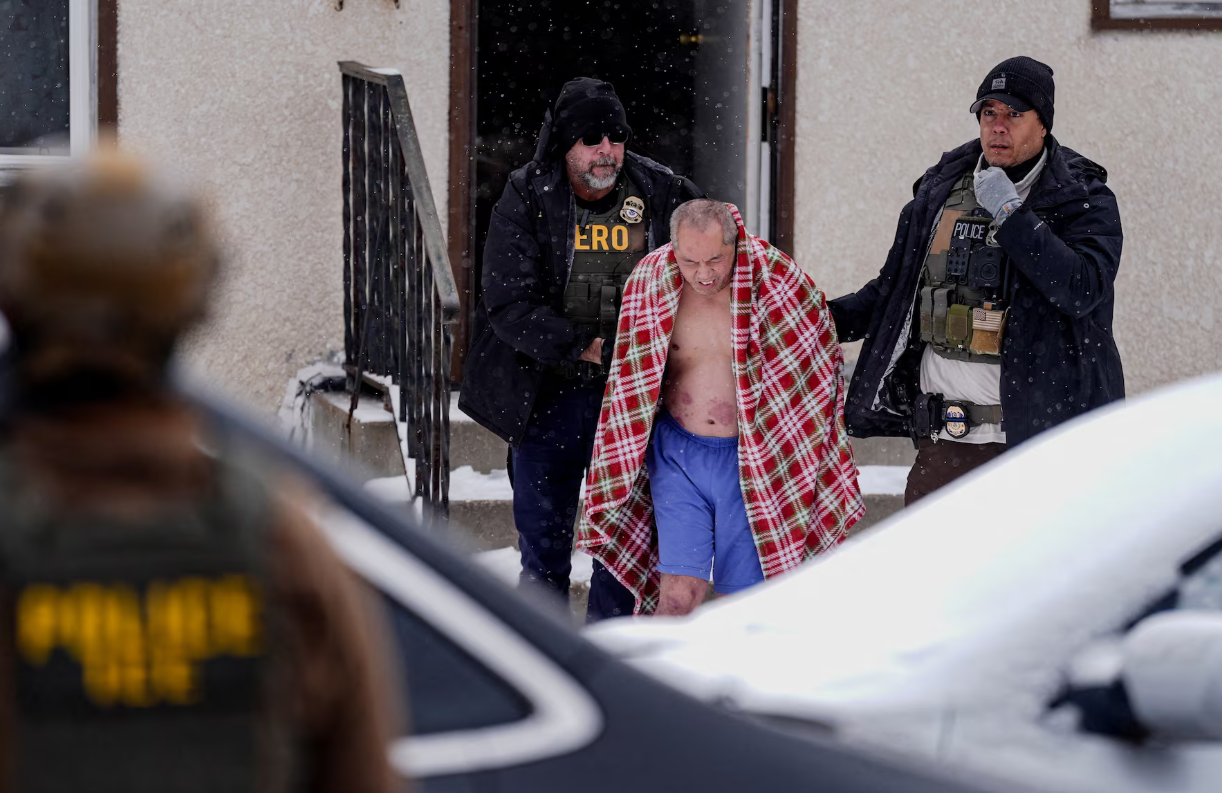

A Minnesota resident has described fear, humiliation, and helplessness after federal immigration officers forcibly entered his home. The incident has intensified concerns over aggressive enforcement tactics. It also raised questions about civil rights protections for citizens.
ChongLy Thao, a 56-year-old naturalised US citizen, said officers broke down his door with weapons drawn. They handcuffed him and dragged him outside into the snow. He was wearing only shorts and Crocs. The incident occurred during an early-morning operation in Saint Paul.
Thao said he repeatedly told officers he had done nothing wrong. He recalled feeling terrified and ashamed while exposed to freezing temperatures. He said he prayed for help as officers detained him without explanation. Neighbours later helped repair the damaged door.
Images of Thao wrapped in a blanket circulated widely online. The pictures showed him barely clothed in sub-zero conditions. As a result, public criticism quickly grew. Many questioned whether enforcement actions had crossed legal and ethical boundaries.
Family members described the incident as unnecessary and deeply traumatising. They said no justification was provided at the time of detention. Thao was eventually returned home later the same day. He said officers offered no apology or clarification.
Authorities later stated the operation targeted two convicted sex offenders linked to the address. Officials said Thao matched the physical description of the suspects. They claimed he refused fingerprinting and facial identification. Therefore, officers detained him as part of standard procedure.
Officials also stated that law enforcement may temporarily hold occupants during operations. They argued this ensures officer and public safety. However, critics questioned the proportionality of the response. Civil rights advocates warned such actions risk eroding public trust.
Relatives said one suspect previously lived at the residence but had moved out. They said the individual was no longer connected to the household. This detail further fuelled concerns about mistaken identity. It also highlighted risks faced by innocent residents.
The incident followed a recent court ruling limiting certain enforcement tactics. A federal judge warned that aggressive operations could deter lawful civic participation. The ruling aimed to protect constitutional freedoms during heightened enforcement periods.
After being fingerprinted and photographed, Thao was released. He returned home visibly shaken. He questioned whether the country still offered safety and dignity to its residents. He said his family came seeking stability and opportunity.
The incident has since become a flashpoint in the immigration debate. It underscores growing tension between enforcement priorities and civil liberties. Many now call for clearer safeguards to prevent similar incidents involving citizens.
