

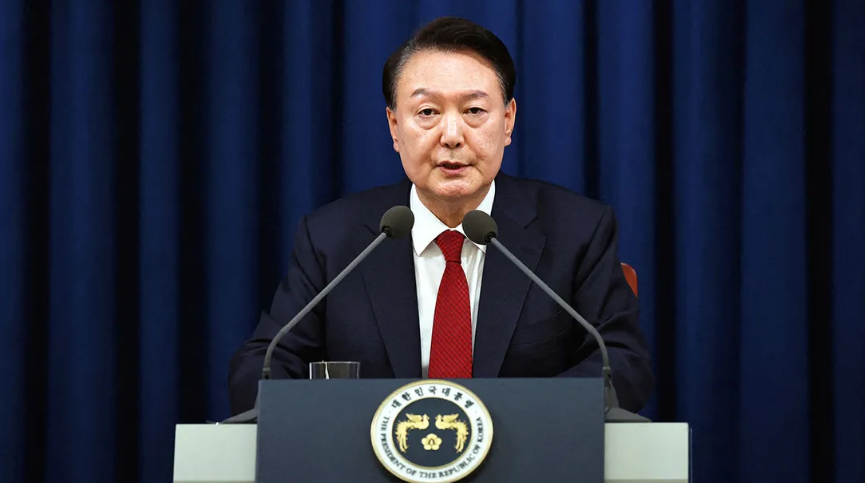

Former South Korean President Yoon Suk Yeol has been sentenced to five years in prison over charges including obstruction of authorities and illegal martial law imposition. The Seoul Central District Court delivered the verdict on Friday.
The court found Yoon guilty of using the presidential security service to block a legally issued arrest warrant. This action followed his failed attempt to declare martial law in December 2024. He was also convicted of fabricating official documents and violating legal procedures for martial law implementation.
Court’s Statement on Yoon’s Actions
“The defendant abused his enormous influence as president to prevent execution of legitimate warrants,” the lead judge stated. The court said Yoon effectively privatized security officials for personal gain, obstructing lawful investigation.
The ruling is the first judgment related to criminal charges stemming from Yoon’s martial law attempt. The former president’s lawyers immediately announced plans to appeal the verdict, calling it politically motivated.
Potential Additional Charges
Yoon faces a separate trial on charges of masterminding an insurrection by declaring martial law without justification. In that case, he could potentially face the death penalty, according to legal analysts.
Yoon has argued that his martial law declaration was within presidential powers and aimed at highlighting government obstruction by opposition parties. He denied all charges, claiming that the actions were legal and necessary.
Arrest and Impeachment History
The obstruction charges relate to Yoon barricading himself inside his residence in January 2025. He reportedly ordered security personnel to block investigators during a first arrest attempt. Over 3,000 police officers were later involved in a second successful arrest, marking the first arrest of a sitting South Korean president.
Following his martial law attempt, the Parliament overturned the decree, and the Constitutional Court impeached Yoon, suspending his presidential powers. He was officially removed from office in April 2025.
National and International Impact
Although Yoon’s martial law attempt lasted only about six hours, it sent shockwaves across South Korea. The country, Asia’s fourth-largest economy and a key US security ally, has long been considered one of the world’s most resilient democracies. Analysts say the episode has deepened political tensions and raised questions about presidential authority in emergencies.
The conviction of Yoon is expected to set a precedent for accountability for future leaders who attempt to bypass constitutional limits. Legal experts note that the appeals process could extend the case for months, keeping the nation closely engaged in political and judicial developments.
