


WWF Disputes Official Claim on Paper Mulberry Removal
WWF-Pakistan has challenged the Islamabad authorities’ explanation for recent large-scale tree removal in the capital. The environmental organisation said the cutting of trees was not limited to paper mulberry eradication alone. It stated that infrastructure development also played a major role.
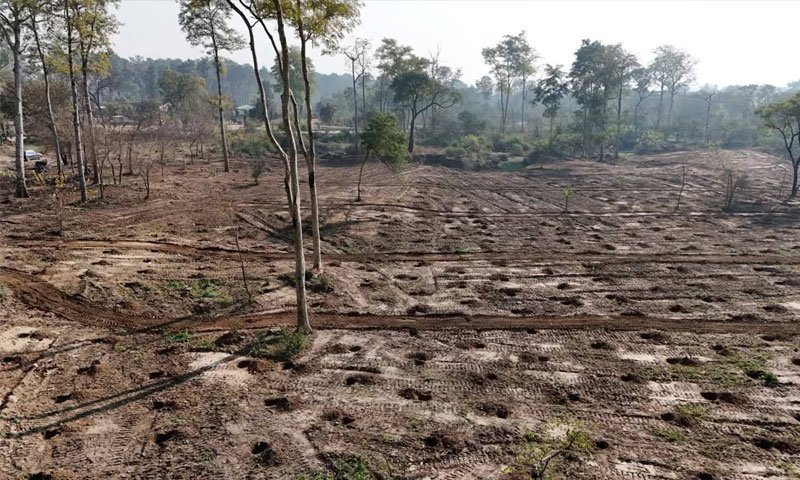
In recent weeks, extensive tree removal was reported across several areas of Islamabad. These included Shakarparian, areas near Lok Virsa, the National Museum precinct, and parts of the Islamabad Expressway. Large tracts of land were cleared, raising public concern.
The Capital Development Authority maintained that only paper mulberry trees were removed. Officials said the species causes severe pollen allergies in Islamabad. On Tuesday, Minister of State for Interior Tallal Chaudhry assured lawmakers that no other tree species were cut. He also promised that plantation drives would be launched in coming months.
However, WWF-Pakistan said its field assessments contradicted this narrative. In a statement shared on social media, the organisation said vegetation loss was linked to multiple factors. These included road construction and other infrastructure projects.
“Beyond pollen and allergies, Islamabad’s recent tree removal reflects broader challenges in urban planning,” WWF-Pakistan stated.
Infrastructure Projects Identified as Key Drivers
WWF-Pakistan released a detailed report based on field inspections. The inspections were conducted between December 2025 and January 2026. The report covered multiple locations in the Islamabad Capital Territory.
According to the report, major land clearing was observed at Shakarparian, the H-8 Islamabad Expressway, and the Margalla Enclave Link Road near the National Institutes of Health. Several of these sites were linked to infrastructure development. These included road expansion and monument-related projects.
The organisation said it carried out verification to distinguish health-related tree removal from development-driven clearance. It found that while paper mulberry eradication was ongoing, substantial vegetation loss resulted from construction activity.
At the H-8 Expressway site alone, WWF-Pakistan estimated a net loss of nearly five hectares of urban tree cover. The report noted that such large-scale clearance could not be explained by allergy management alone.
Social media users and some lawmakers also claimed that old indigenous trees were cut. Responding in the National Assembly, Chaudhry cited three reasons for tree removal. These included paper mulberry presence, brown zones in the Islamabad Master Plan, and areas previously seen as green but later developed. He firmly denied that any species other than paper mulberry were removed.
Environmental Concerns and Call for Transparency
WWF-Pakistan stressed the critical role of urban trees. It said trees help regulate climate, stabilize soil, and support biodiversity. The organisation warned that unplanned removal could damage ecological balance.
The report acknowledged that paper mulberry is a major cause of seasonal pollen allergies. Medical experts link it to asthma and allergic rhinitis. WWF-Pakistan agreed that managing the invasive species is necessary.
However, it warned against sudden and large-scale removal. In a separate research paper, WWF-Pakistan Forest Director Muhammad Ibrahim Khan said paper mulberry is a non-native and highly invasive species. It spreads aggressively and suppresses native vegetation.
The paper said complete eradication is unrealistic. Sudden uprooting could cause soil erosion, habitat loss, and wildlife displacement. It could also lead to accidental removal of native trees.
WWF-Pakistan called for science-based, site-specific planning. It demanded legally compliant environmental impact assessments for development projects. The organisation also urged public disclosure of removed and planted species.
According to official sources cited in the report, more than 29,000 paper mulberry trees have been removed across Islamabad. These include trees from Shakarparian, Fatima Jinnah Park, and major greenbelts.
WWF-Pakistan concluded that reforestation efforts remain unclear. It said long-term success depends on transparency, native species prioritisation, and independent monitoring. Protecting Islamabad’s green character, it warned, requires responsible urban planning.
