

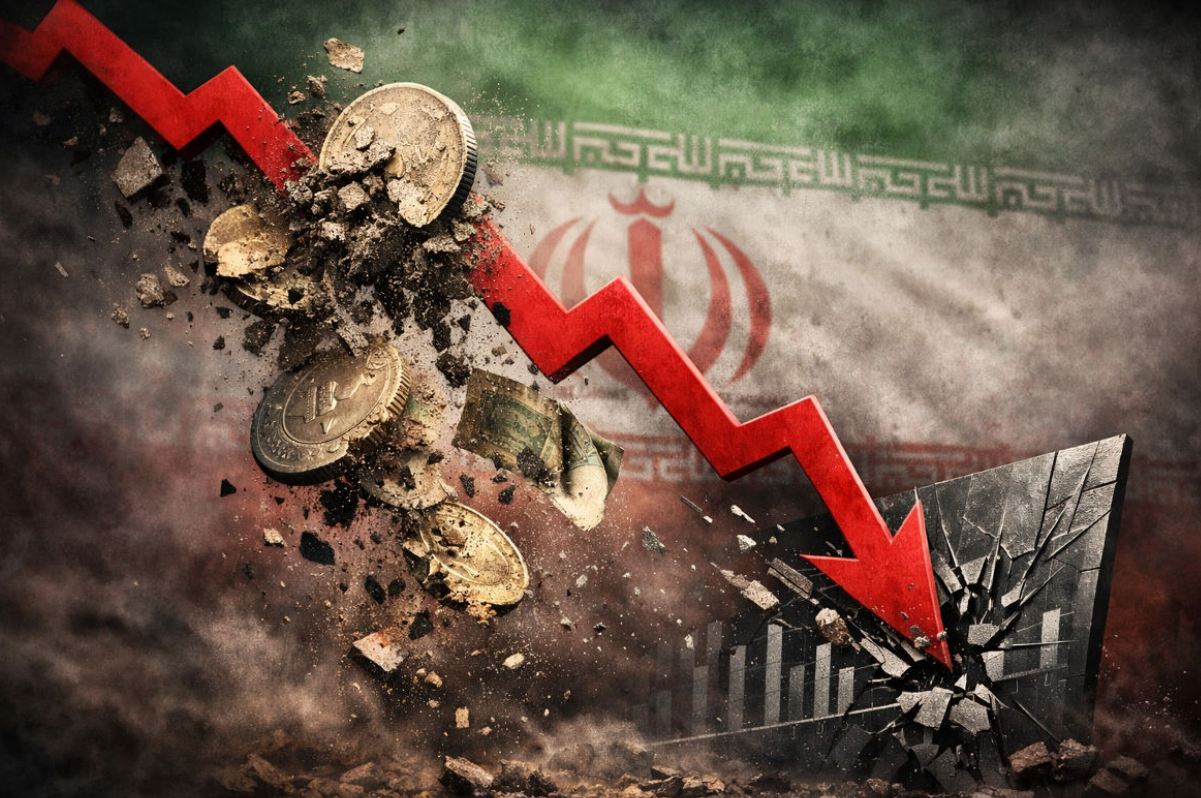

Iran’s currency remains under intense pressure after months of volatility. By mid-January 2026, the open-market exchange rate stood near 1,457,000 rials per dollar, reflecting continued stress. Inflation remains at crisis levels, with consumer prices rising around 42.5 percent in December 2025. During 2025, the rial lost nearly half its value against the dollar, further damaging public confidence. This decline is not a sudden panic. Instead, it reflects years of high inflation, weak economic growth, and restricted access to hard currency. Recent political tensions have added pressure, deepening uncertainty across markets.
The central issue is not a literal collapse to zero. Rather, it is a breakdown in purchasing power that makes the currency feel worthless in daily life. When people say the rial is “going to zero,” they usually refer to its shrinking real value. A functioning national currency does not trade at zero while the state continues to use it. Even in severe crises, a price still exists. However, purchasing power can erode sharply when prices rise faster than wages. At the same time, exchange rates may add more zeros, pushing the dollar value higher each month. In other cases, governments remove zeros through redenomination, which resets figures without fixing underlying weaknesses.
Iran has already moved toward redenomination. In late 2025, parliament approved a plan to remove four zeros from the rial. The plan allows two years for preparation and a three-year transition period during which old and new notes circulate together. This step aims to simplify transactions after prolonged inflation. However, redenomination alone does not restore real value. Purchasing power only improves if inflation falls and remains controlled.
Iran’s currency market operates through multiple exchange rates rather than a single unified system. The official administered rate remains near 42,000 rials per dollar and applies to limited transactions. A preferential rate supports selected imports, while the open-market rate reflects real demand and trades near 1,457,000. This gap creates severe distortion. The difference between official and market rates exceeds thirty-five times, weakening price signals and encouraging speculation.
Multiple exchange rates accelerate depreciation through several channels. Traders often front-run policy changes by pricing in future devaluations early. Large spreads also create strong arbitrage incentives, diverting scarce hard currency away from productive use. Over time, confidence erodes as multiple prices signal rationing rather than stability. These dynamics embed depreciation expectations into everyday pricing decisions.
Several factors drive the current slide. Sanctions continue to restrict access to export earnings and international transfers, tightening dollar supply. Inflation remains extremely high, encouraging households to avoid holding cash and seek protection through dollars, gold, or property. Economic growth is weak, reducing tax revenues and increasing fiscal strain. Policy changes in late 2025 required importers to source dollars at market rates, pushing demand higher overnight. Political unrest has further increased risk premiums, shortening public time horizons and reinforcing currency weakness.
Looking ahead, three broad scenarios remain. The most likely path is a gradual erosion, with high inflation and step-by-step depreciation. A sharper devaluation could occur after a policy shock or funding disruption. Redenomination remains the third option, removing zeros on paper without fixing fundamentals. While redenomination improves convenience, it does not cure inflation. Currency credibility ultimately depends on fiscal discipline, monetary restraint, and clearer exchange-rate policy. Until those foundations improve, every period of stability will remain fragile, and every policy move will continue to test confidence.
