


Viral Pink Sky Stuns Residents Across West Midlands
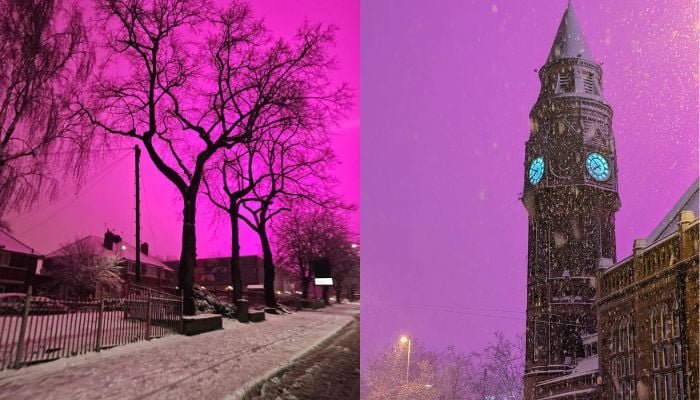
Residents across Birmingham and the wider West Midlands were left astonished when the night sky turned an intense neon pink during Storm Goretti. The surreal glow appeared suddenly and spread across snow-covered neighbourhoods, prompting widespread speculation and fascination on social media.
Photos and videos of the unusual sky quickly went viral. Many residents described the scene as straight out of a science-fiction film. Some compared it to a “cyberpunk cityscape,” while others feared it could be linked to pollution, extreme weather events, or even industrial accidents.
As the storm continued, the pink illumination remained visible for hours, reflecting off falling snow and thick cloud cover. The phenomenon sparked curiosity and concern in equal measure, with people demanding answers about its origin.
Meteorologists Explain the Science Behind the Glow
The mystery was later solved by weather experts and meteorologists. According to BBC Weather presenter Simon King, the pink sky was not caused by any natural disaster or environmental hazard. Instead, it was the result of a rare combination of artificial lighting and specific weather conditions.
King explained that thick cloud cover and falling snow acted like a reflective surface. This allowed light from the ground to bounce back toward the clouds rather than dispersing into the atmosphere. As a result, urban lighting became dramatically amplified in the sky.
The primary source of the pink glow was identified as high-powered LED grow lights at Birmingham Football Club’s St Andrew’s Stadium. These lights are commonly used to maintain healthy grass on football pitches during winter months.
When reflected by snowflakes and low clouds, the pink and purple tones from the stadium lights spread across the sky, creating an otherworldly effect. Similar phenomena have previously been observed near football stadiums in other UK cities, including Hull near the MKM Stadium.
Storm Goretti Adds to the Surreal Scene
Storm Goretti played a crucial role in intensifying the visual impact. Snowfall increased the reflective quality of the atmosphere, while low clouds trapped the light close to the ground. This combination turned a routine stadium maintenance activity into a spectacular visual event.
While many residents admired the dazzling display, authorities remained focused on the storm’s aftermath. As temperatures began to rise, melting snow raised concerns about flooding. More than 100 flood warnings were issued across parts of the UK, urging residents to stay alert.
Emergency services advised caution, especially in low-lying areas, as snowmelt combined with heavy rainfall increased the risk of water overflow. Despite the warnings, many locals said the pink sky provided a rare moment of beauty amid harsh winter conditions.
Experts reassured the public that the glow posed no health or environmental risk. It was simply an optical effect created by modern lighting technology and unusual weather patterns.
The incident has since been dubbed the “world’s first cyberpunk sky”, highlighting how urban infrastructure and climate conditions can combine to create extraordinary sights. For Birmingham residents, it was a night that transformed an ordinary winter storm into an unforgettable visual experience.
