


Major Arms Agreement Poised to Boost Sudanese Military Capabilities
Pakistan is in the final stages of securing a major $1.5 billion defence agreement with Sudan, according to multiple sources familiar with the matter. The deal would involve the supply of advanced weapons, drones, and military aircraft to Sudan’s army, which has been locked in a brutal conflict with the paramilitary Rapid Support Forces (RSF) for more than two and a half years.
Sources said the agreement represents one of Pakistan’s most significant arms exports to date. A retired senior Pakistani air force official described the deal as essentially final, stating that all major components have already been agreed upon. The transaction is expected to significantly enhance Sudan’s military capabilities, particularly in air power and surveillance.
Sudan’s conflict has triggered what international agencies describe as the world’s worst humanitarian crisis. Millions have been displaced, and the prolonged fighting has drawn in foreign interests due to Sudan’s strategic Red Sea location and its status as a major gold-producing country.
Neither Pakistan’s defence ministry nor its military has issued an official comment so far. Sudanese military officials have also not responded publicly.
Details of Weapons, Drones, and Aircraft Included
According to sources, the defence package includes at least 10 Karakoram-8 light attack aircraft. These planes are designed for close air support and counterinsurgency operations. The deal also reportedly includes more than 200 drones, which will be used for reconnaissance and kamikaze-style attacks.
Advanced air defence systems are also part of the agreement. These systems could help Sudan’s army counter the growing drone capabilities of the RSF. Over the past year, the RSF has increasingly relied on drones to seize territory, weakening the army’s earlier air superiority.
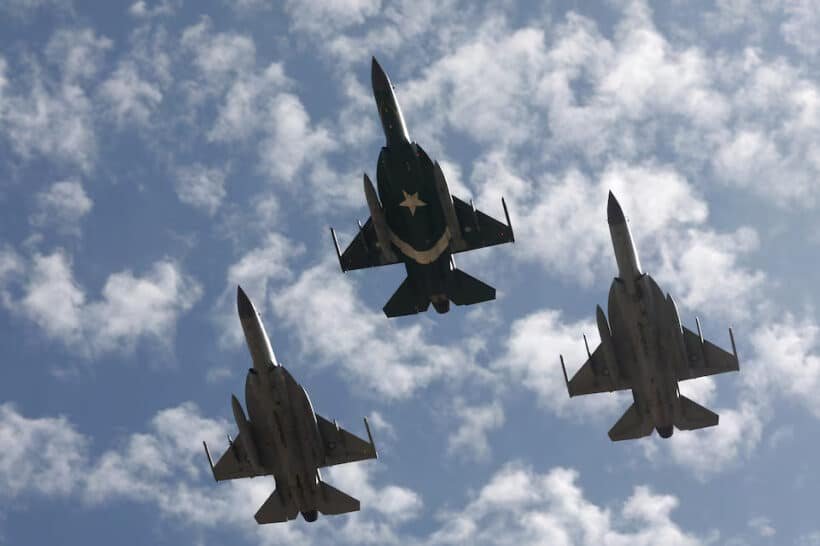
In addition to the Karakoram-8 aircraft, Pakistan is expected to supply Super Mushshak training planes. There is also the possibility that JF-17 Thunder fighter jets could be included. These jets are jointly developed by Pakistan and China and are considered one of Pakistan’s most successful defence exports. However, exact numbers and delivery timelines remain unclear.
Military analysts say drones and jets from Pakistan could help Sudan’s army regain control of airspace, which is critical in modern warfare. Sudan’s army has accused the RSF of receiving foreign weapons, including alleged support from the United Arab Emirates. The UAE has repeatedly denied those claims.
Possible Saudi Role and Pakistan’s Expanding Defence Industry
The sources did not clearly identify how the Sudan deal would be financed. However, there is speculation that Saudi Arabia may have played a role in facilitating the agreement. One source said Riyadh helped broker talks between Islamabad and Khartoum, though there is no confirmation that Saudi Arabia is funding the weapons.
Another source denied any Saudi financial involvement. Pakistani defence analysts note that Islamabad is already in discussions with Riyadh over a broader defence partnership worth between $2 billion and $4 billion. The Sudan deal could potentially be linked to that wider framework.
Saudi Arabia, Egypt, and the UAE are part of a US-backed diplomatic group trying to push Sudan’s warring sides toward negotiations. Sudan’s army chief, Abdel Fattah al-Burhan, has reportedly sought Saudi support during recent visits.
The deal highlights Pakistan’s growing ambitions as a global arms exporter. In recent months, Islamabad secured a defence agreement worth more than $4 billion with Libya’s National Army. That deal included JF-17 fighter jets and training aircraft. Pakistan has also held defence talks with Bangladesh as bilateral ties improve.
The government views defence exports as a key pillar for long-term economic stability. Pakistan is currently operating under a $7 billion IMF programme. Support from Gulf allies previously helped Islamabad avoid a sovereign default.
Analysts say the Sudan agreement, if finalized, would further strengthen Pakistan’s position in the global defence market.
