

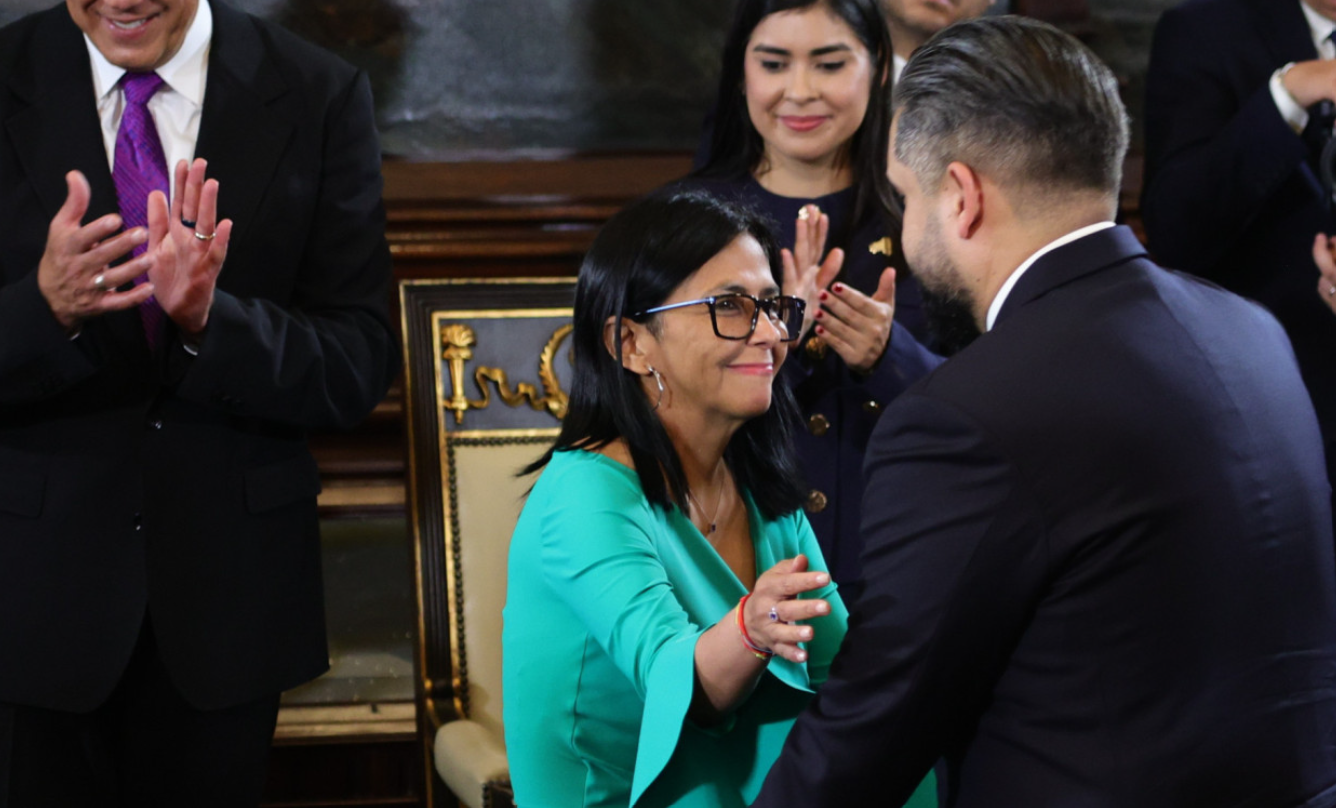

Russia has voiced its support for Delcy Rodríguez, who became Venezuela’s interim leader after the United States captured President Nicolás Maduro in a dramatic military operation. The Russian Foreign Ministry described her swearing‑in as a crucial step to preserve Venezuela’s constitutional order and prevent a deeper crisis.
Rodríguez, who served as vice president under Maduro, was sworn in by Venezuela’s National Assembly shortly after U.S. forces carried out the raid in Caracas and took Maduro and his wife to the United States. The extraordinary operation led to Maduro’s appearance in a U.S. court, where he has denied drug‑related charges but insisted he remains Venezuela’s legitimate leader.
Russia Frames Support as Defense of Sovereignty
In its statement, Russia emphasised that Venezuela should determine its own destiny without outside interference, framing the U.S. action as a form of external pressure that could destabilise the region. Moscow said Rodríguez’s appointment offers an opportunity for peace and stability amid what it described as “neocolonial threats and foreign armed aggression.”
The Russian Foreign Ministry reaffirmed its solidarity with the Venezuelan people and government, stating that it stood ready to continue providing necessary support. Although the statement did not explicitly name the United States, it reflected Moscow’s broader diplomatic stance against what it views as undue external influence in sovereign affairs.
Political Fallout in Venezuela
Rodríguez’s rise to leadership has unfolded amid extraordinary circumstances. The U.S. operation that removed Maduro from power marked one of the most dramatic direct interventions by American forces in Latin America in decades. Critics argue that the raid raises serious questions about sovereignty and international law, while supporters frame it as necessary to address criminal charges and regime corruption.
Despite Russia’s support for Rodríguez, uncertainty remains over her ability to govern effectively. She faces significant legitimacy challenges, and domestic factions loyal to Maduro still wield influence. At the same time, some elements of Venezuela’s military have recognised her authority, helping solidify her role as acting president.
Global Reactions and Geopolitical Tensions
Russia is not alone in expressing concern about developments in Venezuela. Other nations and international observers have called for restraint and adherence to international law as tensions escalate. The situation has sparked intense debate over the role of foreign military action and the balance between national sovereignty and accountability.
Meanwhile, Rodríguez has signalled a willingness to engage with the United States diplomatically, even as she insists that Venezuela remains governed by Venezuelans, not external powers. This reflects a delicate diplomatic balance in the wake of a highly polarising event.
What Comes Next for Venezuela
Venezuela now faces a period of profound uncertainty. With one of the world’s largest proven oil reserves and deep political divisions, the country’s future hinges on how domestic and international actors navigate the fallout. Russia’s backing of Rodríguez, framed as support for sovereignty and stability, adds another layer to an already complex geopolitical situation.
As global powers weigh in, the legitimacy and durability of Venezuela’s interim leadership will continue to shape regional dynamics. The world watches closely as the country seeks a path forward amidst competing interests and deep internal fissures.
