

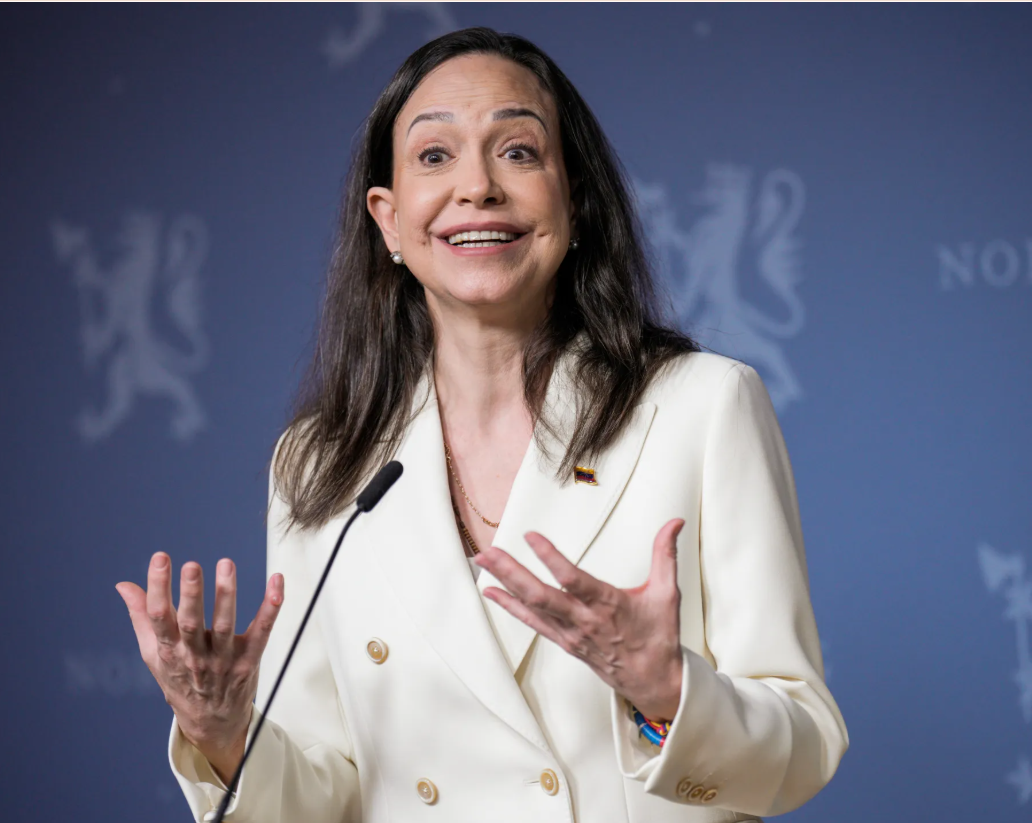

Venezuela’s leading opposition figure Maria Corina Machado has vowed to return to the country soon following the capture of President Nicolas Maduro by United States forces. She described the moment as a historic turning point and said the opposition movement now stands ready for democratic transition. Machado said she plans to go back to Venezuela as soon as conditions allow, despite remaining under threat of arrest and facing a volatile political environment.
Machado, a lawyer and mother of three, escaped Venezuela in disguise in October after years of political persecution. She later received the Nobel Peace Prize, which she dedicated to US President Donald Trump. She praised Trump for what she described as decisive action against Maduro, calling the raid that led to his capture a defining moment for Venezuela’s future.
She insisted that the opposition had already won the 2024 election by a landslide under what she called fraudulent conditions. She added that in a free and fair vote, the opposition would secure overwhelming public support. Machado said the transition must move forward quickly, but acknowledged that the process will remain complex.
Trump, however, has publicly expressed reservations about holding immediate elections. He has argued that Venezuela’s institutions must be stabilized first and warned that a rapid vote could be unrealistic under current conditions. He has also questioned Machado’s level of domestic support, despite widespread claims of electoral manipulation by opposition groups and international observers.
Machado said she has not spoken to Trump since October, yet she strongly defended his actions. She described January 3 as the day justice defeated tyranny and said Venezuela’s people were grateful for what she called a courageous intervention. She promised to personally present Trump with her Nobel Prize in recognition of his role.
The United States administration currently appears open to working with interim leader Delcy Rodriguez, a long-time Maduro ally who has condemned the capture while signaling willingness to engage with Washington. Machado sharply rejected that approach, accusing Rodriguez of corruption, repression, and close ties with rival global powers. She said Rodriguez lacks public trust and credibility among Venezuelans.
Machado outlined an ambitious vision for Venezuela’s future. She said the country could become an energy hub for the Americas by restoring rule of law, reopening markets, attracting foreign investment, and welcoming back millions who fled economic collapse. Venezuela holds the world’s largest proven oil reserves, yet production has suffered for years due to mismanagement, sanctions, and underinvestment.
Meanwhile, tensions inside Venezuela remain high. Authorities have ordered arrests of individuals accused of collaborating with the operation against Maduro. Several media workers were briefly detained in Caracas, while security forces fired warning shots to deter unauthorized drone activity. Officials insist the situation remains calm, though uncertainty persists.
Maduro has pleaded not guilty to multiple criminal charges in a New York court and maintains he is still Venezuela’s president. His wife has also denied wrongdoing. International reaction remains sharply divided, with several global powers questioning the legality of the operation and urging dialogue. The coming weeks are expected to shape Venezuela’s political future in profound and lasting ways.
