

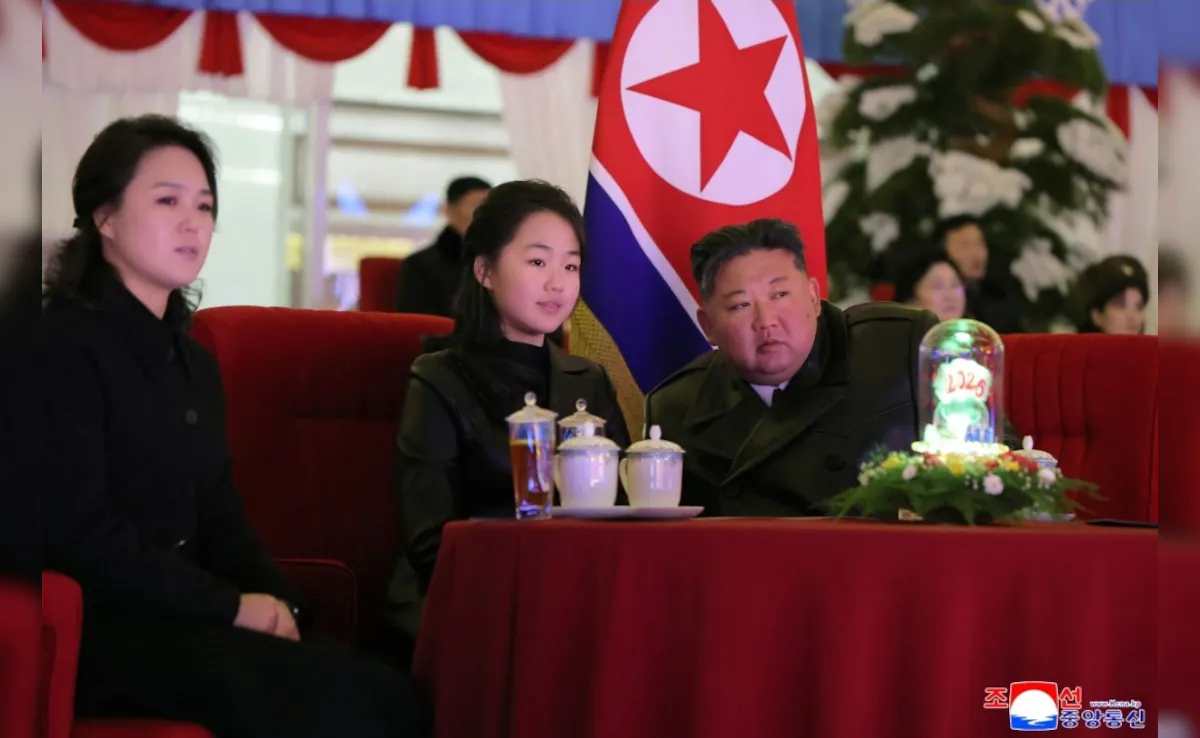

SEOUL — Kim Ju Ae, the daughter of North Korean leader Kim Jong Un, has made her first public visit to the Kumsusan Palace of the Sun, the mausoleum housing her grandfather Kim Il Sung and father’s predecessor Kim Jong Il. State media images released on Friday showed her standing alongside Kim Jong Un, fueling speculation that she may be the next in line to lead the nuclear-armed nation.
The Kim family has ruled North Korea for decades, maintaining an iron grip over the country through a powerful cult of personality centered on the so-called “Paektu bloodline.” Kim Jong Un is the third generation to lead the isolated communist state, following his father and grandfather, who are honored as “eternal leaders” in official propaganda.
Public Appearance at the Mausoleum
The Kumsusan Palace of the Sun, located in downtown Pyongyang, is a symbolic site where the country’s two previous leaders are enshrined. According to the state-run Korean Central News Agency (KCNA), Kim Jong Un visited the mausoleum with top officials, and images released by the agency prominently featured his daughter Ju Ae at his side.
South Korea’s intelligence agency previously indicated that Ju Ae is now regarded as the likely successor to her father. Reports suggested that her high-profile accompaniment of Kim Jong Un on a visit to Beijing last year strengthened her position as the heir apparent.
Experts point out that the daughter’s placement at the center of the front row during the mausoleum visit is highly significant. Cheong Seong-chang, a North Korea analyst at Seoul’s Sejong Institute, noted that such positioning is traditionally reserved for the leader himself. He suggested that the move could be interpreted as Kim Jong Un formally presenting his daughter to the “eternal leaders” as the future successor.
Implications for North Korea’s Leadership
Analysts say that Kim Ju Ae’s public appearances signal a potential transition plan, although no formal announcement has been made. Cheong predicted that she may soon be “formally confirmed as the next successor both domestically and internationally.”
Her growing visibility underscores the importance of the Kim family’s dynastic rule and the symbolic continuation of the “Paektu bloodline.” The move is likely intended to reassure domestic audiences of political continuity while sending a message to foreign observers about the regime’s future leadership plans.
Kim Ju Ae remains young and relatively unknown to the wider international audience. However, her emergence in official state imagery marks a clear step toward succession planning in a country where leadership transitions are tightly controlled and rarely publicised.
Observers will now closely monitor her future appearances and roles in state functions, as any new signals could confirm her position as heir to North Korea’s authoritarian rule.
