

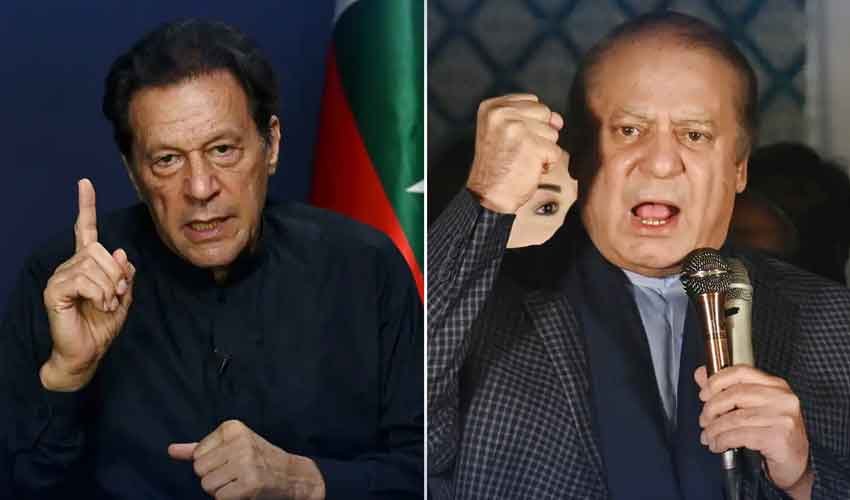

ISLAMABAD: Prime Minister’s Adviser on Political and Public Affairs Rana Sanaullah has emphasized that lasting political stability in Pakistan can only be achieved through sustained dialogue among major political stakeholders. Speaking on a private television program, he said meaningful progress would remain impossible unless former prime minister Nawaz Sharif, President Asif Ali Zardari, and the PTI founder Imran Khan agree to sit together and resolve differences through negotiations.
During his appearance on Nadeem Malik Live on Samaa TV, Rana Sanaullah underlined that all political disputes eventually require dialogue. He said political parties must recognize this reality and move toward the negotiating table. According to him, the country’s democratic future depends on cooperation rather than confrontation. Therefore, he urged leaders to adopt a responsible approach and engage constructively for national stability.
Political bitterness and its roots
Rana Sanaullah argued that political polarization in Pakistan began with the PTI rally at Minar-e-Pakistan in 2011. He claimed the event enjoyed establishment backing and marked the beginning of a confrontational political culture. After entering mainstream politics at that stage, he said, the PTI founder adopted an aggressive style that deepened divisions across the political landscape.
Furthermore, Rana Sanaullah rejected allegations that senior leaders of PML-N and PPP used inappropriate language against the PTI founder. He stated that he had never heard Nawaz Sharif resort to personal attacks. Similarly, he added that Asif Ali Zardari maintained restraint in his political discourse. As a result, he dismissed claims of verbal aggression from these leaders as baseless.
Charter of Democracy and democratic continuity
Highlighting democratic progress, Rana Sanaullah recalled that PPP and PML-N signed the Charter of Democracy, which enabled parliament to complete two full constitutional terms. He said this continuity reflected political maturity and consensus-building between major parties. Consequently, he argued that dialogue and mutual respect had already proven effective in strengthening democratic institutions.
Turning to recent tensions, Rana Sanaullah accused PTI’s social media operations of functioning like a defense institution. He alleged that these platforms even ran campaigns against their own leadership, thereby worsening political polarization. According to him, such actions obstruct efforts aimed at reconciliation.
He also said the prime minister repeatedly invited the opposition for talks, but conflicting signals prevented progress. He claimed that during a meeting with Uzma Khan, the PTI founder conveyed plans for a street movement instead of dialogue.
Rana Sanaullah further stated that the PTI founder categorically rejected negotiations, warning that anyone engaging in talks would not represent the party. Consequently, he said authorities imposed meeting bans ahead of November 26 due to escalating tensions. Using a metaphor, he remarked that the political “fog” must clear before any meaningful journey toward dialogue can begin.
