

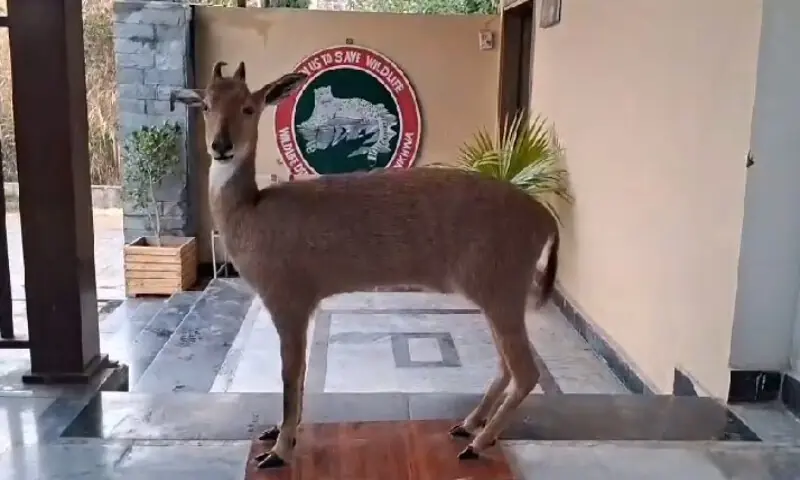

Pakistan has carried out its first-ever goral trophy hunt under a community-based conservation programme, marking a new step in regulated wildlife management, officials said on Thursday. Authorities auctioned the hunting permit for about $55,000 in the remote Torghar district of the Hazara Division.
Wildlife Conservator Iftikhar Zaman said a United States national, Darren James Mullin, secured the goral trophy permit after submitting the highest bid. Consequently, this became the first instance in Pakistan’s history in which a foreign hunter participated in a regulated goral hunt.
According to Zaman, authorities organised the hunt under a community-based conservation model designed to balance wildlife protection with economic incentives. He explained that the programme aims to ensure local communities benefit directly from conservation-related activities rather than remaining excluded from decision-making.
Under the approved scheme, officials will allocate 80% of the revenue generated from the hunt to development projects in Torghar. These funds will support local infrastructure, community welfare initiatives, and conservation-related activities in the area. As a result, residents are expected to play a more active role in protecting wildlife habitats.
Zaman said goral populations exist in significant numbers across several parts of the Hazara Division. Therefore, he added, controlled and regulated hunting can encourage conservation by creating financial value for protecting the species and its environment. He stressed that authorities carefully regulate such hunts to avoid negative impacts on wildlife numbers.
Meanwhile, wildlife officials said the initiative seeks to promote sustainable wildlife management practices across Pakistan. In addition, the programme aims to attract responsible international trophy hunters while maintaining strict oversight and transparency.
Officials further noted that community involvement remains central to the model, as local residents act as custodians of wildlife resources. Through this approach, authorities hope to reduce illegal hunting, strengthen conservation awareness, and improve livelihoods in remote regions.
