

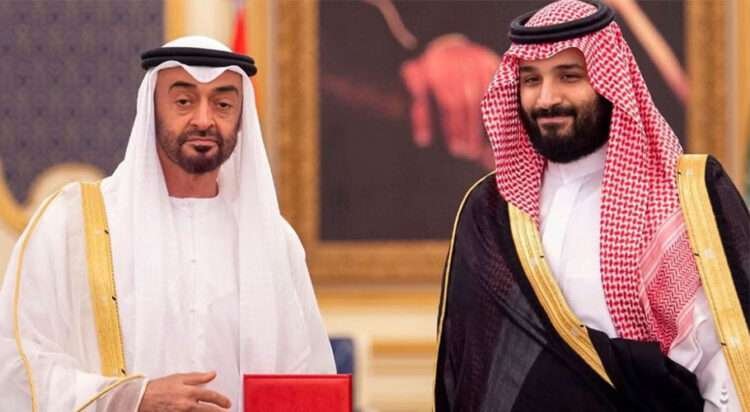

Tensions between Saudi Arabia and the United Arab Emirates have resurfaced sharply in Yemen, exposing deep mistrust between the two Gulf powers. While the UAE’s decision to withdraw its remaining forces may ease immediate friction, recent events have revealed long-standing strategic disagreements that go far beyond a single military incident.
Saudi Airstrike Triggers Diplomatic Fallout
The latest standoff began after a Saudi-led airstrike hit the southern Yemeni port city of Mukalla earlier this week. The strike reportedly targeted positions linked to the UAE-backed Southern Transitional Council (STC). The move angered Abu Dhabi, which said it was taken by surprise by the attack.
Saudi Arabia followed the strike with a firm warning, stressing that its national security was non-negotiable. Riyadh demanded the withdrawal of all Emirati troops from Yemen. Shortly afterward, the UAE announced it would pull out its remaining military personnel, citing concerns for their safety.
Yemen’s internationally recognized authorities went further. According to Yemen’s state news agency, the government cancelled its defence agreement with the UAE and ordered Emirati forces to leave the country within 24 hours. Abu Dhabi then formally declared an end to its military mission in Yemen.
STC Advances Expose Saudi–UAE Strategic Divide
The crisis follows the rapid and unexpected advance of the Southern Transitional Council in early December. Backed by the UAE, STC forces seized large parts of southern Yemen, including strategic areas in Hadramout province. This expansion has brought STC-controlled territory closer to Saudi Arabia’s border.
Once a key partner in the Saudi-led coalition fighting the Iran-aligned Houthi movement, the STC has increasingly pursued its own agenda. Its push for dominance in the south has highlighted major disagreements between Riyadh and Abu Dhabi over Yemen’s future, governance, and territorial unity.
Saudi officials view the STC’s expansion into areas previously controlled by Saudi-backed forces as a direct threat. Although the STC has not launched attacks on Saudi territory, its growing power near the border has raised serious concerns in Riyadh.
Who Controls What in Yemen Now
After the latest developments, Yemen is effectively divided into three major power centres.
Ansar Allah (Houthi Rebels):
The Houthis control northern Yemen, including the capital Sanaa and the western coastal belt. The group emerged stronger after the 2011 uprising forced President Ali Abdullah Saleh to step down. Since the Saudi-led intervention began in 2015, the Houthis have remained locked in conflict with coalition forces. They have previously launched missile and drone attacks on Saudi cities and oil infrastructure.
Presidential Leadership Council (PLC):
The PLC is the Saudi-backed, internationally recognized authority. It was formed in April 2022 as an eight-member body aimed at uniting anti-Houthi factions. STC leader Aidrous al-Zubaidi was appointed vice president. However, internal disputes led to the collapse of this alliance in December 2025. The council’s influence has since shrunk to a few limited areas.
Southern Transitional Council (STC):
The STC is a separatist movement seeking to restore an independent southern Yemen, similar to the pre-1990 People’s Democratic Republic of Yemen. Earlier this month, STC forces captured most of Yemen’s southern regions, including Aden, Hadramout, and Mahra. The group now controls key ports and oil-rich areas, strengthening its political and military position.
What the Rift Means for the Region
The Saudi–UAE fallout underscores how Yemen’s war has shifted from a unified coalition effort to a struggle over influence and control. While both countries oppose the Houthis, their visions for Yemen’s future sharply differ. Saudi Arabia prioritizes border security and a unified Yemeni state. The UAE has supported local allies like the STC to secure strategic ports and trade routes.
The UAE’s withdrawal may reduce short-term tensions, but the rivalry exposed by recent events is unlikely to fade quickly. Yemen’s fragmentation, combined with competing regional interests, suggests continued instability and a complex power struggle that could reshape the conflict in the months ahead.
