

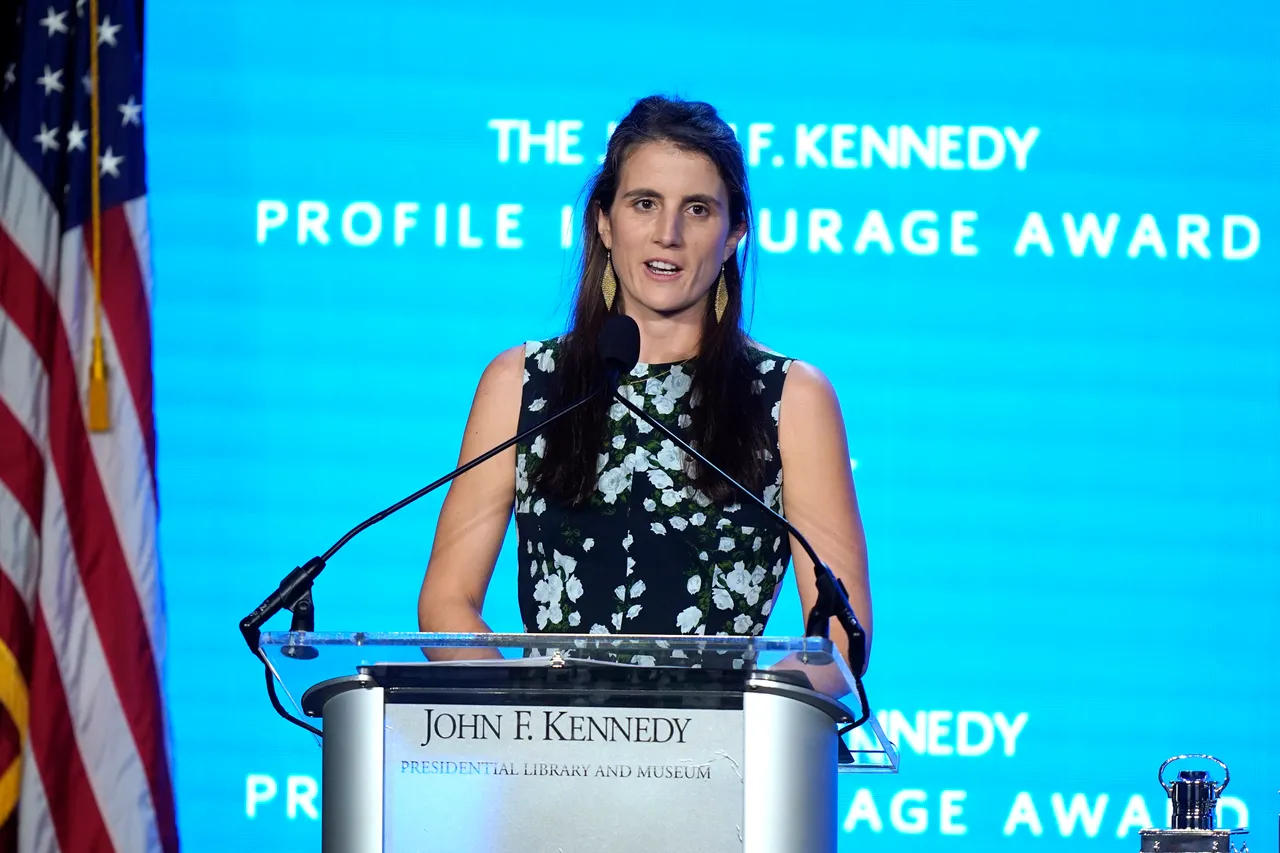

Tatiana Schlossberg, the granddaughter of former United States president John F. Kennedy, has died at the age of 35 following a diagnosis of a rare form of leukemia. Her family announced her death on Tuesday through a statement shared by the John F. Kennedy Presidential Library and Museum, prompting an outpouring of tributes and condolences.
In the statement, the family said Schlossberg passed away peacefully earlier in the day. They described her as a beloved daughter, sister, and member of the Kennedy family, noting that she would remain forever in their hearts. The announcement marked the first public confirmation of her death and brought renewed attention to her work and final writings.
Schlossberg was widely known for her journalism focused on climate change and environmental issues. Over the years, she built a reputation for thoughtful reporting and commentary on the global climate crisis, often highlighting the intersection between science, policy, and public responsibility. As news of her death spread, colleagues and readers reflected on her commitment to environmental advocacy and public discourse.
Career, family background, and illness
Tatiana Schlossberg was the second child of Caroline Kennedy, a former United States ambassador and diplomat, and Edwin Schlossberg, a designer and artist. As a member of one of America’s most prominent political families, she largely chose a professional path centered on journalism rather than public office.
In November, Schlossberg published a deeply personal essay in The New Yorker, where she disclosed that doctors had diagnosed her with acute myeloid leukemia carrying a rare genetic mutation. In the essay, she described the physical and emotional toll of the disease, explaining how it affected her body, her daily life, and her understanding of mortality. At the same time, she reflected on the healthcare system and the uncertainty faced by cancer patients.
Moreover, the essay demonstrated her continued engagement with public issues even during illness. Schlossberg used the platform to criticize vaccine scepticism and to voice concern over reductions in funding for cancer research. She specifically referenced her cousin Robert F. Kennedy Jr., arguing that misinformation and policy decisions could have serious consequences for public health and medical progress.
Legacy and public reaction
Following the announcement of her death, readers revisited Schlossberg’s final essay, which many described as candid, courageous, and intellectually rigorous. Environmental advocates also highlighted her contributions to climate journalism, noting that she consistently communicated complex scientific issues in accessible language.
Meanwhile, public reaction underscored the personal and political dimensions of her final work. While many focused on her legacy as a journalist and writer, others pointed to her willingness to challenge powerful figures, even within her own family. As a result, her death has renewed discussions about cancer research, public health policy, and the role of journalism in shaping informed debate.
Schlossberg’s passing marks a significant loss for both the Kennedy family and the broader community of environmental and public interest journalists.
