


The prolonged suspension of bilateral trade between Pakistan and Afghanistan has exposed a stark economic imbalance. Despite common assumptions that both countries are equally affected, trade data shows Afghanistan is bearing a far heavier economic burden. Export losses for Kabul have surged sharply, underlining the country’s deep dependence on Pakistan for trade, transit, and market access.
Trade Breakdown Reveals Unequal Economic Impact
Since October 10, Afghanistan’s export losses have reached nearly 10 percent of its total global exports. In contrast, Pakistan’s losses amount to only around 0.6 percent of its overall exports. This disparity highlights how critical Pakistan is to Afghanistan’s trade structure, while Afghanistan remains a relatively small market for Pakistan.
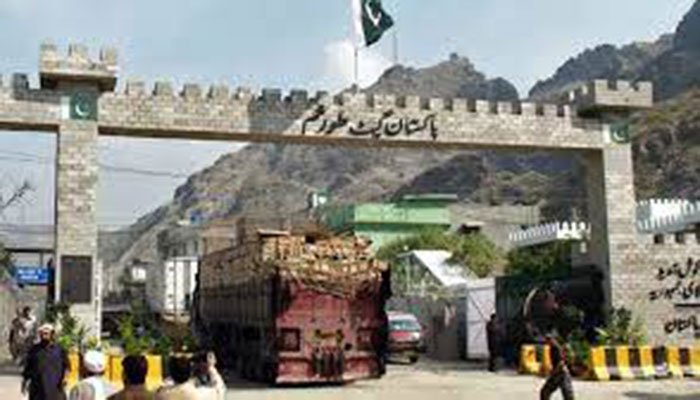
The suspension followed a sharp deterioration in bilateral relations. Tensions escalated over Islamabad’s demand that Kabul take action against the banned Tehreek-i-Taliban Pakistan. Border clashes on October 11 led to the closure of major crossings, including Torkham. Although ceasefires and negotiations were attempted in Doha and later Istanbul, mediation efforts by Turkiye and Qatar failed to bridge deep differences. Pakistan declared talks effectively over on November 7. Afghanistan responded by suspending trade ties, though Pakistan had already sealed its border after the clashes.
Trade figures show why Kabul is at a disadvantage. Nearly 46 percent of Afghanistan’s total exports are sent to Pakistan. A significant portion of these exports is routed onward to India through the Wagah border. By comparison, Afghanistan accounts for only 3.46 percent of Pakistan’s global exports. This asymmetry means that prolonged disruption inflicts far greater damage on the Afghan economy.
Transit Trade and Market Concentration Worsen Kabul’s Position
Afghanistan’s vulnerability extends beyond direct exports. Transit trade through Pakistan represents nearly 40 percent of Afghanistan’s total imports. Any disruption immediately affects food supplies, fuel availability, and industrial inputs. This factor is not fully captured in export-loss calculations, yet it significantly deepens the economic impact.
India has emerged as Afghanistan’s second-largest export destination, absorbing around 40 percent of its exports. However, India does not share a border with Afghanistan. Access to the Indian market relies heavily on Pakistani infrastructure, especially the Wagah border and Karachi ports. Exports to Afghanistan’s other neighbors remain limited, with Iran accounting for just 1.94 percent, Uzbekistan 3.14 percent, and Tajikistan only 0.37 percent.
This heavy concentration reveals how dependent Afghanistan is on two markets, Pakistan and India, and on Pakistan’s transit routes. Any prolonged closure threatens to choke Afghan exports, especially agricultural goods.
Limited Alternatives for Afghan Exports
According to World Bank estimates, fruits and vegetables made up 71 percent of Afghanistan’s total exports in 2024. These goods are perishable and require fast, predictable transport. While Kabul may divert some imports toward Central Asian states, Iran, or India, finding alternative markets for its exports remains extremely difficult.
This raises serious questions about the Taliban’s willingness to tolerate prolonged supply chain disruptions. Afghanistan’s economy is already struggling with sanctions, low investment, and limited access to global markets. Prolonged trade suspension risks worsening unemployment and poverty, particularly in rural areas dependent on agriculture.
Costs and Risks for Pakistan
Pakistan is not immune to losses. Since October 10, Pakistan’s estimated export losses stand at around $222.5 million. Afghanistan’s losses are estimated at $173 million. However, Afghanistan’s losses equal nearly 10 percent of its average annual exports, while Pakistan’s losses remain marginal in relative terms.
Pakistan’s exports to Afghanistan had recovered strongly in recent years, reaching $1.39 billion in FY24. Key export items include medicines, cement, rice, and construction materials. Industries in Punjab and Khyber Pakhtunkhwa are now feeling the strain, particularly those linked to construction and pharmaceuticals.
More than 90 percent of Pakistan’s exports to Afghanistan pass through customs stations in Khyber Pakhtunkhwa, mainly via Torkham. This has concentrated the impact of the trade halt on businesses along this corridor, while the Chaman route in Balochistan remains underutilized.
Shifting Supply Chains and Long-Term Consequences
Afghan importers are already shifting orders away from Pakistan. Cement is increasingly sourced from Iran, Uzbekistan, and Tajikistan. Medicines are being imported from Turkey, Iran, Uzbekistan, and even India via air cargo. While Pakistani pharmaceuticals still dominate much of the Afghan market, that share is under pressure.
Once supply chains adjust, reversing them becomes difficult. Prolonged disruption risks permanently eroding Pakistan’s market share in Afghanistan. At the same time, Pakistan’s plans to expand transit trade with Central Asian states depend heavily on stable relations with Kabul. Current tensions are already disrupting emerging corridors.
Historically, Pakistan and Afghanistan have remained economically interconnected despite repeated suspensions since 1947. Each disruption has pushed Afghanistan further toward alternative routes through Iran and Central Asia. The current standoff risks accelerating that shift, with lasting economic consequences for both countries.
