

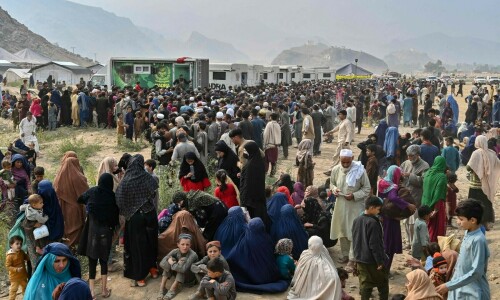

ISLAMABAD: The United Nations refugee agency has released new findings highlighting significant differences in the reintegration experiences of Afghan returnees from Iran and Pakistan. According to UNHCR’s Afghanistan post-return monitoring survey report, issued on Tuesday, returnees from Iran generally arrive with higher levels of education, better food security, and more stable housing conditions. In contrast, those returning from Pakistan face deeper economic hardship, rely more heavily on daily wage labour, and carry larger debt burdens.
The survey found that returnees from Iran were less likely to secure income-generating employment despite their comparatively stronger education profiles. They also more frequently reported barriers to girls’ education, largely due to restrictive policies and laws. Meanwhile, Afghans returning from Pakistan after April reported slightly more access to casual income opportunities, yet they struggled to afford rent and meet basic food needs.
Across all groups, UNHCR observed that returnees continued to settle in fragile areas marked by deepening poverty and limited access to essential services. Many families could not return to their original communities because they lacked shelter, land, or viable livelihoods. Furthermore, more than half of surveyed households reported missing essential civil documentation, limiting their access to education, healthcare, and housing.
Education, health, and debt pressures persist
Education remained severely constrained for women and girls nationwide. While returnees from Iran most often cited legal and policy restrictions as the main obstacle, those from Pakistan pointed to economic barriers. Access to healthcare also remained limited due to high costs, long distances, and shortages of medicines. Women faced disproportionate challenges because movement restrictions further reduced their ability to seek care.
The survey showed that debt remained widespread, with 88 per cent of returnee households reporting financial liabilities, a slight improvement compared to 2024. On average, households included six members, intensifying financial strain. Debt levels were especially severe in Nangarhar province, where 96 per cent of returnees reported economic distress. Although returnees from Iran were marginally less indebted than those from Pakistan, almost all indebted households stated that their debt exceeded their monthly income, underscoring unsustainable financial cycles.
Urgent need for tailored, sustained support
In August 2025, UNHCR expanded its monitoring to include returnees from Iran for the first time. This round covered interviews with 1,658 households and introduced separate data sets for Afghans returning from Pakistan before and after April 2025, when cash assistance declined due to funding shortages. The survey also included undocumented returnees, enabling comparison with those holding refugee documentation.
UNHCR said the findings demonstrate the urgent need for sustained, multisectoral assistance tailored to the distinct profiles of returnees from Iran and Pakistan. In 2025 alone, Afghanistan recorded an estimated 2.7 million returns, amid deteriorating conditions in neighbouring countries. The agency stressed that continued monitoring remains essential to adapt programming, protect vulnerable groups, and ensure that reintegration efforts lead to lasting stability.
