

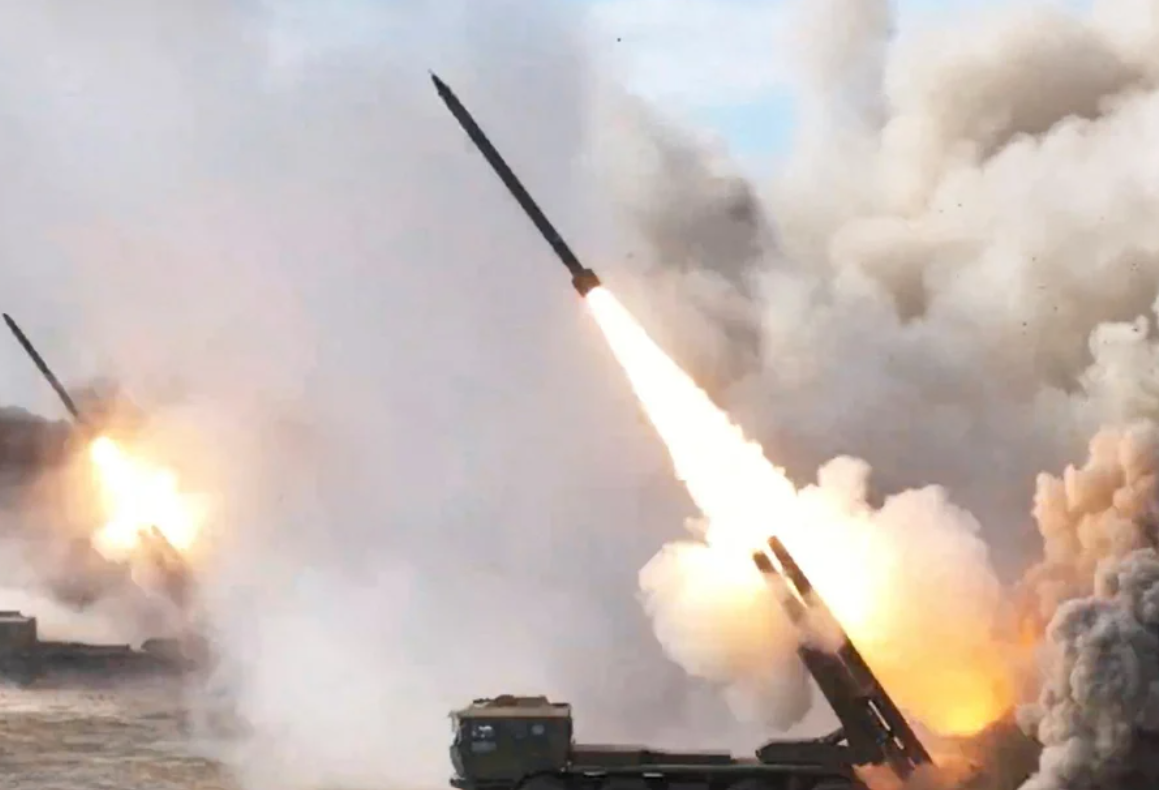

China intensified its military exercises around Taiwan on Tuesday by firing missiles and deploying large numbers of aircraft and naval vessels. The drills marked the second consecutive day of live-fire operations. They focused on simulating a blockade of Taiwan’s major ports and attacks on maritime targets.
Chinese forces launched multiple rockets from coastal areas facing Taiwan. Observers reported at least ten missiles fired in quick succession. The launches produced loud explosions and visible smoke trails. Taiwan’s authorities later confirmed that 27 rockets were detected during the day.
Beijing Signals Resolve on Sovereignty
China considers Taiwan part of its sovereign territory and has not ruled out using force to assert control. Officials described the drills as a response to what they called separatist actions. They framed the exercises as necessary to defend national sovereignty.
Military statements said the drills involved destroyers, frigates, fighter jets, and bombers. The operations tested sea and air coordination. They also rehearsed identification, expulsion warnings, and simulated strikes. Anti-air and anti-submarine elements were included as well.
Blockade Simulation Raises Alarm
Chinese state media reported that a key objective was simulating a blockade of major Taiwanese ports. These included Keelung in the north and Kaohsiung in the south. Maps released by Chinese authorities showed several large exercise zones surrounding the island.
Some of these zones extended close to Taiwan’s territorial waters. As a result, international shipping and aviation routes were disrupted. Taiwan’s aviation authorities reported hundreds of flight delays and cancellations.
However, senior Taiwanese military officials said the blockade attempt did not materialize. They argued the drills aimed more at psychological impact than actual control.
Taiwan and Allies Respond
Taiwan condemned the exercises as reckless and destabilizing. President Lai Ching-te said China was deliberately undermining regional stability. He added that Taiwan would not escalate tensions despite the provocation.
Taiwan’s defense ministry reported detecting at least 130 Chinese aircraft and more than 50 vessels during the drills. The coast guard deployed 14 ships. Each vessel closely shadowed Chinese counterparts to deter encroachment.
Taiwanese forces also conducted their own readiness drills. These focused on rapid troop deployment and defensive obstacles near urban areas.
International Reaction Grows
The drills followed recent arms sales to Taiwan by the United States. They also came after comments from Japan suggesting a possible response to force against Taiwan. Chinese officials warned they would counter foreign military support for Taipei.
The European Union criticized the exercises, saying they endangered regional peace. It urged restraint to avoid escalation. Meanwhile, US President Donald Trump downplayed the risk of invasion. He said he did not believe China intended to attack Taiwan.
Public Reaction Remains Calm
Many people in Taiwan reacted calmly to the drills. Residents said frequent exercises had made them accustomed to such displays. Some dismissed the actions as posturing rather than preparation for war.
Despite this calm, the scale and intensity of the drills underscored rising tensions. The situation continues to test regional stability and global diplomacy.
